Beni Musicali

Vi segnalo un nuovo sito, che si presenta interessante.

Si tratta di Beni Musicali, che intende « promuovere e valorizzare il grande patrimonio storico-musicale italiano attraverso la ricerca e l’analisi critica delle opere musicali, la trascrizione e la riproduzione audio e video» .

Al momento sono disponibili, e liberamente scaricabili, quattro partiture di Johann Adolf Hasse e un’esecuzione dal vivo dell’oratorio “La Creazione” di F.J. Haydn, oltre a interventi in podcasting rispettivamente del trascrittore di Hasse e del direttore dell’esecuzione di Haydn.

Canone obbligato

Non è una forma musicale del ‘600. Sto parlando del canone che tutti noi dobbiamo pagare per sostenere la TV pubblica. E quando dico tutti, intendo dire proprio tutti: che guardiamo o non guardiamo la RAI, che abbiamo o non abbiamo un televisore.
Perché il regio decreto 246 del 21 febbraio 1938 (con successive integrazioni e modifiche) dice che il canone deve essere versato da chiunque possegga “apparecchi atti o adattabili alla ricezione delle trasmissioni radio televisive”.
Leggete bene: atti o adattabili significa quasi qualsiasi cosa. Secondo l’interpretazione corrente, infatti, un computer è facilmente adattabile: basta comprare una scheda da pochi euro con selezionatore TV e presa per antenna. La stessa cosa si può fare con un qualsiasi monitor. Esagerando un po’ (ma forse non troppo), si può sostenere che anche la mia lavatrice, che è già dotata di un display LCD, con poche e banali modifiche potrebbe essere messa in grado di ricevere il segnale TV.
Dunque riassumiamo:

  • chi ha un televisore, ma non guarda la RAI, deve pagare il canone;
  • ma anche chi non ha un televisore, ma possiede un computer o un lettore DVD + monitor lo deve pagare, solo perché potrebbe, in via del tutto ipotetica, dotare il suddetto ordigno di un componente che lo mette in grado di vedere la TV.

Ma è fantastico. È geniale!
Per lo stesso principio forse dovremmo pagare in anticipo qualche multa per eccesso di velocità perché tutti possediamo un auto/moto/ciclomotore atto a violare qualche limite. In teoria, anche una bici è adattabile.
Per estensione, forse dovremmo andare in galera in quanto tutti abbiamo in casa qualche ordigno atto o adattabile a commettere un omicidio…
Il bello è che io sono favorevole a una TV pubblica mantenuta da un canone (diciamo che se la RAI fosse come la BBC lo pagherei molto più volentieri), ma questa faccenda dell’obbligare al pagamento anche chi in via ipotetica potrebbe, mi sembra del tutto demenziale.

Mutopia

In 1971 Michael Hart started the Project Gutenberg. The PG is a volunteer effort to digitize, archive, and distribute cultural works. It is the oldest digital library. Most of its items are the full texts of public domain books. The project tries to make the items in its collection as free as possible, in long-lasting, open formats that can be used on almost any computer.
The PG is legal because the copyright on this books has expired. We often don’t think about it because we are used to buy books, but the original text of all the works whose author is died from more than a crtain amount of years (the time could differs in different countries) can be freely and legally copied. I said “original text” because the translations are generally copyrighted.
There are 18,000 free books in the Project Gutenberg Online Book Catalog.

Mutopia Project is similar in spirit to Project Gutenberg, but consists of free sheet music.
Broadly speaking, copyright on a creative work expires 70 years after the creator’s death. This means that the works of Bach, Mozart, Beethoven and many other composers are in the public domain – in principle, they may be copied and performed without restriction.
However, you may not normally copy or perform a sheet music edition which you can buy, because an editor also has a copyright on the edition, and an arranger may have, too. The copyright on the edition only expires when all these people have been dead for 70 years. Additional restrictions in the USA mean that only works published there prior to 1923 are in the public domain. Only sufficiently old editions fulfil these criteria, and are therefore in the public domain.
But for a lot of classical music, editions do exist which are old enough, especially in libraries and private collections. The quality of the editorial work is generally as high as in recent editions, if not higher. Several composers were also notable as editors. (For example, Brahms’s editions of Mozart works are now in the public domain)
The idea behind the Mutopia Project is that volunteers typeset these editions on a computer, using the GNU Lilypond typesetting software, and make them freely available.
The Mutopia Project also contains a growing number of modern editions, arrangements and new music. The respective editors, arrangers and composers have chosen to make these works freely available. All may be freely downloaded, printed, copied, distributed, modified, performed or recorded.
All music is available as Postscript (.ps) and PDF (.pdf) files, for both A4 and Letter paper sizes, as well as Lilypond’s own file format (.ly).

Project Gutenberg Site
Mutopia Project Site

The future of musical marketing (2)

It’s the year 2015 and you wake to a familiar tune playing softly. It gets you out of bed and makes you feel good. As you walk into the bathroom, your Personal Media Minder activates the video display in the mirror, and you watch a bit of personalized news while you get ready for the day. You step into the shower and your personalized music program is ready for you, cued up with a new live version of a track that you downloaded the other day. It is even better than the original recording, so while you dress, you tell your “TasteMate” program to include the new track in your playlist rotation.
You put on your new eyeglasses, which contain a networked audio headset, letting tiny earbuds slip into your ears. You switch on the power, and the mix that your friend made for you starts to play. Music pours into your consciousness. It becomes yours.
After breakfast with the family, you head off to work and the Personal Media Minder asks if you wish to finish the audio book you started yesterday morning. You confirm and listen while you walk to the train that takes you to your job.
During the day, your headset and other wireless devices help you communicate across the network, with your friends, associates, network buddies, and “digital peers.” The headset also keeps you connected to that hard rock collection that you really love to listen to. Meanwhile, a variety of new songs, new versions, and remixes of tracks you truly dig, along with your old favorites, continues to come your way. Using TasteMate, you access and trade playlists, and recommend a couple of songs to your friend in Seattle, and they get added to his rotation. Music propels you throughout the day.
On the way home, you choose your usual dose of news, sports, weather, and the latest dirt on your favorite bands and movie stars. The headset syncs to the active 3D displays that project images just in front of your eyes, or onto the communal screens available on the train and at home. You decide what you hear and see, and who can share in the experience. The Media Minder blends and delivers the programming you select, along with whatever variety of new music you decide to explore. It also determines how that new music is chosen, with the help of the TasteMate program.
Back at home, you cruise into the evening with the house system sending soft dinner jazz to various speaker systems in your house, as you serve up one of your culinary specialties, then pay your bills. One of these bills is your media and entertainment subscription, which includes your monthly music, video, network, and communications charges; it’s always lower than your heating or water bill. Incoming calls from your friends blend into the programming that surrounds you, as you see fit. After dinner, you clean up, perhaps enjoy a couple of games with friends across your virtual network, and begin to wind down with some New-Age derivatives of Mozart’s original compositions, which you discovered late one night while cruising through the music sharing channels…

The Future of Music: Manifesto for the Digital Music Revolution
By David Kusek

This is the opening of David Kusek and Gerd Leonhard book “The Future of Music”. Here is the blog related.

In your opinion it’s heaven or nightmare?

While reading for the first time I think “…beatiful…”, but when I tried to imagine this as a real world all began turning to nightmare.
Well, to a large extent I agree with the authors. As stated in the previous post I also think that the music will be sold as a digital stream, the prices will drop, there will be subscription services, etc…
But there will be also other things not so good. For instance, what about advertisement?
Do you think the seller of a similar service will give up the gain that advertisement could create? There is nothing all around without it. And I hate advertisement. And the personalized advertisement I hate more.
So, suppose they try to create a “not disturbing” advertisement. You are listening to the hard rock collection you really love and “meanwhile, a variety of new songs, new versions, and remixes of tracks you truly dig, along with your old favorites, continues to come your way” but sometimes a you hear a song similar to the others, but definitively not a part of your choice. And you start asking if it’s a bug of the selection software or a masked advertisement. Do you remember payola?
And then “during the day, your headset and other wireless devices help you communicate across the network, with your friends, associates, network buddies, and digital peers”. Good, but if you can connect with every network, every network can find you. So, while you are listening to the audiobook, the people in your office call because your boss has planned a meeting at 10 am and he needs your opinion about a new project, so charts, images and word come to you mixing with the audiobook. Moreover, your messenger software has started automatically (it’s part of the subscription) and you can hear the rings and see the nicknames of 50 idiots that have nothing to do and want to chat with you. At least, there is another call from that moron with persist in calling from the day you made sex with him/her only because that time you were so blue…
Ok, I could modify all the book’s opening reflect my not-so-optimistic vision, and maybe I’ll do. But the thing that disturb me the more in this utopia is the refusal to choose. I know the information is increasing so choosing is more and more difficult, but when I choose to get the news from CNN or the NY Times, I make a selection by myself e.g. I choose CNN because I trust CNN). If I connect to a service like GoogleNews I don’t. It’s someone other that select the news I see. In this case, it’s the software itself, but the software works looking at how popular a news is, so it’s not my choice.
In the same way, a music selection service can only make blind choices based on the musical genre and I could customize it, but its “intelligence” it’s always in someone other hands.
Ok, the music will flow like water, but who control the flux?

The future of musical marketing (1)

Dal punto di vista degli autori – Con spirito relativamente ottimistico

La musica non viene più distribuita su un supporto ma solo come flusso di dati. La vendita avviene via rete, non necessariamente solo tramite un computer, ma attraverso un qualsiasi terminale multimediale.
Le major discografiche non esistono più. Esattamente come una qualsiasi azienda che fabbrica e vende un qualsiasi prodotto, o come uno studio professionale, sono gli autori (la band costituita come società) a vendere i risultati del proprio lavoro, coadiuvati da una serie di agenzie di servizi e di consulenza.
In altre parole, l’autore e l’esecutore sono tornati ad essere il centro del proprio lavoro, a controllare il prodotto, a investire e rischiare in proprio, esattamente come qualsiasi altra entità economica. E naturalmente controllano anche tutti gli incassi, con i quali devono pagare le spese, le consulenze e anche viverci. Esattamente come qualsiasi altra entità economica.
I prodotti sono privi di protezione. Ormai si è visto che, a meno di militarizzare la rete, le protezioni non tengono. Il calo del prezzo della musica dovuto all’assenza di supporto, stampa, distribuzione e ruberie varie e una piccola tassa sul P2P, pagata come parte dell’accesso a internet, assorbono la perdita dovuta alle copie. Un disco potrebbe costare € 4, ma ne costa 8/10 proprio per questa ragione.
In pratica, una band segue la solita trafila. La differenza rispetto alla situazione attuale sta nel fatto che si gestisce in proprio. Comincia a suonare un po’ in giro, registra dei brani in proprio o in uno studio con modica spesa, li vende sul proprio sito o su quello di una agenzia di distribuzione a cui dà una certa percentuale. In pratica, fin qui ha solo bisogno di un commercialista.
Naturalmente, sul sito, qualche pezzo si può scaricare gratis come forma promozionale. Alcune band distribuiscono gratis tutto il disco oppure il video di un loro concerto perché contano sui concerti per vivere.
E così, se sono una buona band, la voce comincia a spargersi e il loro nome arriva all’orecchio di qualche critico. E allora un critico musicale con un blog da 10.000 accessi al giorno ascolta la loro musica. Non una major che presenta loro una lettera di impegno con cui la band si impegna su tutto e la major su niente mentre pensa se investire su di loro o su uno degli altri 1000 deficienti che ha sottomano. Non c’è bisogno di investire su di loro perché loro stanno già investendo su se stessi e non c’è niente da guadagnare perché la band è padrona del proprio business, per quanto piccolo sia.
Ok, li ascolta un critico. E il critico non è uno stronzo borioso che scrive su una nota rivista musicale. È solo uno che ha un blog e si è fatto una fama in rete con anni di post intelligenti. È un free-lance e non ha un capo. Anche lui si è costruito un po’ per volta, facendo della sua passione il proprio lavoro. Sa che il suo pubblico si fida di lui e lo stima e che questa fiducia è la base del suo successo per cui adesso le radio gli chiedono di preparare programmi e le riviste gli chiedono articoli. Ma non ha un capo.
Sa che il segnalare nuove band interessanti è parte del suo lavoro e aumenta la sua fama. Sa che in TV lo presentano come “quello che ha scoperto Heterophobia e poi Gregg Turner and the Blood Drained Cows”.
Così non chiede loro € 10.000 per una buona recensione, ma li contatta, parla con loro via internet, li intervista e se può va a sentirli dal vivo. E poi ne scrive e li linka sul suo blog e gli accessi al sito della band aumentano di un bel po’.
E allora, se le cose vanno bene, la band valuta se lavorare un po’ con un consulente musicale e di immagine che viene pagato a prestazione o con una percentuale sulle vendite o con un qualsiasi altro accordo di lavoro.
Se poi le cose vanno molto bene e il commercialista non basta più, si affida a una agenzia di management per gestire concerti, tours, merchandising e contabilità. E fornisce loro anche un set di avvocati, perche in un’intervista uno di loro ha detto che ormai sono più popolari di Gesù Cristo e così sono stati messi al bando dall’amministrazione Bush.
E a questo punto, la band si rende conto che è davvero famosa e si fa la propria agenzia di management e manda a quel paese i consulenti musicali e di immagine, gli avvocati e gli altri mangiapane a tradimento.
Uff! Che fatica gestirsi da soli…

Un sogno?
From the band point of view – With a little optimistic attitude

Music is no more sold on CD but only on the internet as data stream.
The majors don’t exist no more. Like any business company that build and sells its own products, or like a professional office, the band sells its own productions with the help of some artistic advisors and/or a management agency.
In other words, the band works alone and control its own work, the music, putting money (and risk) in its own activity, exactly as any other economic entity.
And of course the band controls all the revenues, with which it must pay expenses, the advisors and also living. Just as any other economic entity.
The music has no protection system. By now everybody knows that it’s impossible to control the copy without controlling and blocking all the net and the copy itself is not a loss so big. Now the people pay a little P2P tax as part of the internet access cost and the decreasing of music price, without support, printing, distribution and several robberies, can cover the copies loss. The price of ten songs could be € 4 but it’s € 8 to 10 just to cover the copies loss.
The beginning of a band career is as usual. The difference is that the band runs its business alone.
They begin play around, record some music at home or in a little studio with a little expense and sell it on his site or on the site of a music distribution service that charges a little. Until now the band only needs a chartered accountant.
Of course the people can download some song from the band’s site to hear and give it to friends. So, if the music is good, their name spreads and some music critics begin to hear it. And then a music critic who leads a blog with 10.000 visit per day comes to their site. Not a major with a letter of intent, a so called “deal memo” to which the band remains bound while the major choose between this band or another. Not a major because there is nothing to gain when it’s the artist that control itself and his/her music.
So a music critic hear the band. And this critic is not a pretentious bastard who works for a big music magazine. He is a person who holds a blog and has build his reputation online with years of smart posting. He is a free-lance and has no boss. He knows that many people trust him and this trust is the foundation of his success, is the reason why the radios ask him for programs and the magazines ask him for articles. But he has no boss.
He knows that discovering new interesting bands is the reason of his success and the TVs introduce him as the one who discovered Heterophobia and Gregg Turner and the Blood Drained Cows.
So he don’t ask the band for $ 10.000 to write a good review. He simply listen to their music and write some line to the band and go to their concert and then put a post on his blog and their site many more people come.
And then, if the things runs well, the band maybe turn to a music advisor or to an image advisor to improve the music or the live act, but it’s always the band who controls its music.
And then, if the things runs very well, the band search for a business management service to help handle tours, merchandise and maybe lawyer because the singer told they are more popular than Jesus they get banned by Bush administration.
And at least the band realizes that they became really popular and they can make their own business management service and kick out the advisors and the lawyers and all this parasites.
Agh! What a hard work lead his business alone…

A dream?
Syd Barrett

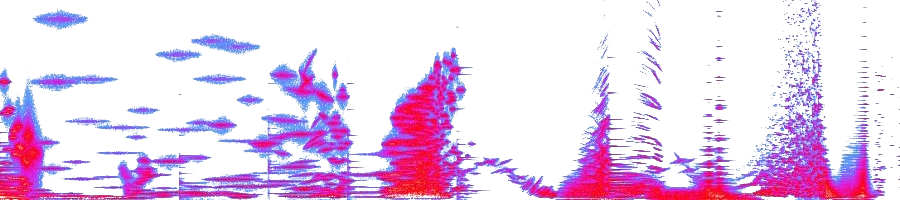
Syd Barrett è deceduto venerdì 7 luglio all’età di 60 anni nella sua casa del Cambridgeshire, a quanto sembra per problemi legati al diabete di cui soffriva da tempo.
Sparito dalla vita pubblica negli anni ’70 era praticamente una leggenda.

Syd Barrett died of (it seems) a diabetes-related illness on July 7, 2006 at his home in Cambridgeshire at the age of 60.
Retired from public eye from the seventies, he was a living legend.

Lucy Leave – 0:00 I’m A King Bee – 2:59 – recorded summer 1965 Interstellar Overdrive (Demo) – 6:11 – recorded 10/31/1966 Candy and a Currant Bun (Alt. Mix) – 21:17 – recorded 1/27/1967 See Emily Play (Alt. Mix) – 23:19 – recorded 5/21/1967 Astronomy Domine (BBC TV) – 26:13 – recorded 5/14/1967 Scream Thy Last Scream (Outtake) – 30:12 – recorded 8/7/1967 Vegetable Man (Outtake) – 34:45 – recorded 10/9/1967 No Title (Outtake) – 37:16 – recorded 9/4/1967 [BBC RADIO] The Gnome – 38:51 Matilda Mother – 41:19 The Scarecrow – 44:51 Flaming – 46:59 Set the Controls for the Heart of the Sun – 49:43 Reaction In G – 53:13 – recorded 9/25/1967 [BBC RADIO 4] Vegetable Man – 53:55 Scream Thy Last Scream – 57:32 Jugband Blues – 1:04:18 Pow R Toc H – 1:09:25 – recorded 12/20/1967 Interstellar Overdrive + interview – 1:11:04 – recorded 12/1966

The neighbour’s grass

Here in Italy the goverment grants for entertainment and music are more and more lower. Mr berlusconi goverment (luckily gone) has lowered it from € 516 million in 2001 to € 375 million in 2006. The new government told that in 2007 the national grant will be increased until the 2001 level. Musicians wait and pray.
Now I read that in France the grants are € 901 million (about 3 times with respect to present Italy’s grants), and € 745 million in UK. To find a grant equal than our, you must look at the little Denmark that spend € 344 million for the music, but has a population of 5.400.000 (1/10 than Italy).
The new issue of the Finnish Music Quarterly reveals that the Finnish government is spending € 359.5 million on the arts this year, of which 60.5 million goes to music. This grant has been described as inadequate and the Prime Minister has signed a law stipulating that orchestra subsidies should increase by 37% per year over the next 3 years. The Finnish population is about 5.000.000.

Quarrel: Cage about Glass and back

Tiding up old books I found this one: Desert Plants – conversations with 23 american musicians by Walter Zimmermann, Vancouver, 1976. An old style book, clearly printed and written with IBM electric typewriter. Questions in italic and answers in monospace fonts.
Browsing I found this gag:
Walter Zimmermann to Philip Glass:

John Cage describes your work as follows: “Though the doors will always remain open for the musical expression of personal feelings, what will more and more come through is the expression of the pleasures of conviviality. And beyond that a non-intentional expressivity: a being together of sounds and people.”
How do you relate this quote to your music?

A bothered Philip Glass:

Well, I think it has more to do with his music than mine.

Riordinando i vecchi libri mi è caduto in mano questo: Desert Plants – conversations with 23 american musicians by Walter Zimmermann, Vancouver, 1976. Un libro vecchio stile scritto con una macchina elettrica IBM. Le domande stampate in corsivo e le risposte nei classici caratteri da macchina da scrivere.
Sfogliando qui e là ho trovato questa gag:

Walter Zimmermann a Philip Glass:

John Cage describes your work as follows: “Though the doors will always remain open for the musical expression of personal feelings, what will more and more come through is the expression of the pleasures of conviviality. And beyond that a non-intentional expressivity: a being together of sounds and people.”
How do you relate this quote to your music?

Philip Glass, seccato:

Well, I think it has more to do with his music than mine.