
Internet è volatile. Oggi trovate un bel sito che domani può essere sparito.
L’Internet Archive archivia siti e altri contenuti culturali di tutti i tipi in forma digitale. La WayBack Machine, che recupera i contenuti di siti ormai andati, ospita attualmente circa 55 miliardi di pagine. Ma ci trovate anche musica, testi, interviste, immagini in movimento.
C’è un vasto archivio di musica dal vivo di band per lo più sconosciute, più di 30.000 libri e anche materiale interessante per questo blog. Le chiavi da usare per accedervi sono “Avantgarde” e “20th Century Classical”, oltre alla ricerca diretta con i nomi dei compositori. Ne abbiamo un piccolo esempio nel post precedente.
L’accesso è libero, ma qualche volta il motore di ricerca che gestisce tutto questo materiale è sovraccarico e non risponde. Abbiate pazienza.
Nel frattempo, alla faccia della musica contemporanea, beccatevi i Grateful Dead.
Monthly Archives: August 2006
Music and Interviews
Su Archive.org sono disponibili alcune interessanti interviste, ovviamente in inglese, con: Brian Eno (1980), Astor Piazzolla (1989), Cathy Berberian (1972)
Si trovano anche le registrazioni di alcuni concerti, come questo di Cage e Tudor del 1965.
On the site Archive.org we can find some interesting interviews with Brian Eno (1980), Astor Piazzolla (1989), Cathy Berberian (1972).
There is music also. Listen to this Cage and Tudor concert (1965).
25 recordings
Tim Page, of Washington Post, has his list of 25 recordings to represent 20th century classical music.
His comments and suggestions are interesting. You can find it here.
Le perversioni dei brevetti (1)
Tanto per allargare un po’ il discorso del post precedente, pubblico qui parte di un mio testo di qualche anno fa riguardante i brevetti, finora non pubblicato.
Potrebbe anche chiamarsi “Le perversioni del libero mercato 1 (aka L’Etica Aziendale)”, ma mettendola su questo piano, la serie non finirebbe mai…
È lungo, ma spero interessante. Comunque, per non annoiare, ho messo un link di continuazione a metà.
In tutte le legislazioni esiste il brevetto ed è visto come un incentivo alla ricerca. Il ragionamento è: assicurando una ventina di anni di sfruttamento esclusivo dell’invenzione o di introiti derivanti dai diritti, l’investimento degli ingenti capitali necessari alla ricerca diventa conveniente.
In teoria è giusto, ma il problema è che la realtà non è quasi mai così. Spesso la presenza del brevetto è un ostacolo alla diffusione di una invenzione. A volte ne provoca anche la scomparsa.
Andate a vedere, per esempio, a quando risale il brevetto dell’air-bag, che pure è un oggetto salvavita (secondo le stime del governo statunitense, 15.000 vite salvate contro le 242 perdute perché il passeggero non aveva la cintura al momento dell’impatto) e scoprirete che è del 1952 e appartiene a tale John Hetrick.
Il brevetto arrivò a scadenza nel 1972, guarda caso proprio un anno prima che General Motors decidesse di piazzare i primi air-bag della storia dell’automobile su alcune versioni della Chevrolet Impala. Inoltre, le industrie automobilistiche erano molto reticenti all’installazione di questo sistema, anche quando tutti i test ne provavano l’efficacia, perché aumentava costi e prezzi, tanto che il governo statunitense dovette renderlo obbligatorio con una legge nel 1984.
Tutto ciò dimostra che:
- le aziende hanno consapevolmente ritardato per almeno 20 anni l’adozione di un sistema salvavita;
- anche a brevetto scaduto, le aziende non lo avrebbero introdotto senza una disposizione governativa, a riprova che il cosiddetto libero mercato necessita di un controllo continuo e feroce;
- pur avendola brevettata, Hetrick non guadagnò un solo penny dalla sua invenzione;
- si tratta di una ulteriore prova che l’esistenza dei brevetti non porta benefici ai consumatori e non incrementa la ricerca, anzi, spesso la blocca;
- dov’è l’etica aziendale?
Volete altri esempi?. Non c’è problema. Sparlare di industria automobilistica e ricerca, ma in genere di industria e ricerca, è facile come sparare sulla Croce Rossa.
 Chiedetevi, per esempio, che fine ha fatto il motore Wankel.
Non sapete cos’è? Non mi stupisce. Il motore rotativo progettato da Felix Wankel (prototipo nel 1936, definitivo nel 1954) andava anche lui a benzina o gasolio e rimase nell’ombra per circa 20 anni (fino alla scadenza del brevetto, cvd).
Poi, verso la fine degli anni ’60, la NSU, la Mercedes e la General Motors ne realizzarono dei prototipi. Solo negli anni 70 l’azienda tedesca Auto Union lo realizzò montandolo sulla Nsu Ro 80, una berlinona di rappresentanza regolarmente distribuita che avrebbe poi ispirato, 10 anni dopo, le linee guida delle Audi 100. Le dimensioni erano quelle delle grandi Mercedes di allora, ma il motore Wankel era di soli 993 centimetri cubi e permetteva prestazioni di primo piano (NB: le Mercedes con uguali prestazioni e dimensioni avevano cilindrata 2000). La Nsu Ro 80 (eletta auto dell’anno) era un’auto veloce e in più aveva un motore piccolo e rivoluzionario. I consumi erano quelli di un’automobile di media cilindrata e qui, ecco nascere i vantaggi ma anche i problemi.
Certamente c’erano parecchi problemi di natura tecnica, ma probabilmente risolvibili con la ricerca. Forse la maggior parte non era di natura tecnica. Il dato di fatto è che il motore Wankel è praticamente scomparso dal mondo dell’automobile. Non se ne è più parlato e anche la sua memoria, in Europa, è quasi scomparsa.
La ragione ufficiale erano i costi della ricerca che sarebbe stata necessaria per renderlo affidabile come il collaudatissimo motore a scoppio. Ah si? Ma le aziende non fanno anche ricerca? Come staremmo adesso, a oltre 30 anni di distanza, se le auto avessero sempre avuto cilindrate inferiori?
I giapponesi della Mazda, invece, hanno continuato la ricerca, lo hanno reso affidabile già alla fine degli anni ’60 e oggi lo troviamo sulla Mazda RX-8. Nel loro sito il nome di Felix Wankel appare una o due volte. Il motore rotativo naturalmente nel frattempo è diventato il motore rotativo Mazda e ha assunto il nome di Renesis (acronimo di Rotative e Genesis).
A questo punto, mi chiedo se sia davvero così difficile sviluppare motori a energie alternative (alcool, olio, elettricità, idrogeno) visto che i prototipi già funzionano. Ora, dato che una delle priorità dell’umanità dovrebbe essere quella di abbattere l’inquinamento, forse basterebbe che tutte le aziende automobilistiche fossero costrette a creare un consorzio di ricerca che si occupa di sviluppare anche solo i fondamenti del motore a idrogeno (come nel caso del motore a scoppio in cui i fondamenti sono noti a tutti e poi ognuno applica le proprie migliorie) e investirci quello che normalmente investono nella cosiddetta ricerca e lo potremmo avere in 5 anni, forse meno.
Ah, ma questo sarebbe contrario al libero mercato. Forse sì, però sarebbe altamente ragionevole ed etico: di fronte a un problema reale, l’umanità si coalizza.
Durante la guerra fredda, quando tutti vedevano UFO dappertutto, io speravo tanto in un attacco alieno. non alieni iper-avanzati e amichevoli che ci avrebbero solo distrutto culturalmente, ma alieni cattivi che vogliono eliminarci e terraformare il nostro pianeta perché respirano anidride carbonica. Così, tanto per vedere se USA e URSS finalmente non si sarebbero coalizzate lanciando i missili contro lo stesso bersaglio.
Questo sfogo serve solo a mostrare il grado di demenza del nostro sistema che favorisce l’isolamento aziendale contro la cooperazione.
The copyright degenerations (2)
London, September 23, 2002.
British composer Mike Batt found himself the subject of a plagiarism action for including the song, “A One Minute Silence,” on an album for his classical rock band The Planets.
He was accused of copying it from a work by the late American composer John Cage, whose 1952 composition “4’33″” was totally silent.
On Monday, Batt settled the matter out of court by paying an undisclosed six-figure sum (in UK pounds) to the John Cage Trust (note: John Cage is dead in 1992). Batt gave the cheque to Nicholas Riddle, managing director of Cage’s publishers Peters Edition and credited “A One Minute Silence” to “Batt/Cage.”
Riddle said: “We feel that honour has been settled. We had been prepared to make our point more strongly on behalf of Mr Cage’s estate, because we do feel that the concept of a silent piece — particularly as it was credited by Mr Batt as being co-written by “Cage” — is a valuable artistic concept in which there is a copyright.”
Very interesting. There is a precedent in art: the white painting drawn on a blank canvas by Rauschenberg is copyrighted.
As the white paintings, the silent piece is a concept, but if a composer could patent musical concepts, there would be no music at all.
Cowell could have patented piano clusters, Schoenberg the 12-tone system, Debussy the 6-tone scale and so on. And what about the sonata and other forms?
Not to speak about pop music. I can imagine a never ending lawsuit between Deep Purple and Led Zeppelin about hard rock invention.
People are strange
Get a P2P software (I tried eMule), select file type = audio and search for John Cage. Then sort the results by sources (i.e. the number of users sharing that file). You’ll find that the John Cage’s most shared composition is 4’33”, piano version.
Yes! The silent piece is the Cage’s most shared mp3 over the net.
People are strange…
Eruption Music 2
Ricordate il post “Eruption Music” in cui parlavo della codifica musicale dei sismogrammi dell’Etna?
Bene, ecco qui il risultato: una pagina della partitura e il relativo audio.
Do you remember the “Eruption Music” post about the sonification of Mount Etna’s seismograms?
Well, here is the score and the music.

Rapporto 2005 Economia della musica italiana
I dati seguenti sono tratti dal Rapporto 2005 Economia della musica italiana del Centro Ask (Art & science for knowledge) dell’Università Bocconi, realizzato con la collaborazione di Dismamusica (Associazione distribuzione industria strumenti musicali e artigianato), Fem (Federazione editori musicali) e Scf (Società consortile fonografici). Sito di riferimento. Rapporto in pdf.
Il sistema musicale italiano ha fatturato, lo scorso anno, 2,284 miliardi di euro, con una crescita del 4,35% rispetto al 2003. Il sistema nel suo complesso non è perciò in crisi, anche se il saldo finale è il risultato di movimenti disomogenei dei diversi settori, con il più esposto, la discografia, in controtendenza. I dati di sell-in evidenziano vendite di musica su supporto fisico per 527,1 milioni di euro, con un calo del 5,57%.
La distribuzione digitale, con la progressiva sostituzione dei siti peer-to-peer con servizi gestiti o approvati dalle case discografiche, passando dagli 89,6 milioni del 2003 ai 141 del 2005 (+57,3%), controbilancia in parte il calo di vendita dei supporti fisici e, sommato alla buona salute degli eventi dal vivo, contribuisce alla crescita del consumo finale di musica a 1,046 miliardi di euro (+13,7%).
Una comparazione internazionale, focalizzata sul settore discografico, conferma la relativa marginalità del mercato italiano, ottavo al mondo ma con valori quasi sei volte inferiori a quello britannico (primo in Europa), otto volte più piccolo di quello giapponese e 1/20 di quello americano. L’Italia registra un consumo medio di soli 0,7 album per abitante, contro i 4,3 del Regno Unito, i 2,7 degli Stati Uniti o l’1.7 della Spagna.
A questo mercato la musica classica contribuisce solo per il 4% nel nostro paese. D’altra parte la classica è ovunque un genere residuale che va da un minimo inferiore all’1% (Svizzera, Svezia, Giappone), fino a un massimo dell’11% (Austria, unico paese che supera il 10%). Notare che la Spagna è al 7%, più di UK, Canada, Germania, Belgio (6%), Olanda e Francia (5%). I dati non comprendono Russia, Cina e Asia (a parte il Giappone).
Da notare che, mentre il fatturato delle scuole di musica private aumenta del 7.4%, quello dei conservatori (scuola pubblica) cresce solo del 4.8%.
Varèse on YouTube
Credo che Edgar Varèse sia uno dei compositori del ‘900 storico più sottovalutati (almeno rispetto alla sua grandezza) e meno studiati (anche perché è di non facile analisi).
Eccovi Offrandes (1921), per soprano e orchestra da camera.
Sarah Leonard, soprano ASKO Ensemble, Riccardo Chailly (1996)
Offrandes è un insieme di due poesie di Vicente Huidobro e José Juan Tablada. Questo è il testo di Huidobro (in francese):
From YouTube, a piece by Edgar Varèse: Offrandes (1921), for soprano and chamber orchestra. Sarah Leonard, soprano ASKO Ensemble, Riccardo Chailly (1996)
Texts by Vicente Huidobro and José Juan Tablada. Here is the original text by Huidobro (in french):
La Seine dort sous l’ombre de ses ponts.
Je vois tourner la terre
Et je sonne mon clairon
Vers toutes les mers.Sur le chemin de ton parfum
Toutes les abeilles et les paroles s’en vont.
Reine de l’Aube des Pôles,
Rose des Vents que fane l’Automne!
Dans ma tête un oiseau chante toute l’année.
Questa è la mia traduzione. Perdonate l’inadeguatezza.
La Senna dorme all’ombra dei suoi ponti.
Vedo girare la terra
e suono la mia tromba
verso tutti i mari.
Sulla scia del tuo profumo
vanno tutte le api e le parole.
Regina dell’Alba dei Poli,
Rosa dei Venti che appassisce l’Autunno!
Nella mia testa un uccello canta tutto l’anno.
The International Music Score Library
Other than Mutopia (already mentioned in this blog), there is another good site sharing public domain scores. It is the International Music Score Library Project (IMSLP).
Currently the IMSLP hosts 1293 scores from 70 composers.
Beatles analizzati
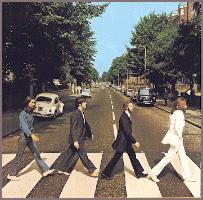
In 1989 the American musicologist Alan W. Pollack started to analyze the songs of the Beatles. He published his first results on internet. In 1991 — after he had finished the work on 28 songs — he bravely decided to do the whole lot of them. About ten years later, in 2000 he completed the analysis of the official Beatles’ canon, consisting of 187 songs and 25 covers. Now the journal on media culture soundscapes.info have ordered this massive work in five categories. And, for your convenience, they have added an alphabetical, a canonical and a chronological index as well as a short introduction.
You can find all materials here.
The work is beautiful and very accurate. For each song Pollack analyze the structure, the style, form, melody, harmony and arrangement. A detailed section-by-section walkthrough follows. This is a very important resource for every people interested in popular music.
Šostakovič 100 years

I hope someone remember that the year 2006 is not only another Mozart’s year, but it is also 100 years from the birth of russian composer Dmitrij Šostakovič (also written Shostakovich or Schostakowitsch, from the cyrillic Дмитрий Дмитриевич Шостакович, born in San Petersburg, September 25, 1906 – dead in Moscow, 1975).
Here at the International Music Score Library Project, you can download several scores.
Here, from the 24 Preludes & Fugues op. 87, you can listen to Prelude and Fugue num. 1 in C, with the fugue on he white keys only.
RIAA let’s you live if you are dead
Come riferisce The Wired Campus, la RIAA (l’associazione americana dei discografici, la cui mission, ormai, è perseguire legalmente chiunque scarichi MP3 illegali dentro e fuori gli USA) ha lasciato cadere la causa contro Larry Scantlebury, recentemente deceduto, invece di continuarla, rivalendosi su moglie e figli, come avrebbe avuto il diritto di fare.
La stessa RIAA ha sottolineato la propria “grande sensibilità” in questo particolare caso, ma il blog Boing Boing ha fatto notare come, subito dopo la morte del sig. Scantlebury, la RIAA aveva concesso alla famiglia solo una sospensione della causa per 60 giorni e la sua abbondanza di sensibilità si sia materializzata solo dopo che il caso era finito su molti giornali e blog (più di 20.000 reference per Scantlebury RIAA su Google).
According to The Wired Campus, the RIAA, (Recording Industry Association of America) has dropped plans to pursue an antipiracy lawsuit against Larry Scantlebury, a defendant who recently passed away, by deposing his children.
A RIAA spokesperson, Jonathan Lamy, emphasized the RIAA “abundance of sensitivity” in dropping this particular case, but Boing Boing, one of its fiercest critics, remarks that the RIAA had only given 60 days to grieve before the RIAA went on to depose the dead man’s children in a renewed suit against his estate and this “abundance of sensitivity” only materialized within 24 hours of this story hitting several large news outlets and blogs (more than 20.000 references for Scantlebury RIAA found on Google).
Seattle Improv Meeting
The Seattle Improv Meeting is a group dedicated to exploring structured improvisation. Utilizing graphical, textural, Flash, verbal and other non-idiomatic scores the group examine the intersection of composition and improvisation. The group primary focus has been Cornelius Cardew’s epic graphic score Treatise (we already post about it) which they currently are in the midst of a complete playthrough, at the rate of 4-6 pages per session (due to the lack of any explicit time scale, the Treatise can also be played in parts, al least a page at a time).
On the site you can also find a guide to Treatise with many materials and links.
Dead Elvis

Yesterday, August 16, it was 29 year from Elvis Presley death. The Elvis fame don’t fall off. As dead, “The Pelvis” earns more than $30 millions each year from royalties on music, films and image. Here in Europe the majors are asking for a copyright extension to 95 years, like the “Sonny Bono Copyright Term Extension Act” which preserved the Mickey Mouse copyright to Disney.
But the Elvis fame outsell even Mickey Mouse. There is a book called “Dead Elvis: A Chronicle of a Cultural Obsession” which collects all the sights of Elvis after his death (no one see Mickey Mouse instead :-)).
In 1993 the composer Michael Daugherty wrote a piece whose title is again “Dead Elvis”. In the program notes, Daugherty says:
In Dead Elvis (1993), the bassoon soloist is an Elvis impersonator accompanied by a chamber ensemble. It is more than a coincidence that Dead Elvis is scored for the same instrumentation as Stravinsky’s Histoire du Soldat (1918), in which a soldier sells his violin, and his soul, to the devil for a magic book. I offer a new spin on this Faustian scenario: a rock star sells out to Hollywood, Colonel Parker, and Las Vegas for wealth and fame.
The style is a sort of post-modern collage that Boulez don’t like (see previous post).
Boulez about tradition
Renewable Music post this statement by Pierre Boulez about the tradition:
There’s a game that we played as children: You sit at a table, the first whispers a sentence in the ear of his neighbor: “The hankerchief is in my pocket”. The entence travels, from ear to ear, ever faster, and how does it go at the end? “The cat is eating chocolate”. Tja. That’s tradition – often only the inheritence of mannerisms. One is imitating gestures without understanding their spirit.
[original here]
I like this idea. I think the comparison is right and meaningful. It takes in account the time also. The first to receive the message can have a quite clear idea of its meaning, but as much as the distance increase, the message becomes unclear.
The Boulez thinking about tradition is clear in this statement from an interview to the Telegraph:
No, I do not believe in tradition, I believe in history, The lessons you get from history are your own lessons, you are teaching yourself. Tradition is simply the mannerism of people who came before you. Tradition is passive, history is active.
Floating in a silent bubble
Note for non-italian readers: here in Italy, August 15 is traditionally vacation. Cities turn into void bubbles of silence and peace. No people call. Even phones are silent.
Floating in the silent bubble of August 15 in a city that seems to be totally still. Swinging in my hammock in a desert quarter, this seems to me the proper music. It is a piece by me, composed in 1980 as furniture for a void flat.
I play on the piano short random-generated diatonic groups of notes (from 1 to 6 notes each). Each group is played one time only. A 6 seconds echo repeat and mix the notes building melodies, form, rhythm and eventually emotions.
Mauro Graziani – Morning Grill (1980) – for piano and delay
A disaster for musicians
The cabin baggage ban after the stopped plot to blow up planes in London is a disaster for musicians.
Performers are used to carry the instruments as cabin baggage or even to buy a separate seat for big ones, like cello or tuba, because insurance do not cover damage if instruments are carried in the hold.
The problem is not only the way instruments are treated by luggage operators. The real problem is the cold. Plane holds have no heating plant and temperatures can go well below minus 10C in the hold of a short flight and below minus 30C during a long high-flying journey. This experience could seriously damage the wood of a 200 years old violin, cello or oboe whose value easily go over € 20.000.
BBC News report that Russian musicians returning from London after the Bolshoi Theatre’s season face an overland journey because of the new UK cabin baggage ban on planes. They are under contract to keep their instruments with them and cannot check them in as hold baggage. Bolshoi musicians borrow their instruments from Russia’s state collection and do not have the right to part with them under any circumstances.
Air travel is an everyday part of the job for many musicians and the cabin baggage ban is a real nightmare for them.
Eruption Music

I read on BBC News that Researchers in Italy have already created a concerto from the underground movements of Mount Etna on Sicily.
Well, judging from the rest of article, this is an out of line way to say that italian scientists (Professor Roberto Barbera of the University of Catania and his team) are trying to get music from seismographs data to reveal inner patterns. The musical method, known as data sonification, adds a further tool to the vulcanologist’s tool box.
Data sonification transforms complex data into audible sounds. It has previously been used to analyse astronomical data from the Shoemaker Levy comet collision with Jupiter. The data sonification software used on Mount Etna was invented by Dr Domenico Vicinanza at the Italian National Institute for Nuclear Physics. It transforms the inaudible seismic waves that travel through the Earth into music.
According to the image, to create the volcanic score, the team take a seismogram – a graphical record of an earthquake that records the timing and intensity of seismic waves – and trace the peaks and troughs on to blank music bars. They then overlay the contours with musical notes. A digital synthesiser can then play the score.
From a composer point of view, the sistem is simple, but we must remember that the intent is not to make a concert, not even to write music, but only to reveal hidden patterns and produce a sort of “sound signature” of the volcano’s behavior.
I remember that, back in the sixties, american composer Gordon Mumma make the same with the intent to produce music and wrote a sequence of pieces called Mograph starting from seismographs data. From his site, here is an extract from Medium Size Mograph (1963) for 4 hands piano with cybersonic modification (Gordon Mumma e Robert Ashley performers).
UBU Web
UBU Web is a completely independent resource dedicated to all strains of the avant-garde, ethnopoetics, and outsider arts.
All materials on UbuWeb are being made available for noncommercial and educational use only.
Originally focusing on Sound Poetry proper, UbuWeb’s Sound section has grown to encompass all types of sound art, historical and contemporary, mainly from Fluxus era (sixties to seventies).
From there, I suggest 2 musical works with graphic score:
- Morton Feldman – The King of Denmark (1964) Max Neuhaus realisation. A very soft piece for percussions all played in ppp in the peculiar style of Feldman’s production of the sixties.
- Cornelius Cardew – Treatise (1963-67) once described as the Mount Everest of graphic scores (193 pages of numbers, shapes and symbols whose interpretation is left up to the performers) played by the Scratch Orchestra at the Cardew Memorial Concert in 1982.
The copyright degenerations (1)
The copyright degenerations are many. IMHO the following is really absurd.
I am an electronic music teacher in the Conservatorio (high level school of music) here in Verona, Italy. As such, my duty is also suggesting books to students. In Italy we have a main book about history and development of electronic music. The book is called “La Musica Elettronica” and is a collection of papers selected by the composer Henry Pousseur, printed by Feltrinelli in 1976. This book is very important because is the only one on which you can find papers about early electronic music written by main composers and translated in italian.
But now this book is no more for sale. The publisher has withdraw from the market because the revenues are not satisfactory. Easy to guess: it’s a technical book for musicologist and composers only (and italian market is no so big as the USA market). So my students can’t buy it. OK, they could make copies, but they can’t because in Italy to copy a book is a crime.
So look at this absurd situation:
- The book is no more available because of the publisher choice
- It follows that neither the publisher nor the authors gain royalties from the book
- So the only way to obtain the book is copying
- Copying is not piracy because the book is no more available
- But copying is a crime
They shoot, he scores…
I always think that the composers of music for film are accountables for the link between contemporary and electronic music with bad feelings like suspense, horror, anxiety, etc.
Now Ennio Morricone, inteviewed by The Guardian, comfirm this hypothesis when, speaking about Dario Argento’s horror films, says
“His films are full of blood, so contemporary electronic music works perfectly and the audience accepted the music as linked to those strong scenes.”
Up ahead in the interview, Morricone shows his right attitude towards the Hollywood majors: he has never moved to Hollywood and he has also refused to learn English. “They said they would give me a villa,” he says of the attempts Hollywood studios made to get him to move. “I told them I liked it in Italy, and there was no need to leave Rome because I only speak with the director about the score, not the studio.”
It’s the Hemingway lesson. Hemingway once summed up his attitude toward the film industry, in spite of all the money he made, by suggesting that the best way for a writer to deal with Hollywood was to meet the producers at the California state line: “You throw them your book, they throw you the money. Then you jump into your car and drive like hell back the way you came.” [cit. by CNN].
50 albums that changed music
To celebrate fifty years of its album chart, The Observer Review’s panel of critics argues for 50 albums that changed music.
IMHO this kind of charts is only a curiosity. It’s something to discuss on the beach when there is nothing else to do. Maybe younger people could find something “new” to listen to.
Of course the musical area is the popular music in the most general meaning. There is no experimental music, and not even the jazz is mentioned (but Miles Davis).
Best positions are:
- The Velvet Underground and Nico (1967), the album with the Warhol’s banana on the cover.
- The Beatles – Sgt Pepper’s Lonely Hearts Club Band (1967)
- Kraftwerk – Trans-Europe Express (1977)
Steve Hubback
Steve Hubback define himself as a “Percussionist and Metal Sculptor”. Born as a drummer, from 1990 he also design and build percussion instruments to be played or used in open air installations, like this live at No Noise Festival 2023.
The sounds are deep and beautiful, with different colors and nuances. You can listen to other tracks from this page.
8 ideas for an iPod nano
The idea is only one: to kill someone.
Nothing strange. I think that, when trying to talk to someone wearing iPod and headphones, everyone feel a strong desire to wrench the iPod and force he/she to swallow it.
Now McSweeney’s Internet Tendency help us with a paper by Keving Fleming with a straight and interesting title: EIGHT WAYS TO KILL SOMEONE BY USING AN IPOD NANO, ACCORDING TO EX-MARINE BRAD COLLUM.
Wow! At last a useful role for that object! You can find the text here.
I especially appreciate the suggestion #6 (but will it work?).
Of course the suggestion #8 cannot work. If someone can digest the lutefisk, can digest the iPod also.
Can you add some other ideas?
Be a little paranoid
Mi spiace dirvelo, ma è possibile, anzi probabile, che l’avvento del digitale nelle telecomunicazioni e nel multimedia equivalga a una ennesima fregata (leggi: limitazione dei diritti) per l’utente/consumatore.
Quello che segue è un esempio molto ma molto limitato rispetto a quello che si può fare e si sta già facendo.
Dunque, state guardando un film sulla vostra nuova TV ad alta definizione con schermo al plasma, quando parte l’inserto pubblicitario. Lanciando qualche maledizione ai pubblicitari e alle aziende che li pagano, annaspate alla ricerca del telecomando con l’idea di approfittarne per dare un’occhiate alle prove del gran premio di formula 1 sull’altro canale.
Impugnando l’oggetto del potere, premete un tasto… e il canale non cambia.
Inoltre, nella parte bassa dello schermo appare in sovraimpressione un messaggio il cui contenuto è, in sintesi, il seguente:
“Tranquilli, il vostro telecomando non è rotto. In base alla nuova politica di questa emittente, la funzione di zapping viene disabilitata durante gli spazi pubblicitari. Dovete capire che questa emittente vive solo grazie alla pubblicità e solo così sarà in grado di offrirvi nuovi e più entusiasmanti programmi. Il vostro telecomando riprenderà pienamente la propria funzionalità al termine dello spazio pubblicitario. Vi ringraziamo per la collaborazione”
Il bello è che la cosa non coinvolge solo chi sta guardando in diretta il programma. Il vostro amico che ha pensato bene di vedersi le prove del gran premio e registrare il film sul nuovo DVD recorder, non si salverà. Negli spazi pubblicitari, infatti, sarà disabilitata la funzione di avanti-veloce.
Non è fantasia e nemmeno pessimismo. È un nuovo brevetto Philips che sta facendo proseliti (vedi Punto Informatico).
Ora considerate che questo è un esempio molto limitato di quello che si sta facendo nel campo del controllo. Quello a cui si vuole arrivare è:
- musica, film e altri contenuti multimediali blindati, non copiabili e possibilmente nemmeno prestabili (e questo è il DRM: digital rights management)
- computer blindati mediante tecnologia TC (trusted computer) che possono consentire soltanto l’accesso o l’esecuzione di software specificamente autorizzato.
Cominciate a preoccuparvi un po’. Date un’occhiata a NO1984.
I’m sorry, but the digital revolution in telecommunication and multimedia is very likely to have a dangerous effect (i.e. right limitations) on users/consumers.
This is a simple and limited example:
Well, suppose you are looking to a movie on your new digital HD TV. The commercial starts and you search for the remote controller to switch to another channel.
You push the button… and the channel don’t change. Moreover, a message appears on the screen:
“Be cool, your controller is good, but following the new policy of this TV station, your remote controller is disabled during the commercials broadcasting. Please, consider that this TV station needs the commercials incomes to offer new and beautiful channels. Your controller will become fully functional after the commercials space. TYVM for your cooperation”
This thing is not limited to the people looking at the movie in real time. Even if you record the movie with your new DVD recorder you will be affected. The Fast Forward function will be disabled during the advertisement’s broadcasting.
It’s not science fiction and it’s not pessimist attitude. It’s a new Philips patent which prevents a user from changing the channel during commercials. According to Ars Technica, ABC is very interested in.
Now, consider that this is a little example of exploiting the digital technologies to control the users. It seem that the aim of the major is:
- music, movies and multimedia contents completely blocked. No copy (even for personal use) and no loan between friends (this is the DRM)
- computers totally under control by the so called Trusted Computing technologies. Only allowed software can run and only allowed (so called “safe“) platforms can go on line.
Mozart, il buon cristiano
Ultimamente nella chiesa cattolica Mozart va per la maggiore. È il compositore che Papa Ratzinger preferisce suonare al pianoforte (insieme a Bach), ma anche il cardinal Martini e perfino Hans Küng hanno confessato la loro passione per il genio di Salisburgo.
Di conseguenza, ecco che l’arcivescovo di Vienna, il cardinale Christoph Schönborn, teologo e allievo di Ratzinger, si preoccupa di far sapere al mondo che Mozart era un vero cristiano e che la sua affiliazione massonica era un atto di pura convenienza. In pratica, come scrive Socci, per Mozart affiliarsi alla Loggia significava entrare in un club pieno di potenti che potevano sostenere la sua attività e le sue languenti finanze familiari (cioè più o meno come ha fatto Berlusconi  ).
).
Dunque, capisco che il fatto che la massoneria fosse stata scomunicata ben due volte (da Clemente XII e Benedetto XIV) possa essere un problema, ma, dannazione, è mai possibile che costoro debbano giustificarsi di fronte al mondo e lanciarsi nell’ennesimo atto di revisionismo storico, solo perché al Papa piace suonare Mozart? Forse che il Papa deve informarsi sulla posizione religiosa di un compositore, prima di suonarlo? Ma il Papa non può ascoltare Wagner, se ne ha voglia?
E poi, come si permettono? Il cardinale Schönborn sarà anche un brillante teologo e un raffinato intellettuale, ma non mi risulta abbia pubblicato alcunché nel campo della musicologia e della storia della musica. Dell’affiliazione massonica di Mozart e delle sue musiche massoniche, invece, sono pieni i libri.
Da dove trae il cardinale Schönborn questa certezza? Lui dice che “Basta leggere l’ epistolario dell’artista per non avere dubbi sulla sua fede convinta”. Ma nell’epistolario di Mozart c’è tutto e di più. Fra l’altro anche degli ottimi esempi, sconsigliati ai bambini, di turpiloquio a sfondo sessuale 😳 , come questa lettera alla cuginetta che non sembra proprio una testimonianza di fede ( 😆 va bene, aveva 22 anni…).
Socci, che secondo me non avrebbe alcuna difficoltà nel sostenere anche che i maiali volano se lo dicessero le gerarchie ecclesiastiche, fa notare che le musiche massoniche sono state scritte per committenza. Ma, accidenti, anche la musica sacra di Mozart è stata scritta su commissione, con l’unica eccezione della grande messa in do minore che, infatti, è rimasta incompiuta.
Non ultimo, sostenendo che Mozart si iscrisse alla massoneria solo per convenienza, costoro gli danno anche, implicitamente, dell’ipocrita.
Io capisco che la chiesa cattolica tenti di appropriarsi di ciò che è bello, ma respingo questo tentativo. Socci afferma che “Mozart esprime il genio del cristianesimo”. Se è così, lo esprime anche in Don Giovanni e Così fan tutte. Ma in realtà, Mozart esprime il genio. E basta.
Insomma, guardando la biografia di Mozart, mi pare si possa dire che, oltre che genio musicale, sia stato libertino per quanto ha potuto, massone quando gli era utile e cristiano quando ne ha sentito il bisogno. Non proprio un esempio di buon cristiano. Un uomo.
A cellphone at Bayreuth

Here is a beautiful image from the Bayreuth Music Festival. It seems to me appropriate to temperature here in Italy: 29 Celsius degree on the night and 37 on the day (Fahrenheit 84 on the night, 98.6 on the day)
It comes from a long report by Anthony Tommasini, chief classical music critic for The New York Times, on which he finally tackle the burning question: what to wear? 🙂
A tasty part of the article is about gossip and curiosity:
- there is no air-conditioning in the house, for fear that the whir of motors would affect the glorious acoustics
- the approaching end of each 60-minute intermission is signaled by an octet of brass players from the orchestra, who appear on the balcony of the King Ludwig annex and play a fanfare or leitmotiv from the coming act. The chosen excerpt is played once at 15 minutes before the start of the new act, twice at 10 minutes and three times at 5
- Everything is superpunctual at Bayreuth. Critics must pick up tickets 60 minutes before a performance.
But, german spirit notwithstanding, even Bayreuth is not free from the huns: in the last moments of “Die Walküre,” Act II, just as Wotan was about to kill the brutish and avenging husband Hunding, uttering “Geh hin, Knecht!” (“Be off, slave!”), a cellphone rang!!