Musica in via di estinzione? (2)

In risposta a erri e max su Musica in via di estinzione?

Avete ragione entrambi.
Il punto è che prendersela con il conservatorio è come sparare sulla croce rossa. Almeno qui da noi. In altri stati, fare musica contemporanea in conservatorio è più facile
È un dato di fatto che i programmi (soprattutto quelli di storia della musica) vanno aggiornati. Attualmente arriviamo all’assurdo che ho trovato una mia allieva prossima ventura (almeno credo), laureata al DAMS ma non ancora diplomata in strumento e passata da me per informazioni sul biennio, più preparata sulla musica contemporanea rispetto a molti di quelli che mi arrivano con un diploma di strumento (mentre noi dovremmo essere la scuola specialistica).
Come è un dato di fatto che quelli che lavorano in conservatorio e amano la musica contemporanea, si danno da fare per diffonderla.
Il problema, secondo me, non sono nemmeno i concerti, almeno a livello di grande città. Se uno vive a Milano, una rassegna all’anno la trova. Ok, non è tanto, ma non è di questo che mi lamento.
La cosa di cui mi lamento è la presenza in internet. Ormai internet è il mezzo principale di circolazione dell’informazione e delle idee. Se su internet una cosa non c’è, per volontà o per ignavia, non esiste perché quasi nessuno può saperne qualcosa.
Facciamo qualche esempio:

  • Un compositore importante oggi: Tristan Murail.
    Se non ne so niente e lo cerco in internet non trovo un suo sito. E questa è già una idiozia.
    Lo trovo in 130.000 reference fra cui wikipedia, mediateca dell’ircam, etc. Leggo la biografia, l’elenco delle opere, la critica e concludo che indubbiamente è importante.
    Inoltre sono incuriosito da questa faccenda della musica spettrale. E adesso che faccio?
    Se sono un compositore o uno strumentista, magari mi compro un cd. In fondo avere i dischi fa parte del mio lavoro e se ho una partita IVA come musicista, posso detrarre i dischi.
    E sono semplicemente un impiegato del catasto che vuole allargare i propri orizzonti culturali? Butto 20 euro alla cieca? Fossero 10, magari…
    Cerco ancora. Al massimo trovo qualche sito che vende cd e mi permette di ascoltare 30 secondi, max 1 minuto di qualche pezzo. Disastro. Sentire 30 secondi di un brano di contemporanea significa solo sentire dei suoni insulsi. Provate ad ascoltare i primi 30″ del bellissimo pezzo di Pierre Henry che c’è qui sotto e poi ditemi.
    Se almeno ci fosse su iTunes, potrei comprare un paio di pezzi per € 0.99 cadauno.
    C’è Murail su iTunes?
  • Un compositore molto importante ieri e anche oggi: Luigi Nono.
    Esiste l’Archivio Luigi Nono da cui posso sapere vita, morte e miracoli. Però, come diceva Elvis Costello, “parlare di musica è come danzare di architettura”. Posso ascoltare una sua opera, almeno una?
    No.
    Idem, come sopra.
    C’è Nono su iTunes?
  • La cosa vale anche per tutti gli altri. Anche per la maggior parte dei giovani in cerca di affermazione. Anche per gli affermati ma non ancora storici (ex. Marco Stroppa, per dirne uno). Paradossalmente Stockhausen, che non ha certo bisogno di farsi conoscere, è uno di quelli che mette più esempi sonori anche se quasi tutti max 1 minuto (tranne due, non fondamentali).

Allora chiedo a compositori, editori, discografici:
in questo modo, pensate di vendere di più, di guadagnare di più, di diventare più famosi? Ma siete sicuri?

Eppure sul sito dedicato a Schoenberg, quasi tutte le sue opere si possono ascoltare in streaming, il che significa che si è arrivati ad un accordo con eredi, discografici e editori.
Cosa significa? Che adesso Schoenberg non si esegue più? Che non si vende più? Che non si vendono più partiture?

La normalità delle cose sarebbe che sul sito di qualcuno interessato a vendere quella musica o a vedere più gente ai propri concerti ci fossero almeno un paio di opere fondamentali per capire quell’autore liberamente ascoltabili.
Così il nostro impiegato del catasto potrebbe decidere se Murail lo interessa o meno e nel primo caso andrebbe a comperarsi qualche cd, sapendo di non buttare via i soldi.
Così, sia lo strumentista che il compositore, sentito un brano interessante, comprerebbero anch’essi qualche cd e magari anche qualche partitura.

Infine, dal punto di vista di un compositore, tutta questa faccenda ha dei risvolti molto idioti.
Perché uno che scrive musica che sa essere per pochi, dovrebbe dare gran parte dei suoi soldi a qualcuno che per lui fa ben poco?
Alcuni miei colleghi americani famosi quanto me (cioè poco), hanno cominciato a mettere quasi tutto su internet. Tutte le partiture e gli MP3 di vari pezzi. Inoltre, vendono i propri cd da soli o tramite una netlabel.
Uno di questi mi raccontava che un suo brano (non ricordo se un trio o un quintetto) aveva avuto ben 20 esecuzioni nel 2006. Mi diceva:

gli interpreti in cerca di materiali arrivano sul mio sito, ascoltano il pezzo; gli piace; scaricano la partitura, vedono che non è troppo difficile ed è stampata bene e tutto quello che devono fare è studiarla. Scaricano le parti in pdf e provano. Spesso mi mandano le registrazioni delle prove e io dò qualche consiglio. Magari prendo un volo da $30 e ci vado.
In questo modo ho guadagnato i diritti per 20 esecuzioni [i suoi lavori sono depositati all’ASCAP; nota mia]. Non sono pochi soldi. Non credo che sarebbe successo se avessi avuto un editore.
Inoltre, nei programmi di sala faccio indicare sempre il mio sito su cui è possibile comprare il mio cd in forma di file, comprese le immagini di copertina e le note, a $8. Così, se a qualcuno il pezzo è piaciuto, si compra anche gli altri brani che non sono liberamente disponibili e in un anno ho venduto quasi 200 copie per circa $1500. Se lo avessi dato a una casa discografica avrei dovuto vendere 1500 copie per guadagnare così. Forse nemmeno Stockhausen vende tanto.

Ora, so bene che qui non siamo negli USA, però forse è il caso di far fuori un po’ di intermediari. Noi dobbiamo prendere in mano il nostro destino. La gente non compra più i cd nei negozi. Quello a cui dobbiamo arrivare è a poter gestire in proprio le nostre produzioni, come qualcuno ha già cominciato a fare.
Domanda: qui in Italia, io posso, legalmente, vendere dal mio sito un brano musicale che ho depositato in SIAE? (ovviamente pagando le tasse sugli incassi, come parte del mio imponibile)

Boulez 82

boulez

March 26 was the Pierre Boulez 82th birthday.
Here is the opening bars of Piano Sonata No. 1, written in 1946, when he was twenty-one years old.
Click the image to enlarge.

Il 26 marzo Pierre Boulez ha compiuto 82 anni.
Anche noi lo ricordiamo pubblicando le battute iniziali della sua Prima Sonata per piano scritta a soli 21 anni.
Cliccate sull’immagine per ingrandire.

[from Monotonous Forest]

Musica in via di estinzione?

Ok, forse il titolo è eccessivo; in fondo la musica contemporanea può anche essere considerata un optional, però la sua situazione è piuttosto drammatica.
Principalmente a causa dell’opposizione dei discografici e degli editori, ma anche per la cecità di buona parte dei musicisti, la musica di produzione recente su internet praticamente non esiste.
Chi, come il sottoscritto, gestisce un blog dedicato alla musica sperimentale, se ne rende conto pesantemente.
L’unica musica che si trova facilmente è quella distribuita dalle netlabel. Si tratta, nella maggior parte dei casi, di pop o similia, più raramente di musica sperimentale non accademica e praticamente mai di musica contemporanea accademica.
Quello di cui non riesco a rendermi conto è come i compositori possano essere così ciechi. Sui loro siti, almeno su quelli dei pochi che ce l’hanno (e già questo è indice di idiozia diffusa), molto raramente si trova un po’ di musica da ascoltare. E quando dico “un po’ di musica” intendo dire alcuni brani, interi, non un minuto su 10. Nell’Archivio Luigi Nono, tanto per fare un esempio, non c’è un solo pezzo da ascoltare.
Come pensino di incrementare il proprio seguito se nessuno può ascoltarli, è un mistero.
Nel caso della musica classica, la situazione migliora almeno un po’. Essendo ormai scaduti i diritti d’autore, se l’interprete acconsente e la sua esecuzione non è su disco, può essere diffusa, ma nel caso della musica contemporanea non è possibile, a meno che non si muova il compositore in persona, perché, a quanto pare, sia i discografici che gli editori sono sordi al riguardo.
Ora, considerate che, anche nel nostro conservatorio e fra i compositori, pochi conoscono nomi come Murail. Grisey, Crumb, Gubaidulina. Al massimo li conoscono di nome, ma non hanno ascoltato quasi nulla. E se fate un sondaggio, vedrete che anche le opere dei compositori storici (Berio, Nono…), non sono così conosciute. E non mi sembra strano: a meno di sforzi, non è possibile ascoltarli.
Recentemente, in un mondo sensibile sia alla tecnologia che all’auto-promozione, come quello americano, si nota qualche segno di cambiamento. Vari compositori, soprattutto giovani o non ancora affermati, hanno iniziato a mettere brani e partiture in rete e anche qualche europeo lo fa.
Ma è sempre troppo poco e non riesco proprio a capire perché non lo capiscano.

Le Voile D’Orphée

Pierre Henry’s “Veil of Orpheus”, probably the first major work of symphonic concrete music, though composed for an opera (“Orpheus 53”, written with Pierre Schaeffer for the Donauescliingen Festival). At the time it stood out from among the many experiments as finished and significant; it sounds as valid today despite the great progress made by the technical evolution upon which electro-acoustical music so closely depends.
I say symphonic because the score calls for a large number of “concrete instruments” the history and specifications of which we need not go into here; indeed one of the essential conditions of concrete music is transmutation, and the actual origin of a sound is relatively unimportant. But Pierre Henry profoundly individualizes instruments and instrumental (or choral) ensembles, as would classical composers, without adopting classical molds. What is astonishing is that here in the infancy of concrete music he had already reinvented everything: a mysterious quality in the orchestral fabric, a large, complex rhythmic structure, a polyphony of rhythms and sound planes obeying no known rules and nevertheless achieving a unity, an internal logic, that cannot be gainsaid.
[excerpt from Notes From Philips 836 887 by Jacques Lonchampt]

Can download both versions in loseless flac format from the AvantGarde Project

Pierre Henry – Le Voile D’Orphée I (1953)

RIAA peggiore

golden shit trophy

According to The Consumerist, The RIAA won The Consumerist’s “Worst Company In America 2007” reader poll.
Congrats to you, oh RIAA! Your lucky golden shit trophy will be arriving at your headquarters shortly.

Nel poll di Consumerist (associazione di consumatori USA), la RIAA (associazione dei discografici USA) è stata eletta peggiore compagnia americana 2007 con il 53.8% dei voti, battendo nientemeno che Halliburton, la multinazionale texana in cui ha lavorato il vice-presidente Cheney sempre sull’orlo dello scandalo per i suoi profitti legati alla guerra in Iraq.
Di conseguenza, la RIAA vince il “lucky golden shit trophy”, premio più piccolo, ma molto più esplicito del tapiro d’oro (vedi figura).

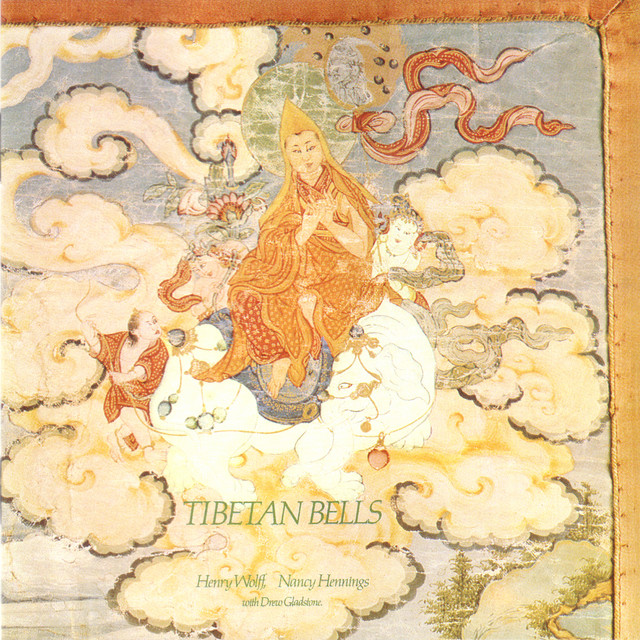
Tibetan Bells

Maybe someone remember this 1973 vinyl (now out of print) called Tibetan Bells by Henry Wolff and Nancy Hennings.

Not so deep from a composer’s point of view but beautiful sounds.

Non so se qualcuno di voi ricorda questo vinile del 1973 ormai fuori catalogo, fatto tutto con campane tibetane e firmato Henry Wolff and Nancy Hennings.
Compositivamente debole, ma gran suono.

from Henry Wolff and Nancy Hennings – Tibetan Bells (1973)

Khumbu Ice-Fall

Chain Music

Sul sito di Sakamoto trovate Chain Music, una catena musicale fra vari artisti mantenuta in vita finché continua la guerra in Iraq.
Sakamoto scrive:

In March, 2003, when the US invaded Iraq, I felt that I had to advocate peace over war, so I started this little web project.
Even though the 100,000-plus Iraqi civilian and the 3,000-plus US military lives lost to date can’t be brought back, I want to keep this project alive and open until the war has ended, until peace comes to Iraq.
The idea is to chain musical pieces from one artist to another, like a chain letter.
The purpose is to musically mark the passage of time that Iraq is in a state of war, to mark the steps to peace, to take each day that there is war and build a musical memorial to the desire for peace as well as to mark off the time of war.
So far 22 artists have contributed their musical pieces, adding on to the existing work vertically as well as horizontally, overlaying or extending the existing creation.
There are no rules how to contribute musically, except that the contributor must not eliminate any of the existing music as he or she adds to it, because the existing music is the result of the artistic contribution of the other artists.


Questo è il link / Here is the link

Partecipano nomi di primo piano.

Att.ne: il file, si ascolta in linea via flash, ma il caricamento è molto lungo perché il tutto ormai dura 54 minuti. Dovete premere start perché inizi il caricamento. Meglio scaricare l’MP3.
Warning: the file is a flash audio/video stream 54 minutes long and it takes a lot to load. Must press start to load. Better download the MP3.

Onesto o poco professionale?

An expectant hum filled the Brighton Dome as the thousand-strong audience took their seats for the world premiere of A British Symphony.
They had travelled from all over the country in the hope of hearing something extraordinary from Andrew Gant, the respected composer who is also the Queen’s choirmaster. Instead, they heard it from Barry Wordsworth, the conductor of the Brighton Philharmonic Orchestra (BPO).
Moments before the afternoon’s performance was due to begin he announced that he “did not believe” in the work and it would therefore be hypocritical to perform it. Gant’s patriotic homage to the British Isles had been replaced by Mendelssohn’s Italian Symphony.
[from The Times]

So, what do you think about. Please, vote and/or drop a line.

Secondo il Times del 10 marzo, Barry Wordsworth, direttore stabile della Brighton Philharmonic Orchestra si è rifiutato di dirigere un brano del compositore e organista contemporaneo Andrew Gant intitolato A British Symphony. Il tutto è accaduto il 25 febbraio, a poche ore dalla rappresentazione (nel programma della serata, il brano è stato sostituito dalla Sinfonia Italiana di Mendelssohn).
Per spiegare il proprio comportamento Wordsworth ha dichiarato che “non credeva nel pezzo”.

L’ambiente si è diviso in due partiti: quelli che lodano l’onestà intellettuale e quelli che criticano la mancanza di professionalità.
Così, d’istinto, mi viene da iscrivermi al primo (semmai criticando il fatto che non lo abbia detto prima), ma poi ho pensato alle volte in cui ho fatto l’esecutore in qualche brano di musica elettronica che non mi piaceva più di tanto, sempre sforzandomi di fare bene quello che andava fatto e magari cercando di metterci qualcosa che me lo facesse amare almeno un po’ e così non sono più tanto sicuro.

Voi che ne pensate?
Provo a lanciare un altro poll. Naturalmente potete anche commentare.

Create polls and vote for free. dPolls.com

faune y seis tormentas

faune & seis tormentas together in this release titled “zone de guerre” (2006) for the netlabels unshell records and pathmusick by Alex Cortex.

faune e seis tormentas insieme in questo “zone de guerre” del 2006 per le netlabel unshell records e pathmusick di Alex Cortex.
Trovo affascinanti queste fasce sonore composte di pochissimi elementi in perpetuo loop, quasi un residuo di qualcosa che è già stato a cui noi non abbiamo assistito e di cui non sappiamo nulla.
In effetti questa situazione mi ricorda un po’ Stalker, non tanto il film di Tarkovskij, quanto il racconto da cui è tratto: quel Picnic sul ciglio della strada (1971) dei fratelli Arkadi e Boris Strugackij

Come dopo un picnic sul ciglio della strada, a metà del viaggio fra una galassia e l’altra, gli extraterrestri hanno mollato i propri avanzi sul prato. “Avanzi” che hanno cambiato radicalmente leggi fisiche e natura di quei luoghi..

faune y seis tormentas – zone de guerre

zone 1
zone 2
zone 3
zone 4

Il paradosso di Google: la moneta cattiva scaccia la buona

Chi dice che la legge di Gresham non si applica a Internet?
Qualche giorno fa, per scrivere il post sul Well Tuned Piano di La Monte Young, ho cercato su Google “la monte young well tuned piano” (senza le virgolette, of course).
La classifica dei link in prima pagina è la seguente:

  1. Amazon.com (che naturalmente non mi dà informazioni sull’opera, vuole solo vendermi i dischi, che peraltro non ha)
  2. Kyle Gann (la pagina sulla just intonation che ho citato; mi è servita, ma non era essenziale)
  3. Mela Foundation (la fondazione di La Monte Young che però riporta solo citazioni stampa sull’opera)
  4. Kyle Gann (di nuovo: ha la stessa pagina in due link diversi)
  5. Avantgarde Music di Scaruffi (la prima pag con contenuto realmente informativo su cui si può essere d’accordo o meno, ma comunque è informativa)
  6. MG Blog (sì, mi fa piacere notare che, in soli 2 giorni, il nostro blog è sesto; in blogsearch è addirittura primo, ammesso che la lingua del vostro browser sia l’italiano. Naturalmente quando ho fatto la ricerca non c’era)
  7. Musica su Last.fm (che mi dà 4 estratti di 30 secondi ciascuno su pezzi che non sono The Well Tuned Piano)
  8. New Music Box (con una intervista in cui si parla anche di quest’opera)
  9. Dusted Magazine (altra pagina informativa)
  10. Vinadio2003 (su una installazione che omaggia l’opera)

Questi sono i primi 10. Solo 2/10 link offrono vera informazione sull’opera. Gli altri, 8/10, o vogliono vendermi qualcosa o sono tangenti all’opera. Nelle pagine che seguono, le cose non cambiano.

In definiva Google mi dato un 20% di link utili alla comprensione dell’opera e il resto è fuffa.
OK. Forse riflette l’entropia del pianeta, ma non dovrebbe farlo. Il page rank (la conta, sia pure pesata, dei link a quella pagina) è stato osannato come un sistema per trarre un ordine dal caos, mentre invece adesso è un semplice sondaggio.
Il dato di fatto è che ormai, Google, Technorati e altri indici non misurano l’importanza di un sito o di un blog, ma soltanto la sua popolarità. In pratica applicano una equazione secondo cui popolarità = importanza. E questo è un problema perché una cosa del genere può essere vera per il grande fratello, ma non, per esempio, per la fisica teorica. O per la musica sperimentale.

Mmmhhh. Viene quasi da avere dei dubbi anche sulla democrazia…

Ionisation

Ionisation by Edgar Varèse on YouTube.

Solistes de l’Ensemble intercontemporain
Elèves du Conservatoire National Supérieur de Musique et de Danse de Paris
Susanna Mälkki, direction

Percussions : Gilles DUROT, Samuel FAVRE, Victor HANNA (Ensemble intercontemporain) / Matthieu DRAUX, Adelaide FERRIERE, Jean-Baptiste BONNARD, Noam BIERSTONE, Christophe DRELICH, Julien LACROUZADE, Thibault LEPRI, Sylvain BORREDON, Othman LOUATI
Piano : Sébastien VICHARD

Enregistré à la Cité de la musique le 20 novembre 2012, dans le cadre du Festival d’Automne à Paris

π-Day

pi grecoSpero che abbiate un font greco altrimenti non vedrete mai tutto il titolo.
Il 14 marzo era il π-Day (Pi greco day). Questo perché gli anglosassoni scrivono prima il mese, poi il giorno e quindi esce 3.14.
Generalmente si celebra alle 1.59 p.m. perché π fa 3.14159.
Incidentalmente era anche il compleanno di Albert Einstein.
È un po’ buffo taggare questo post con Scienza, comunque… in questa pagina trovate pi-greco con 4 milioni di decimali.

The FreeSound Project

The Freesound Project (by the Universitat Pompeu Fabra, Barcelona) aims to create a huge collaborative database of audio snippets, samples, recordings, bleeps, … released under the Creative Commons Sampling Plus License. The Freesound Project provides new and interesting ways of accessing these samples, allowing users to

  • browse the sounds in new ways using keywords, a “sounds-like” type of browsing and more
  • up and download sounds to and from the database, under the same creative commons license
  • interact with fellow sound-artists!

They also aim to create an open database of sounds that can also be used for scientific research. Many audio research institutions have trouble finding correctly licensed audio to test their algorithms. Many have voiced this problem, but so far there hasn’t been a solution.

T-clock

Enough beating about the bush, the T-shirt clock does exactly what it says on the tin. It’s a t-shirt with a clock in it. This technological marvel is 100% cotton and has a fully functional Electro Luminescence (EL) panel stuck to the front of it. The clock is powered by a discreet battery pack that tucks into a pocket inside the T. The super clear green clock looks good during the day or at night and as an added bonus in the dark the UV reactive circuit board adds to the effect. It can be left on/off continuously or it can be set to one of eight different modes to conserve the battery power. There’s even a stop clock feature. The clock is powered by 4 x AAA batteries and battery life is anywhere from 12 – 36 hours depending on flash mode you select.
If you like being the centre of attention or you just don’t like wearing your own watch then this is for you. Ideal for parties, gigs, festivals and raves t-shirt clock will have the crowds staring at you time and time again!!. Oh yeah just one more thing, this t-shirt is hand wash only (as if you needed telling)!
[$89.95 from groovygadgetsonline]

La vedete? È una T-shirt con un orologio sopra. Ma l’orologio non è stampato. Funziona. C’è anche una funzione cronometro.
Il problema è che dovete tirarvi dietro anche 4 batterie AAA con autonomia da 12 a 36 ore in base alle modalità di funzionamento (il display si può spegnere o lampeggiare).
L’altro punto è che vi trasforma in un orologio ambulante: gli altri leggono bene l’ora, voi no.
Costa $89.95 da groovygadgetsonline

Però l’idea è interessante. In tempo di wireless è facile pensare a magliette con film che vanno, news, immagini e magari, visto il numero di webcam non protette in giro, prima o poi, passeggiando per un aeroporto qualcuno vedrà, sulla schiena di qualcun altro, la moglie che se la spassa con il classico migliore amico…

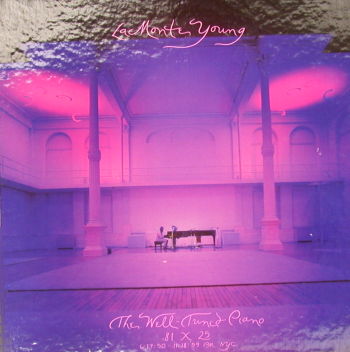
Il pianoforte ben temperato

la monte youngThe Well-Tuned Piano is La Monte Young’s magnum opus, the work in which many of his theories are crystallized and laid out for the listener. It’s a massive solo piano performance, lasting a little over five hours, during which Young displays virtually every combination of chords that he deems special, seguing one into another. At the end of the day, the question is: Given the formal system and obviously huge amount of time devoted to its investigation, is the resultant music beautiful enough to justify the large amount of hype accompanying the project? The first thing that strikes the listener is the sound of the piano itself, a Bosendorfer that has been tuned in just intonation. [here is a page about the tuning]
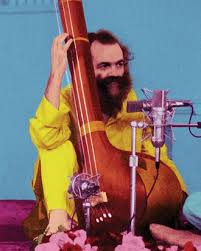
The sounds of the notes themselves are fascinating and, to Western ears, exotic enough to compel attention; one hears harmonies that sound strangely alien yet apropos. Young keeps the sustain pedal pressed almost throughout, the harmonics surrounding each chord like a cloud. The music itself, to the extent that one can dissociate it from the theory involved, is where things get a bit chancy. The themes tend to alternate between idyllic ruminations and rumbling, pulsating passages, each of which more than a bit reminiscent of the often overindulgent solo work of Keith Jarrett. The titles to the sections may impart an idea of the new age-y drift that sometimes occurs here. There’s simply not a great deal of meat to it, as though Young expects that the sheer beauty of the tuning system is enough. Once one gets acclimated to it and accepts it as an alternative (and quite attractive) way to tune a piano, inevitably one comes back listening for deeper meaning and structure. And there’s not much there. Indeed, there’s more than a whiff of arrogance to the project, such as in the “Playback Suggestions” printed at the beginning of the large (and very informative) booklet accompanying the set. When one has found the correct volume setting, allowing the sound of the loudest sections to fill the room, it suggests that the listener “may eventually want to mark [the setting] in order to avoid adjusting the volume control as you listen.” Yeah, OK. Young was a vitally important figure in the genesis of minimalism as a musical movement, and contributed numerous crucial ideas to the avant-garde from the late ’50s onward. Fans of his will obviously require The Well-Tuned Piano in their collections. Newer listeners may be better served by picking up smaller-scale releases like The Four Dreams of China before making the commitment. There’s certainly a danger otherwise that, after five hours of music that has more than its share of noodling, the listener might well wonder what all the fuss was about.
Brian Olewnick, All Music Guide

Notes: Eb E F F# G G# A Bb B C C# D
Ratios: 1/1 567/
512
9/8 147/
128
21/
16
1323/
1024
189/
128
3/2 49/
32
7/4 441/
256
63/
32
Cents: 0 177 204 240 471 444 675 702 738 969 942 1173
Temp Cents: 0 100 200 300 400 500 600 700 800 900 1000 1100

La Monte Young – The Well-Tuned Piano (excerpt from section 1)

The Place of the Solitaires

In 2005 in started a set of pieces for percussion; the first, “The Pulling into the Sky” (which you will also find a little further down this page), was quickly finished and I had started the second when I got a little sidetracked. Not quite two years later I finally returned to the piece, and this is the result. This movement introduces melodic percussion into the ensemble: bells, marimba and vibraphone. The title is from a Wallace Stevens poem, which when you find it will explain the piece as well as anything else can.
[Steve Layton]

Un altro buon lavoro di Steve Layton per sole percussioni, “The Place of the Solitaires” del 2007, concettualmente collegato con un brano precedente, sempre per percussioni, “The Pulling into the Sky”, scritto due anni prima.
Rispetto al precedente, questo nuovo movimento utilizza anche un set di percussioni melodiche: campane, marimba e vibrafono.
Il titolo si ispira a un poema di Wallace Stevens, che riportiamo, e che, secondo Steve, spiega il brano meglio di ogni altra cosa (…un luogo di perpetuo ondeggiare…)

Steve Layton – 2 pieces for percussion ensemble

Wallace Stevens – The Place of the Solitaires

    Let the place of the solitaires
    Be a place of perpetual undulation.

    Whether it be in mid-sea
    On the dark, green water-wheel,
    Or on the beaches,
    There must be no cessation
    Of motion, or of the noise of motion,
    The renewal of noise
    And manifold continuation;

    And, most, of the motion of thought
    And its restless iteration,

    In the place of the solitaires,
    Which is to be a place of perpetual undulation.

The Seasons

The Seasons consists of nine movements: Prelude I – Winter – Prelude II – Spring – Prelude III – Summer – Prelude IV – Fall – Finale (Prelude I).
It is a sweet and lyric composition, very much unlike Cage’s other works. Like in Sonatas and Interludes and String Quartet in Four Parts it is indicative of Cage’s interest in Indian aesthetics. In The Seasons Cage uses the Indian signification as inspiration: Winter as quiescense, Spring as creation, Summer as preservation and Fall as destruction. It is one of the compositions where Cage tried to “imitate nature in her manner of operation”, which is, according to the composer, one of the ideas from Indian philosophy.
The work’s overall rhythmic strusture is 2-2-1-3-2-4-1-3-1. This structure also expresses the relative lengths of each of the nine movements.
Cage first composed the piano version. The orchestration was made with the help of Lou Harrison and Virgil Thomson.
Here you can listen to an excerpt (Prelude I – Winter) in both versions (see links below).

John Cage – The Seasons (1947)

solo piano version – Margaret Leng Tan, pianoforte

orchestral version – BBC Symphony Orchestra conducted by Lawrence Foster

Se un suono non ti piace è perché non l’hai ascoltato abbastanza

Difficile scrivere poche righe su La Monte Young.
Nato nel 1935, considerato come uno dei primi minimalisti e celebrato dalla suddetta scuola, sebbene formalmente abbia molto poco in comune con compositori come Glass e Reich, i suoi lavori sono considerati fra i più importanti e radicali nel panorama dell’avanguardia post-bellica e sperimentale.
Ispiratore del gruppo Fluxus, le sue composizioni concettualmente minimali investono la stessa definizione di musica. Molti dei suoi pezzi, infatti, sono costituiti da un eterno bordone.
Ricordo che, nella mia ormai lontana gioventù, 8) rimasi colpito da una sua partitura costituita unicamente da due note in 5a (mi pare SI e FA#), con la scritta “to be held for a long time”. Probabilmente il brano più lungo con la partitura più corta mai composto.
Rimasi anche colpito da una sua riflessione che investiva la nostra considerazione del tempo:

Se un giro di blues dura 12 battute, perché non può durare 12 giorni? 4 giorni in DO, 2 giorni in FA…..

Autore del Well Tuned Piano (il pianoforte ben temperato), un’opera monumentale per piano solo accordato secondo la scala naturale (just intonation), la cui durata in alcune esecuzioni supera le 6 ore ed è documentata in una edizione in 5 CD da Grammavision (e poi in DVD per la sua etichetta Just Dreams), è stato un pioniere dello studio degli effetti generati da intervalli musicali naturali mantenuti a lungo e insieme con Marian Zazeela ha realizzato una serie di Dream Houses, ambienti in cui si combinano i suoi tappeti di onde sinusoidali in just intonation con le sculture di luce in forme simmetriche e quasi calligrafiche di Zazeela.
Ha anche studiato musica classica indiana con Pandit Pran Nath a cui è dedicato questo brano composto unicamente da un bordone di tampura e messo in linea da AnaBlog.
È lungo e sempre uguale e ricordate, se un suono non vi piace è perché non l’avete ascoltato abbastanza.

La Monte Young – The Tamburas of Pandit Pran Nath

Out of the Mouths of a Thousand Birds

berry

“I work with blocks of sound in the same way a zen koan might work, in the sense that these “blocks” are supposed to be “triggers” which though they do not contain enough information in themselves to impart enlightenment, may possibly be sufficient to unlock the mechanisms inside one’s mind that leads to enlightenment”.
[Keith Berry]

Io lavoro con blocchi di suono nello stesso modo in cui lavora un koan zen, nel senso che questi “blocchi” possono essere considerati come dei “grilletti” che, nonostante nessuno di essi contenga abbastanza informazione da portare all’illuminazione, è possibile che riescano a sbloccare quel meccanismo nascosto nella mente che conduce all’illuminazione.

Really a pretentious statement this one by the English musician Keith Berry.
But this is part of everyone’s personal path to music and if Berry needs this kind of suggestions to create his environmental and organic clusters, it’s ok by me. I enjoy the sound…

Una dichiarazione maledettamente pretenziosa questa del musicista inglese Keith Berry, così come è pretenzioso il suo sito.
Ma questo fa parte del cammino personale di ciascuno e se Berry ha bisogno di queste suggestioni per produrre i suoi cluster ambientali e quasi organici, faccia pure. È il suono che mi interessa…

Fennesz/Sakamoto

fennesk sakamoto

Part of a 19 minute overture recorded by Claudia Engelhart at the Auditorium della Parco Musica, for the Romaeuropa Festival. This release features a laptop duet between Christian Fennesz and Ryuichi Sakamoto at the start of their performance at Sala Santa Cecilia, Rome on 28th November 2004 – an introduction to a new collaboration between two highly regarded composers.
The whole performance is available as EP from Touch Tone netlabel.

Fennesz/Sakamoto – Live at Sala Santa Cecilia – estratto/excerpt

Dalle 6 alle 7: Danses

frederikeThe Danses sacree et profane were composed by Claude Debussy (1862–1918) at the request of the firm of Pleyel, manufacturers of musical instruments. In 1894 Gustave Lyon had invented a new mechanism for the harp, which provided the full chromatic scale by the use of twelve strings to the octave, crossing each other at an angle so that the diatonic and chromatic notes were clearly distinguished, yet both accessible to the player’s hands. A rough analogy is the arrangement in which a piano has the black keys raised above the white. The previous design of the harp had had only seven strings to the octave, with a series of pedals supplied to provide chromatic notes.
Some time later, a class in the new instrument was established at the Brussels Conservatoire. As a test piece, and also, probably, to promote the use of this instrument, Pleyel and the Conservatoire commissioned a work from Debussy. The Danses were first performed in 1904. As a publicity exercise for the chromatic harp they seem to have been a complete failure; performers and composers continued to employ the standard harp with the pedal mechanism (watch our soloist’s feet today!)
However they were much more successful from the artistic point of view, and the Danses sacree et profane have become an important part of the harp repertoire.
The Danse sacree is a piece of restrained and gentle harmonies, its “sacred” character suggested by the unison line of the opening and the parallel chords first heard at the entry of the harp. A middle section features more complex harmonies, with brief solos from violin and viola; the opening harp theme returns, and subsides onto a bass line picked out by the soloist’s left hand. This leads without a break into the Danse profane.
The “profanity” of the second dance is not a matter of vulgarity (can anyone imagine Debussy writing vulgar music?) but simply proclaims it, in contrast to the first, as “secular” or “worldly”. It begins, in fact, as a valse lente: there is a suggestion of Erik Satie’s Gymnopedies for piano, which Debussy had orchestrated in 1896. In a middle section the tempo drops by half, the strings fall silent, and the harpist provides her own accompaniment with six–against–four, five–against–three and even more complex rhythmic patterns. The valse returns, and builds up to a glowing climax of string chords and harp glissandi.

Le due Danses (sacrée et profane, 1904) di Debussy, per arpa cromatica e orchestra, sono state composte su commissione per valorizzare un nuovo tipo di arpa, con due file di corde, ideato per rimpiazzare i nuovi modelli a pedali.
Nonostante la sua adozione ai conservatori di Parigi e Bruxelles, lo strumento ebbe vita breve a causa delle difficoltà di diteggiatura e altri problemi, ma le Danses di Debussy, invece, ebbero successo e divennero in breve una parte importante del repertorio dell’arpa tradizionale.
L’aspetto “sacro” della prima è suggerito dagli unisoni e dagli accordi paralleli della parte iniziale, mentre il carattere “profano” della seconda deriva dall’andamento di valzer lento un po’ alla Satie, di cui Debussy aveva orchestrato, pochi anni prima, le famose Gymnopedies.

Claude Debussy – Danse sacrée et danse profane

Frederike Wagner, arpa
Sophia Larsdotter, Andrea Pasquetto, violini
Ragnhild Hammer, viola
Andrea Battistoni, violoncello
Anna Zerlotto, contrabbasso
Esecuzione registrata presso il Conservatorio Dall’Abaco, Verona, 30/01/2007

Un compositore…

A composer is a person who goes around forcing their will on unsuspecting air molecules, often with the assistance of unsuspecting musicians.

Un compositore è una persona che se ne va in giro imponendo la propria volontà a ignare molecole d’aria, spesso assistito nel suo scopo da ignari musicisti.

Frank Zappa
from Kill Ugly Radio

Dalle 6 alle 7: Pour le Piano

tessa

Claude Debussy began his three movement piano suite, Pour le piano, L. 95, around 1896 and completed it in 1901. There was a great deal of evolution in the composer’s style during these years; his songs and orchestral writing had become wholly unique. It was not until this late date in his career (he was in his late thirties when he began this suite) that Debussy choose to incorporate the idiomatic challenges of the piano into his personal vocabulary.
[from Answers.com]

Iniziata nel 1894/96 e terminata del 1901, la suite Pour le Piano è un’importante opera di transizione nel linguaggio di Debussy: da una parte la scrittura pianistica risente ancora di influenze determinanti (i claviembalisti settecenteschi nei movimenti esterni, Satie nella sarabanda centrale), ma dall’altro vi si scopre una grande disinvoltura e originalità.
Il primo brano, Prélude (Assez animé et très rythmé, in La minore), fu probabilmente l’ultimo ad essere scritto: è un pezzo è pieno di slancio e di carattere quasi rude, che sembra liberamente ispirarsi ai Preludi e alle Fantasie per strumento a tastiera di Bach. La successiva Sarabande fu composta verso la fine del 1894, ed in origine doveva far parte delle tre Images inédites dedicate a Yvonne Lerolle. E una pagina dalla linea melodica purissima e dall’andamento nobilmente composto, e costituisce probabilmente il momento più alto dell’intera composizione. Chiude la suite una Toccata di grande brillantezza (composta con ogni probabilità nel 1896), una sorta di moto perpetuo in cui fanno capolino le ombre dei grandi clavicembalisti del Settecento, con François Couperin e Domenico Scarlatti in testa.

Claude Debussy – Pour le Piano – Tessa Catchpole, pianoforte

Esecuzione registrata presso il Conservatorio Dall’Abaco, Verona, 30/01/2007

OK

Da un po, ormai, gira in rete una mail del tipo “non tutti sanno che” in cui si attribuisce con certezza l’etimologia di “OK” ai bollettini della guerra di secessione, nei quali sembra si scrivesse “0K” per “zero killed”, notizia positiva che significava che, nell’ultima azione, nessuno dei nostri ci aveva rimesso la pelle.
A riprova che l’universo non è mai user-friendly, questa storia è ben lontana dall’essere una verità certa, ma è solo una fra una moltitudine di ipotesi.
Riporto quanto affermato da wikipedia.

La prima apparizione certa dell’acronimo, nella forma “o.k.”, risale al 23 marzo 1839 nel “Boston Morning Post”.

A dispetto della sua diffusione universale, non vi è la benché minima concordanza sulla possibile origine della locuzione. Ecco alcune delle ipotesi più comuni:

  • potrebbe derivare dalla lingua dei Choctaw, una popolazione nativa americana, dove figurava la parola “okeh” con la stessa pronuncia e lo stesso significato
  • secondo un’altra opinione, starebbe per “Oll Korrect”, cioè “all correct” scritto deliberatamente in modo sbagliato per enfatizzarne il significato
  • in lingua Bantu “uou-key” (trascrizione fonetica) sta per “certamente sì”: l’espressione potrebbe così essere filtrata dalla lingua degli schiavi africani nell’uso americano
  • prima delle elezioni presidenziali del 1840 a New York venne fondato l’O.K. Club, un circolo di sostenitori del presidente democratico Martin Van Buren, il cui nome alludeva a “Old Kinderhook”, nomignolo del presidente dal suo luogo di nascita, Kinderhook, New York
  • durante la Guerra di secessione americana, nei bollettini dal fronte, sarebbe stata usata l’abbreviazione 0K, cioè “zero (che si può anche pronunciare “O”) killed”, “zero uccisi”
  • alcuni sostengono che OK sia semplicemente il contrario di KO, assegnandogli conseguentemente il significato opposto
  • innumerevoli sono le teorie che riconducono la locuzione all’acronimo di un nome proprio, solitamente di una persona preposta al controllo di prodotti, trattative, contratti, elenchi o simili.

Goto80

With roots in both catchy and extreme music plus an unhealthy obsession with errors and variation, Goto80 delivers eclectic music based on 8-bit technology. Since 10 years Goto80 has been praised as a datapriest both in the demoscene aswell as at pop and club stages around the world, with some 80 gigs in Europe, America and Australia. Within the 8-bit sound he seamlessly blends styles ranging from soothing ambience to furious breakcore, although often recognized for his melodic poppy songs. Apart from some commercial releases, he spreads his music for free. His live shows humanize the technology by number-jamming, singing and keyboard-destruction and hopefully have either Entter or Jossystem as VJs.

Listen to
Barking at the Wrong Dog
Love Crime


Eclisse

eclisse
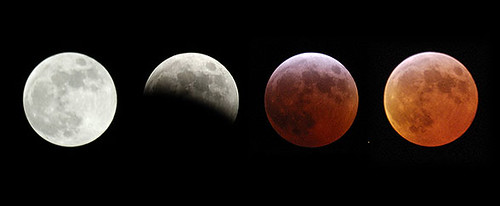
La terra è un’ombra appena più scura, grande, in un cielo senza nuvole.
Lentamente, inesorabilmente, comincia ad intaccare il disco solare: un piccolo morso che si estende rapidamente. Si vede un alone tremolante intorno alla terra, mentre qui una linea d’ombra netta e precisa avanza lungo monti, crateri e valli senza nome.
Una luce rossastra avvolge tutto e per una volta stende un velo di colore su quella che sembrava un’eterna scala di grigi. E io trattengo il fiato nel buio che avanza. Perché un’eclisse di luna per voi è un’eclisse di sole per noi…

Yuki

https://m.media-amazon.com/images/M/MV5BZmM1ZmRkMjItZjc3Ny00ZWQzLWFhYmUtMWE0Y2QwOWY0MTMxXkEyXkFqcGdeQXVyMTIyNzY1NzM@._V1_.jpg

Takemitsu’s recent works have been marked by the use of traditional Japanese instruments as in the case of Eclypse for the Shakuhachi and Koto, or the music in the film, Kwaidan (Ghost Stories), which includes extremely original concepts. Here again, the motive of composition seems to seek through these instruments special effects which otherwise could not be obtained. And it is true that he has until now been so successful that one could not expect more. It seems as if it were aimed at producing an interminable dynamic drama from the succession of the momentary sounds from the hand and the mouth of the musician. This is the quality very akin to that which realizes infinite freedom at the very moment of heightened tension as in the case of Japanese calligraphy and the tea ceremony.

Musica contemporanea su MySpace!?

Che Stockhausen, Xenakis, Ligeti, Boulez, Cage e molti altri del genere avessero uno spazio su MySpace non lo avrei mai detto, ma la fede dei fans è grande e accade anche questo.
La cosa è stata portata alla mia conoscenza dai colleghi bloggers di sounDesign in questo post (c’è anche una interessante proposta cageana).
Naturalmente, nello spazio dedicato a John Cage, uno dei brani ascoltabili è il solito 4’33″… (ma anche la delicatissima Music for Marcel Duchamp). Ovviamente non ho resistito e ho lanciato l’ascolto dell’infame brano silenzioso :mrgreen: L’ho ascoltato guardando l’indicatore del traffico di rete che mostrava kili e kili di zeri viaggiare da MySpace al mio computer.
4’33” è il pezzo di Cage più scambiato in rete, è in vendita su iTunes a $ 0.99, è stato oggetto di una causa: tonnellate di banda usate ogni giorno per trasmettere il nulla…
Se però penso agli skirillioni di bytes che viaggiano ogni ora per trasmettere idiozie, preferisco di gran lunga il nulla, che, come il vuoto quantico, è un nulla che non è vuoto.

Il vento dell’Oriente e il vento dell’Occidente si incontrano in America e producono un movimento ascensionale nell’aria; lo spazio, il silenzio, il nulla che ci sostiene…

Grande, JC…

A proposito, andate a votare, sfaticati, cabrones…

6 pianoforti

CONSERVATORIO DI MUSICA
“E. F. DALL’ABACO”

“DALLE SEI ALLE SETTE”
Martedì 6.3.2007, ore 18


6 pianoforti… e altre sorprese

Steve Reich
Six pianos
Giovanni Bertelli
Grand Pool’s Oven
(prima assoluta)
Renato Chiesa HITLAHAVUTVESIMCHAH
Pianoforti

    Flavia Casari
    Tessa Catchpole
    Stefano Chiozzi
    Oana Dancescu
    Xavier Locus
    Alberto Dal Molin
    Giovanni Bertelli
Dave Samuels/David Friedman

    Mirko Pedrotti, marimba
    Jacopo Bizzarri, vibrafono
Nyack
Dave Samuels/David Friedman

    Filippo Tosi, marimba
    Mirko Pedrotti, vibrafono
Carousel
Dave Samuels/David Friedman

    Jacopo Bizzarri, marimba
    Filippo Tosi, vibrafono
Sunset Glow

Ingresso Libero

Auditorium Nuovo Montemezzi
Piazza S. Anastasia

Asterism

Born in Tokyo, Takemitsu first became interested in western classical music around the time of World War II. He heard western music on American military radio while recuperating from a long illness. He also listened to jazz from his father’s ample collection.
Takemitsu was largely self-taught in music. He was greatly influenced by French music, and in particular that of Claude Debussy and Olivier Messiaen. In 1951 he founded the Jikken Kobo, a group which introduced many contemporary western composers to Japanese audiences.
Takemitsu at first had little interest in traditional Japanese music, but later incorporated Japanese instruments such as the shakuhachi (a kind of bamboo flute) into the orchestra. November Steps (1967), a work for shakuhachi and biwa (a kind of Japanese lute) solo and orchestra was the first piece to combine instruments from east and west. In an Autumn Garden (1973-79) is written for the kind of orchestra that would have played gagaku (traditional Japanese court music). Works such as Eclipse, (1966) for shakuhachi and biwa, Voyage (1973), for three biwas should also been mentioned as works that are decidedly derived from traditional genres.
Takemitsu first came to wide attention when his Requiem for string orchestra (1957) was accidentally heard and praised by Igor Stravinsky in 1959. (Some Japanese people wanted Igor Stravinsky to hear some tape recorded music by Japanese composers and put in the wrong side of the tape; when they tried to take it out, Stravinsky didn’t let them.) Stravinsky went on to champion Takemitsu’s work.
During his career, Takemitsu composed music for motion pictures, including scores for directors Hiroshi Teshigahara, Akira Kurosawa, Masaki Kobayashi, and Shohei Imamura.
Takemitsu died in Tokyo on February 20, 1996

Commissioned in 1968 by RCA Records, this work is for piano and orchestra with an expanded percussion section with unusual methods of articulation: the spine of a comb is run across a suspended cymbal, a double-bass bow used on three suspended cymbals, and so on. All three definitions of the title constitute the poetic meaning of this music – a group of stars, a constellation; crystallized minerals showing a starlike luminous figure in transmitted or reflected light; and the three asterisks placed before a passage to direct attention to it. The music is characterised by lovely crystalline textures from glockenspiel, harp, metallic percussion and the piano. Impressionistic chords from the high strings, and Messiaen-like brass chords provide celestial imagery. Sliding tones from plucked strings and lower brass suggest more earthiness. A brief solo statement from the piano is followed by breaking sounds (light bells, ratchets, rattles) from the percussion suggest the punctuation nature of the title. Toward the end, the music enters a quasi-random chaotic crescendo of uncoordinated cycling motifs and sizzling cymbals and gongs. Suddenly, the sound is suspended and a quiet transparent texture emerges, then silence, and a single final note from the piano. A lovely, brief, poetic vision.

Download Takemitsu music from AvantGarde Project 24.

Toru Takemitsu – Asterism (1968), per piano e orchestra
Toronto Symphony Orchestra – Seiji Ozawa (conductor) – Yuji Takahashi (piano)