
Io sono nessuno
nessuno è perfetto
quindi io sono perfetto. 
Archivio mensile:Settembre 2007
Myanmar
Un pensiero per la Birmania.
Uno dei brani più famosi della musica classica birmana. Anticamente veniva eseguito a palazzo reale e nelle occasioni in cui il re si rivolgeva al popolo.
E mentre ascoltate leggetevi
Rudyard Kipling, Mandalay
che avrà anche degli accenti un po’ da romantico colonialismo d’altri tempi e a tratti è buffa, però ha rappresentato per molto tempo la Birmania nell’immaginario occidentale…
By the old Moulmein Pagoda, lookin’ eastward to the sea,
There’s a Burma girl a-settin’, and I know she thinks o’ me;
For the wind is in the palm-trees, and the temple-bells they say:
“Come you back, you British soldier; come you back to Mandalay!”
Come you back to Mandalay,
Where the old Flotilla lay:
Can’t you ‘ear their paddles chunkin’ from Rangoon to Mandalay?
On the road to Mandalay,
Where the flyin’-fishes play,
An’ the dawn comes up like thunder outer China ‘crost the Bay!
‘Er petticoat was yaller an’ ‘er little cap was green,
An’ ‘er name was Supi-yaw-lat — jes’ the same as Theebaw’s Queen,
An’ I seed her first a-smokin’ of a whackin’ white cheroot,
An’ a-wastin’ Christian kisses on an ‘eathen idol’s foot:
Bloomin’ idol made o’mud —
Wot they called the Great Gawd Budd —
Plucky lot she cared for idols when I kissed ‘er where she stud!
On the road to Mandalay . . .
When the mist was on the rice-fields an’ the sun was droppin’ slow,
She’d git ‘er little banjo an’ she’d sing “Kulla-lo-lo!”
With ‘er arm upon my shoulder an’ ‘er cheek agin’ my cheek
We useter watch the steamers an’ the hathis pilin’ teak.
Elephints a-pilin’ teak
In the sludgy, squdgy creek,
Where the silence ‘ung that ‘eavy you was ‘arf afraid to speak!
On the road to Mandalay . . .
But that’s all shove be’ind me — long ago an’ fur away,
An’ there ain’t no ‘busses runnin’ from the Bank to Mandalay;
An’ I’m learnin’ ‘ere in London what the ten-year soldier tells:
“If you’ve ‘eard the East a-callin’, you won’t never ‘eed naught else.”
No! you won’t ‘eed nothin’ else
But them spicy garlic smells,
An’ the sunshine an’ the palm-trees an’ the tinkly temple-bells;
On the road to Mandalay . . .
I am sick o’ wastin’ leather on these gritty pavin’-stones,
An’ the blasted Henglish drizzle wakes the fever in my bones;
Tho’ I walks with fifty ‘ousemaids outer Chelsea to the Strand,
An’ they talks a lot o’ lovin’, but wot do they understand?
Beefy face an’ grubby ‘and —
Law! wot do they understand?
I’ve a neater, sweeter maiden in a cleaner, greener land!
On the road to Mandalay . . .
Ship me somewheres east of Suez, where the best is like the worst,
Where there aren’t no Ten Commandments an’ a man can raise a thirst;
For the temple-bells are callin’, an’ it’s there that I would be —
By the old Moulmein Pagoda, looking lazy at the sea;
On the road to Mandalay,
Where the old Flotilla lay,
With our sick beneath the awnings when we went to Mandalay!
On the road to Mandalay,
Where the flyin’-fishes play,
An’ the dawn comes up like thunder outer China ‘crost the Bay!
Parallel Lines

MORTON SUBOTNICK (b. 1933, Los Angeles) is a pioneer in the field of electronic music as well as an innovator in works involving instruments and other media. He was the first composer to be commissioned to write an electronic composition expressly for phonograph records, Silver Apples of the Moon (Nonesuch, 1967), a work that was later choreographed by the Netherlands Ballet, Ballet Rambert of London and the Glen Tetley Dance Company. Subotnick was co-founder of the San Francisco Tape Music Center (now at Mills College) and was Music Director of Ann Halprin’s Dance Company and the San Francisco Actor’s Workshop. He served as Music Director of the Lincoln Center Repertory Theatre during its first season and was director of electronic music at the original Electric Circus on St. Mark’s Place in New York City. Subotnick has held several faculty appointments, including Yale University, and was Composer-in-Residence in West Berlin under the auspices of the DAAD. Since 1970, he has chaired the composition department of the California Institute of the Arts.
PARALLEL LINES is one of Subotnick’s “ghost” pieces for live soloist and electronics. The ghost series is a unique method of blending electronics with live performances so that the effect of the electronics is not audible unless the performer is making a sound. The electronic ghost score is a digital control system which activates an amplifier, a frequency shifter, and a location device. These process the instrumental sound according to the plan of each composition. The ghost electronics were made possible by a Creative Arts grant from the Rockefeller Foundation, and were designed by Donald Buchla to the composer’s specifications and constructed by John Payne at the California Institute of the Arts. Other ghost pieces include Last Dream or the Beast for singer and tape, Liquid Strata for piano, The Wild Beasts for trombone and piano, Passages of the Beast for clarinet, and Two Life Histories for male voice and clarinet. The composer writes:
PARALLEL LINES was commissioned by Laurence Trott and the Piccolo Society. The title has to do with the way in which the ‘ghost’ electronics interact with the piccolo. In previous ‘ghost’ pieces the electronics were used to produce an acoustic environment within which the solo manifested itself, but in this case the ‘ghost’ score is a parallel composition to the piccolo solo. The ghost score amplifies and shifts the frequency of the original non-amplified piccolo sound. The two (‘ghost’ and original piccolo sounds), like a pair of parallel lines, can never touch, no matter how quickly or intricately they move.
The work, a continuation of the butterfly-beast series, is divided into three large sections: (1) a perpetual-motion-like movement in which all parts play an equal role; (2) more visceral music, starting with the piccolo alone and leading to a pulsating ‘crying out,’ and (3) a return to the perpetual motion activity, but sweeter.[from ANABlog]
Morton Subotnick – Parallel Lines – Laurence Trott, piccolo soloist
Members of the Buffalo Philharmonic and Buffalo Creative Associates; Michael Tilson Thomas, conductor
Nuvole
Nel suo libro sui sistemi caotici (Caos, la nascita di una nuova scienza – 1987, Rizzoli), James Gleick spiega che la forma delle nuvole è considerata dagli scienziati un problema profondo perché è un fenomeno caotico, imprevedibile nei particolari, ma governato da regole coerenti, ricorrenti e prevedibili nel loro insieme.
A quanto pare, se ne occupò anche Goethe e non dal punto di vista poetico, ma da quello scientifico: La forma delle nuvole e altri saggi di meteorologia – J. Wolfgang Goethe, Archinto, 2000.
Non ci si stupisce, quindi, che siano nati anche dei gruppi di appassionati osservatori delle medesime, in grado di mostrarci incredibili immagini come questa, immortalata presso Anstruther Harbour, Fife, Scotland.
Trovate l’originale, più grande, sul sito della Cloud Appreciation Society.

Schoenberg su YouTube
L’Arnold Schönberg Center e gli eredi del compositore, di cui abbiamo già parlato elogiandone la politica di apertura, hanno recentemente piazzato su YouTube vari spezzoni video con esecuzioni, testimonianze storiche, interviste e altro materiale tratto dall’archivio.
Si trovano facilmente cercando in base al nome dell’utente che è ascvideo (Arnold Schönberg Center video). In ogni caso, cliccate qui.
Una delle cose belle è che i video storici hanno spesso come sottofondo la sua musica. Guardandoli pensavo che ormai mi sembra quasi melodica e mi è tornata in mente una citazione di Cage a proposito della sua Winter Music:
We’ve played ‘Winter Music’ quite a number of times now: I haven’t kept count.
When we first played it the silences seemed very long and the sounds seemed really separated in space, not obstructing one another. In Stockholm, however, when we played it at the opera as an interlude in the dance programme given by Merce Cunningham and Carolyn Brown early one October, I noticed that it had become melodic.
Tutto è destinato a diventare melodico, prima o poi….
Via Alex Ross
Devolution
Quando li ho rivisti in YouTube non ho resistito alla tentazione di piazzare qui un video dei primi Devo, gruppo degli anni ’70 che già allora esplorava il concetto di Devolution, dandogli il corretto significato di inversione del processo evolutivo; in soldoni: stiamo tornando alle scimmie.
Eccoli eseguire con fare robotico la loro cover di Satisfaction.
Il lupo perde il pelo ma…
Andate a vedervi la home page della Pontificia Accademia delle Scienze.
Il tipo barbuto, con l’espressione seria, ma gioviale, che sta in copertina, è Galileo Galilei, con tanto di telescopio. Proprio quello che, qualche secolo fa, fu costretto dall’Inquisizione a rinnegare il suo Dialogo sopra i massimi sistemi in cui sosteneva la validità del modello copernicano.
Ormai papa Giovanni Paolo II° ha riconosciuto l’errore e così Galileo può anche finire sulla home page della maggiore istituzione scientifica del Vaticano. Tutto bene, se non che il fisico Stephen Hawking racconta questo gustoso aneddoto, relativo allo stesso GP2:
…nel 1981 il mio interesse per gli interrogativi sull’origine e il destino dell’universo fu richiamato in vita mentre partecipavo a un convegno sulla cosmologia organizzato dai gesuiti in Vaticano. […]
Al termine del convegno i partecipanti furono ammessi alla presenza del santo padre. Il papa ci disse che era giustissimo studiare l’evoluzione dell’universo dopo il big-bang, ma che non dovevamo cercare di penetrare i segreti del big-bang stesso perché quello era il momento della Creazione, quindi l’opera stessa di Dio.
Fui lieto che il papa non sapesse quale argomento avessi trattato poco prima nella mia conferenza al convegno: la possibilità che lo spazio-tempo fosse finito ma illimitato, ossia che non avesse alcun inizio, che non ci fosse alcun momento della Creazione.
Io non provavo certamente il desiderio di condividere la sorte di Galileo…
[S. Hawking, Dal big-bang ai buchi neri, Rizzoli 1988, pag. 136]
Il lupo perde il pelo…
Sarà…
BLOGRegular pubblica questa dichiarazione di Mirella Freni, intervistata da Leonetta Bentivoglio su Repubblica di qualche giorno fa
Sia io che Luciano abbiamo studiato col maestro Campogalliani, e quando dissi a quest’ultimo che sapevo poco di musica lui m’intimò: guai a te se impari il canto scandendo uno-due-tre-quattro! Hai sensibilità, doti naturali, non perdere la tua naturalezza!
Sarà…
Lungi da me l’idea di criticare Mirella Freni e/o il suo maestro, ma capisco bene i pianisti che, quando si trovano ad accompagnare i cantanti, si lamentano perché questi ultimi “non vanno a tempo neanche a pagarli in oro”.
Accidenti, andare a tempo non significa scandire uno-due-tre-quattro. Significa sentire e assecondare con naturalezza una pulsazione interna al brano, senza però andare dove si vuole solo perché la tua sensibilità ti ci porta. La sensibilità va assecondata, ma anche controllata. e soprattutto educata.
Per esempio, penso che molti pianisti, all’inizio, da piccoli, tendano a suonare uno “smelenso” Chiaro di Luna, ma poi si capisce il pezzo e la sensibilità si adegua senza sentirsi costretta. Un interprete non deve seguire solo il proprio istinto del bello, ma anche interrogarsi su quello che sta facendo.
Secondo me, idee come “non contare, segui la tua sensibilità”, magari hanno prodotto un Pavarotti, ma anche decine di pessimi musicisti.
Forse ne vale la pena, ma non ne sono sicuro…
Le magliette dei bianchi morti
È l’espressione con cui gli africani indicano gli abiti usati che provengono dall’occidente, perché nessuno di loro può credere che questi vestiti vengano buttati solo perché noi non abbiamo più voglia di indossarli.
Torno a casa dopo mezzanotte, mi faccio un gin tonic, accendo la tv e piombo in mezzo a un documentario (ovviamente RAI3) che segue il viaggio di una maglietta da un contenitore di abiti usati in Germania fino all’Africa. Il titolo è “Mitumba – The second hand road”, regista e produttore Raffaele Brunetti.
La storia è molto più complessa di quanto si possa immaginare. A suo modo è una storia estrema. Non è una denuncia. È solo una storia che chiarisce anche un po’ di meccanismi del mercato di cui in genere non ci rendiamo conto.
Dunque, la nostra maglietta viene buttata in un raccoglitore di vestiti usati dalla mamma di un bambino tedesco a cui la maglietta è “scappata”. Lei pensa che questi vestiti regalati vadano a coprire, gratis, gente bisognosa, ma non è esattamente così.
I contenitori, in genere, sono gestiti da organizzazioni non profit, come la Caritas o la Croce Rossa. Dunque, in questo caso, Caritas e/o Croce Rossa (o altri) raccolgono gli abiti usati dai contenitori e poi li vendono a una azienda che tratta abiti usati. Il prezzo è basso, si vendono a peso e il prezzo è calcolato in base ai costi del ritiro, più un margine di guadagno, oppure la ONG non gestisce nemmeno il ritiro, ma lo affida a una organizzazione privata in cambio di una percentuale. In tal modo organizzazioni come quelle citate si auto-finanziano.
L’azienda che gestisce abiti usati dà una lavata a tutto e poi suddivide la merce per tipologia, stato di conservazione e colore. Da qui, gli abiti possono prendere diverse strade. Per esempio, i capi ben conservati degli anni ’70 finiscono nelle boutique dell’usato giapponesi, dove sono considerati oggetti di culto. Altri tipi di capi finiscono nei nostri negozi dell’usato. I capi totalmente distrutti e inusabili vengono ceduti alle aziende che riciclano i tessuti. Tutto il resto finisce nel terzo mondo.
Ma non ci finisce gratis. Non può. Come “non esiste un pasto gratis” [Milton Friedman], così non esiste un costo zero. Esistono invece aziende che si occupano del trasporto dei vestiti, ormai confezionati in grosse balle, fino all’Africa, in uno dei 21 punti di raccolta sparsi in vari stati africani. Il prezzo, naturalmente, cresce in base ai costi di trasporto. Poi, altre organizzazioni locali, grandi o piccole, acquistano una o più balle, le aprono e distribuiscono i singoli capi sul territorio, vendendoli sia direttamente che a rivenditori, “negozi” che agiscono a livello di villaggio.
Gli africani comprano i nostri abiti usati che offrono garanzie di qualità e durata superiori a quelle dei capi prodotti nel loro paese e ormai chiamano Mitumba, che originariamente significa “balla”, tutto l’abbigliamento di seconda mano proveniente dal primo mondo. Lo apprezzano talmente che si sono registrate truffe consistenti nel vendere vestiti nuovi di fabbricazione cinese spacciati per Mitumba.
In alcuni paesi africani i vestiti usati costituiscono la prima voce di importazione, infatti il 90% della popolazione si veste di seconda mano. Li chiamano “I vestiti dei bianchi morti” proprio perché in Africa è inconcepibile pensare di disfarsi di cose ancora utilizzabili a meno che il proprietario non sia morto.
Ma il significato del termine mitumba ormai è in espansione. In Kenya si parla, infatti, di mitumba economy per indicare la consuetudine di costruire servendosi della spazzatura degli altri.
Tutto questo mi ricorda un aneddoto narrato da Jared Diamond nel suo “Armi, acciao e malattie”. Yali, abitante della Nuova Guinea e uomo politico in quel paese da poco sulla via dell’autogoverno, pone in modo diretto all’autore, bianco e scienziato, una questione fondamentale: “Come mai voi bianchi avete tutto questo cargo e lo portate qui in Nuova Guinea, mentre noi neri ne abbiamo così poco?”, dove il termine “cargo” si estende dalla nave all’insieme dei beni materiali che la nave trasporta.
Anche qui un’insufficienza linguistica. Anche qui una cultura non riesce a reagire all’opulenza di un’altra.
Mitumba, the Second Hand Road – documentary by Raffaele Brunetti.
The T-shirt of Felix, a 10-year-old German boy, winds up in an old clothes collection point, the starting place for a journey spanning two continents: donated, collected, bought and sold several times over, finally worn by Lucky, a 9-year-old boy who lives in a small Tanzanian village. In some African countries, used clothing ranks first in imported goods. In fact, 90% of the population wears second hand clothes, called “dead white men’s clothes” because no one in Africa would throw away anything still good unless it came from a dead person. Deals, persons and places along the secret route trade routes of the used clothing business, a hidden road that reveals a surprising reality.
Raffaele Brunetti is a documentary producer and director. Since 1987 he has made documentaries in Italy, the Near East, and the Mediterranean. In his early career he worked with Japanese TV networks (NHK, TBS, NTV, FUJI TV). He then collaborated with National Geographic, BBC, Arté, Yle, History Channel, contributing to over 100 award-winning documentaries. In recent years he has directed historic and fiction documentaries.
L’Amour Outragè
Un bel brano elettroacustico di Massimo Biasioni tratto dal sito del DAW07 (Digital Art Weeks 2007) di Zurigo.
Il materiale di partenza usato per la composizione di “l’amour outragè” è la registrazione di un frammento tratto dalla “Platée” di Rameau eseguito dalla soprano Annamaria Calciolari, ed il titolo del brano si riferisce al testo di detto frammento.
La principale tecnica di sintesi usata è quella granulare, allo scopo di ottenere graduali passaggi da situazioni in cui altezza e timbro vocale sono indeterminati, a situazioni in cui la voce è perfettamente riconoscibile. Fra i parametri di sintesi più controllati uno è quello della durata dei grani: in caso di grani di durata molto corta (entro i 25 millisecondi) la sensazione uditiva di altezza si perde, per tornare percepibile con grani di durata superiore. Per la realizzazione del brano sono stati utilizzati i software Max/Msp e Pro-Tools. Esistono due versioni del brano: la versione principale quadrifonica, da utilizzare in eventuali esecuzioni pubbliche, ed una versione stereofonica su cd. La durata è di 10 minuti.
Massimo Biasioni è nato a Trento nel 1963, diplomato in violino, composizione, musica corale e direzione di coro, nonché musica elettronica. Ha composto lavori da camera e per orchestra, per strumenti tradizionali ed elettronici, video e musica teatrale. Alcune delle sue composizioni sono state eseguite in festival importanti, incise su CD e trasmesse via radio.
Massimo Biasioni – L’Amour Outragè – 2006
Different Trains
Sempre dagli archivi della Fondazione Pulitzer, Different Trains di Steve Reich (anche se a me non piace più di tanto).
Program Notes
Different Trains, released in 1989, captures Reich harnessing a return to using speech patterns in his work, as in ‘Rain,’ with a spare though startling string accompaniment in the form of the Kronos Quartet.
The ‘Different Trains’ theme originates from Reich’s childhood, several wartime years spent travelling with his governess between his estranged parents, his mother in Los Angeles and his father in New York. Exciting, romantic trips, full of adventure for the young Reich but many years later, it dawned on him that, had he been in Germany during the ethnic cleansing by the Nazis, his Jewish background would have ensured that the trains he would have been riding on would have been very ‘different trains.’
He set about collecting recordings to effectively recreate and document the atmosphere of his travels to contrast with those of the unfortunate refugees. By combining the sound of train whistles, pistons and the scream of brakes with extracts of speech by porter Lawrence Davis, who took the same rides as Reich between the big apple and Los Angeles, governess Virginia and three holocaust survivors (Paul, Rachel and Rachella), Reich creates music of great intensity and feeling.
The rhythmic patterns and pitch of the voices establishes the phrases and course of the music heard in the quartet: ‘crack train from New York,’ and ‘1939’ for example, heard in the invigorating, steam-driven opening movement, America-Before The War. The slow, middle section, Europe-During The War, finds the refugees in the midst of their nightmare, ‘no more school’ and being herded into the cattle wagons. ‘They shaved us, They tatooed a number on our arm, Flames going up to the sky- it was smoking.’ Sirens from the Kronos help to convey the despair and confusion of the Jewish plight. Reconciliation is achieved in part three, After The War, where Paul, Rachel and Rachella are transported to live in America.
There is an incredibly poignant moment when Paul proclaims ‘… the war was over,’ Rachella, in sheer, fragile disbelief, asks ‘Are you sure?.’ The New York Times hailed Different Trains as ‘a work of… astonishing originality’ and the piece was subsequently awarded a Grammy in1989 for Best Contemporary Compostion.
Steve Reich – Different Trains – members of the Saint Louis Symphony Orchestra
iPod bloccati
UPDATE 2024
Secondo questo sito, ormai chiuso ma citato anche da arsTECHNICA, i nuovi iPod hanno un codice (un checksum) crittografico che impedisce agli utenti di usarli con applicazioni di terze parti. La notizia è ripresa e confermata anche da Boing Boing.
Traducendo, questo significa che iTunes resta l’unico software capace di gestire un iPod. In soldoni, vuol dire che coloro che preferivano usare Winamp o qualche altro player per gestire l’iPod, con i nuovi modelli non potranno più farlo.
Con la nuova serie, il nuovo Nano, il Classic e l’iTouch, soltanto iTunes è in grado di accedere alla lista dei brani e alle playlist, mentre gli altri player vedono zero file.
Questo però significa anche che gli iPod non potranno più essere utilizzati con sistemi operativi su cui non esiste iTunes, primo fra tutti Linux.
Ma notate che tutto ciò non ha niente a che fare con la pirateria. Serve piuttosto a limitare le scelte di chi acquista un iPod.
La cosa potrebbe sembrare assurda: considerato che questo taglia fuori gli utenti Linux, Apple spende del denaro in ingegnerizzazione per eliminare alcune funzionalità dell’apparecchio e limitare il numero dei potenziali clienti.
Perché lo fa? Una prima spiegazione è evitare che i suoi competitors possano costruire dei software che possano caricare in iPod dei brani che non provengono da iTunes. Ora che parecchie major del disco iniziano a vendere brani senza protezione (DRM), si impedisce agli utenti di acquistare i brani ovunque e caricarli nell’iPod e in pratica questo significa legarli a iTunes.
Inoltre Apple introduce queste restrizioni con il Digital Millennium Copyright Act dalla sua parte, per cui eludere questa protezione è un atto illegale.
È un po’ come vendere un’auto che funziona solo con una determinata marca di benzina, quando sul mercato ne esistono di più economiche e soprattutto senza restrizioni, ma, magari, meno comode.
Questo gioco è stato fatto altre volte: una azienda lancia un prodotto che ha successo e conquista una solida posizione sul mercato. Poi, quando le altre aziende reagiscono con prodotti più innovativi o a prezzi inferiori, introduce limitazioni per legare a sé almeno gli utenti che ha.
In questo gioco, quelli che pagano il prezzo maggiore sono, come accade spesso, gli utenti. Costoro, poi, reagiscono a quella che considerano una ingiustizia e qualcuno fabbrica un crack e questo è illegale.
C.v.d, qualcuno ha già implementato un crack.
Ma ormai tutta la storia non ha più senso.
Credo in Us
Credo in Us di John Cage.
Dated: New York, July, 1942. Revised October 1942
Instrumentation: 4 performers: pianist; 2 percussionists on muted gongs, tin cans, electric buzzer and tom-toms; one performers who plays a radio or phonograph;
Duration: 12′
Premiere and performer(s): August 1, 1942 at Bennington College in Bennington, Vermont, performed with the choreography by Merce Cunningham and Jean Erdman
The work was composed in the phraseology of the dance by Cunningham and Erdman. For the first time Cage uses records or radios, incorporating music of other composers in his own works. He suggests music by Dvorak, Beethoven, Sibelius or Shostakovich. Cage describes the work as a suite with a satirical character.
Jean Erdman recalls that for the first performance a ‘tack-piano’ was used (a piano with tumbtacks inserted onto the felt of the hammers). The pianist mutes the strings at times or plays the piano body (as a percussionist).
Black Angels
Black Angels (Images I), quartetto d’archi amplificati di George Crumb, probabilmente l’unico quartetto ispirato alla guerra in Vietnam. È una bella partitura, anche graficamente. I titoli dei movimenti, poi, sono fantastici (mi piace molto il 2.3 “Sarabanda de la Muerte Oscura”).
Movements
I. DEPARTURE
- Threnody I: Night of the Electric Insects
- Sounds of Bones and Flutes
- Lost Bells
- Devil-music
- Danse Macabre
II. ABSENCE
- Pavana Lachrymae
- Threnody II: Black Angels!
- Sarabanda de la Muerte Oscura
- Lost Bells (Echo)
III. RETURN
- God-music
- Ancient Voices
- Ancient Voices (Echo)
- Threnody III: Night of the Electric Insects
Program Notes (from the author’s site)
Black Angels (Images I)
Thirteen images from the dark land
Things were turned upside down. There were terifying things in the air … they found their way into Black Angels. – George Crumb, 1990
Black Angels is probably the only quartet to have been inspired by the Vietnam War. The work draws from an arsenal of sounds including shouting, chanting, whistling, whispering, gongs, maracas, and crystal glasses. The score bears two inscriptions: in tempore belli (in time of war) and “Finished on Friday the Thirteenth, March, 1970”.
Black Angels was conceived as a kind of parable on our troubled contemporary world. The numerous quasi-programmatic allusions in the work are therefore symbolic, although the essential polarity — God versus Devil — implies more than a purely metaphysical reality. The image of the “black angel” was a conventional device used by early painters to symbolize the fallen angel.
The underlying structure of Black Angels is a huge arch-like design which is suspended from the three “Threnody” pieces. The work portrays a voyage of the soul. The three stages of this voyage are Departure (fall from grace), Absence (spiritual annihilation) and Return (redemption).
The numerological symbolism of Black Angels, while perhaps not immediately perceptible to the ear, is nonetheless quite faithfully reflected in the musical structure. These “magical” relationships are variously expressed; e.g., in terms of length, groupings of single tones, durations, patterns of repetition, etc. An important pitch element in the work — descending E, A, and D-sharp — also symbolizes the fateful numbers 7-13. At certain points in the score there occurs a kind of ritualistic counting in various languages, including German, French, Russian, Hungarian, Japanese and Swahili.
There are several allusions to tonal music in Black Angels: a quotation from Schubert’s “Death and the Maiden” quartet (in the Pavana Lachrymae and also faintly echoed on the last page of the work); an original Sarabanda, which is stylistically synthetic; the sustained B-major tonality of God-Music; and several references to the Latin sequence Dies Irae (“Day of Wrath”). The work abounds in conventional musical symbolisms such as the Diabolus in Musica (the interval of the tritone) and the Trillo Di Diavolo (the “Devil’s Trill”, after Tartini).
The amplification of the stringed instruments in Black Angels is intended to produce a highly surrealistic effect. This surrealism is heightened by the use of certain unusual string effects, e.g., pedal tones (the intensely obscene sounds of the Devil-Music); bowing on the “wrong” side of the strings (to produce the viol-consort effect); trilling on the strings with thimble-capped fingers. The performers also play maracas, tam-tams and water-tuned crystal goblets, the latter played with the bow for the “glass-harmonica” effect in God-Music.
George Crumb – Black Angels (Images I) performed by the Miró Quartet Daniel Ching (violin), Sandy Yamamoto (violin), John Largess (viola), Joshua Gindele (cello)
Music for Elevators
 La netlabel bulgara Mahorka pubblica ben tre volumi di musica per ascensori.
Non so in Bulgaria, ma negli USA, complice anche l’altezza degli edifici, la musichetta negli ascensori è molto diffusa e quasi sempre è idiota, irritante, insipida. Fa pensare che il suo unico fine sia quello di far sì che la gente esca in gran fretta dall’ascensore, una volta raggiunto il piano.
E forse è proprio così, ma, nel mio caso, sebbene questi pezzi non siano né grandi novità, né colpi di genio, se mi trovassi ad sentirli in un ascensore, forse continuerei a vagare fra i piani per la curiosità di ascoltare il brano seguente.
Alcuni estratti dal terzo volume
Potete scaricare i 3 volumi dall’internet archive / Download site
Music for Elevators Vol. 1
Music for Elevators Vol. 2
Music for Elevators Vol. 3
Violin Acoustics

Una eccellente spiegazione della fisica degli strumenti ad arco si può leggere qui.
Il soccombente
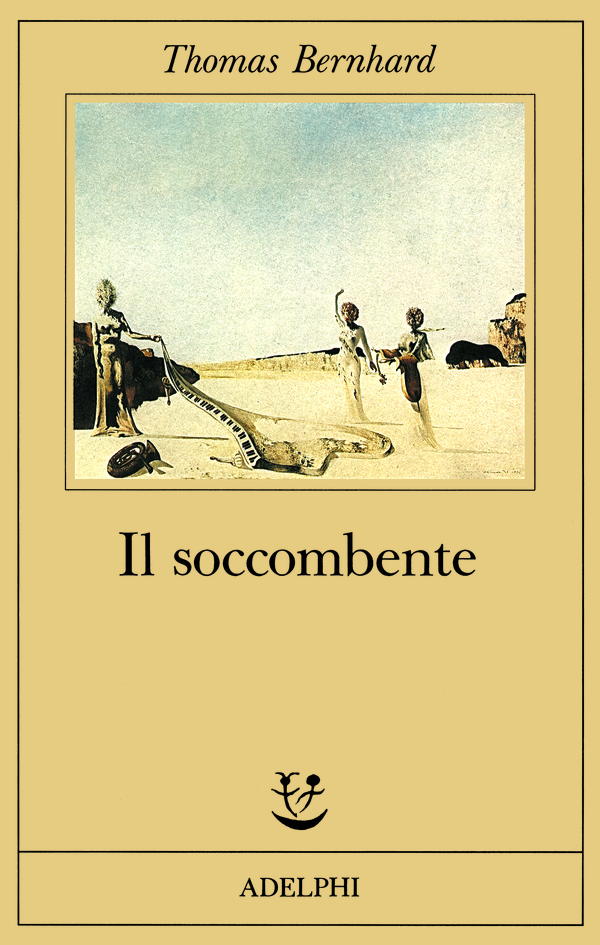
Sebbene legga molto, sono sempre stato restio a scrivere di libri perché c’è già tanta gente che lo fa, probabilmente meglio di me. Ogni tanto, però, ci pensavo. Adesso ci provo con un libro che affonda le sue radici nella musica, o almeno in un certo modo di vedere la professione di esecutore, anche se in realtà di musica si parla ben poco.
Ho da poco terminato Il soccombente di Thomas Bernhard, scritto nel 1983 e pubblicato da Adelphi.
Un libro profondo e nello stesso tempo uno dei più deprimenti che abbia mai letto.
La trama ruota intorno ad un semplice, ma cruciale evento: a un corso tenuto da Horowitz a Salisburgo nel 1953 si incontrano e fanno amicizia tre giovani pianisti. Due sono brillanti e promettenti. Il terzo è Glenn Gould: qualcuno che non brilla e non promette, perché è.
Da quel momento la vita dei primi due rotola inesorabilmente verso la tragedia.
I due si trovano a frequentare come loro pari un genio che suona lo stesso strumento in un modo per loro inarrivabile. La grandezza di Gould è troppo per essere sopportabile e le loro menti, che sembravano essere quelle di due giovani musicisti avviati a una brillante carriera, non reggono il confronto con colui che è, forse, il più importante virtuoso del pianoforte del secolo scorso.
Come artisti, essi miravano all’eccelso, con in testa quell’ideale romantico di tracciare i confini della perfezione che è il sogno impossibile di molti giovani esecutori e che, per loro, prima di quell’incontro, sembrava quasi raggiungibile.
Invece quell’esperienza rivela la loro fragilità, l’incapacità di accettare i propri limiti che si manifesta dapprima con l’abbandono dell’attività musicale e il rifiuto assoluto di avvicinarsi ancora allo strumento e infine con l’atto estremo del più debole dei due – il soccombente, appunto – che non riesce a concepire il sopravvivere a Glenn Gould, sorpreso da un ictus al pianoforte mentre suonava, forse, le sue Variazioni Goldberg.
L’intera storia è raccontata dall’unico superstite in un modo non lineare, per cui la trama non è l’elemento portante (ed è per questo che mi sono permesso di raccontarla). La prosa non facile ma profonda di Bernhard, in un flusso da subito ininterrotto, descrive invece la tragedia del non riuscire ad essere, di fronte a qualcuno che, invece, è. E, nota bene, forse non è così per suo merito (nonostante l’indiscutibile impegno di Gould che passava al piano l’intera giornata e parte della notte, dormendo pochissimo), quanto piuttosto per grazia ricevuta.
Vi si trovano inoltre le tematiche care a Bernhard: l’autodistruzione e l’invettiva contro Salisburgo.
Personalmente, nonostante non fosse nelle intenzioni dell’autore, ci vedo anche una dimostrazione dei nefasti effetti dell’ideale romantico in musica. I due giovani, infatti, sarebbero sicuramente diventati degli ottimi pianisti se solo fossero stati in grado di abbandonare quella tensione verso l’assoluto, responsabile ultima della loro autodistruzione.
Libri autunnali
Ieri ero di buon’umore e sono andato a comprare i libri per sopravvivere in autunno (per di più è ricominciato il calcio… non si può vivere…).
Stranamente sono tutti romanzi (di solito leggo anche saggi).
Vi metto anche qualche nota di copertina.
Da quale inizio?
- Andrei Kurkov – I pinguini non vanno in vacanza
Sulle reazioni dei russi al crollo dell’Unione Sovietica
I pinguini sono animali programmati per vivere in gruppo.
Anche i sovietici erano animali collettivi.
Poi il crollo… - J.G. Ballard – Il mondo sommerso
Ricercatori e scienziati perlustrano intere città sommerse in seguito allo scioglimento delle calotte polari causato dal riscaldamento globale. Fantascienza, per ora. Ma è del 1962.
Uno dei pochi libri di Ballard che non mi ricordo e che quindi forse non ho letto - Kenzaburo Oe – Il salto mortale
I personaggi fanno parte di una setta millenarista a Tokyo. Dio, terrorismo, sesso, creatività, futuro. - David Foster Wallace – Oblio
Otto racconti. Indipendentemente dalla trama, DFW è bravo da morire. - Ilja Stogoff – Boys don’t cry
Da San Pietroburgo a Kuala Lampur. Romanzo di non formazione. Risse e sesso orale a 30° sotto zero. - Luke Rhinehart – L’uomo dei dadi
Uno psicanalista manda a puttane una vita ordinata e si affida al caso prendendo decisioni sulla base del lancio dei dadi. - Kawabata Yasunari – Bellezza e tristezza
Ognuno dei personaggi appare dominato da un’idea ossessiva e su tutti incombe un presagio di tempesta…
Ormai un classico. L’ho letto da piccolo (Kawabata si è suicidato del 1972), ma mi piace l’idea rileggerlo da grande. - David Foster Wallace – Infinite Jest
Un libro di 1300 pagg. che in gran parte ho già letto, ma non era mio. Adesso è uscito in economica. - Neal Stephenson – Snow Crash
Già letto, ma in prestito. Mi piace averlo.
nest

Nest is the collaborative project of Otto Totland and Huw Roberts. The two started working together after forging a strong friendship as former members of the Miasmah label. This self-titled EP is their first work publicly released.
Both pianists, there is little wonder that after exploring a plethora of musical styles, the two find themselves most at home writing traditionally structured pieces, with the ivories a major element throughout. The EP demonstrates clearly the innate ability the two have for song writing, borrowing from the world of film soundtracks and contemporary classical composers to craft delicate instrumental compositions.
Alongside their favoured instrument can be variously heard the plucked strings of the Welsh harp, violins, woodwind instruments, field recordings, percussion and a heady dose of mind wobbling effects.
The album is available from the Serein netlabel in 320kbps MP3
Listen to
Lodge
Trans Siberian
Musical Erratum
Nel 1913, Duchamp creò un ‘musical erratum’ che portava lo stesso titolo del suo Grande Vetro, “La mariée mise à nu par ses célibataires, même” (il che, visto che oggi è un giorno di matrimoni (non il mio) mi sembra appropriato).
Più che di un brano, si tratta di un metodo compositivo che utilizza un imbuto, delle palline e un trenino con vagoncini aperti.
Le palline sono numerate per indicare le note e vengono buttate a caso nell’imbuto posizionato sui vagoncini del trenino che avanza lentamente. In tal modo ogni vagoncino viene riempito casualmente da una pallina e la loro sequenza designa la serie dei suoni nella composizione.
Duchamp non esprime preferenze di organico, salvo indicare che gli strumenti devono essere di nuovo tipo. Questa versione, eseguita da Mats Persson and Kristine Scholz nel 1980, utilizza un panoforte preparato le cui corde sono messe in vibrazione da un disco rotante collegato a un motore elettrico.
Marcel Duchamp
La mariée mise à nu par ses célibataires, même (musical erratum)
Version by Mats Persson and Kristine Scholz
Light_Paper_Sound
Light_Paper_Sound è una installazione in cui dei video vengono proiettati su superfici tridimensionali di carta che in tal modo assumono varie colorazioni e sfumature che cambiano nel tempo. Nello stesso tempo delle tracce audio sono diffuse da altoparlanti.
This exhibition is an installation using randomly selected video projected on three dimensional paper surfaces synced with audio tracks played on speakers in the environment. The overall effect creates a unique environment of dynamic color and sound.
The works collaborators are artists Joseph Gray (sculpture/video) and Gabriel Herbertson (audio) with original music by Beth Fleenor (clarinet) and Paris Hurley (violin).
T-shirts anatomiche
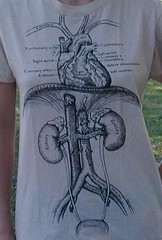
Una serie di interessanti T-shirt anatomiche in varie fogge è disponibile qui.
Un altro produttore, invece, fornisce calze anatomiche.
Di pantaloni anatomici, invece, nemmeno l’ombra.
Anatomical T-Shirts here.
Anatomically Correct Bone Socks here.
No anatomical pants so far.
Via Boing Boing
Pianolina

Vincenzo mi ha segnalato questo bellissimo giochino in cui ogni quadratino, muovendosi e rimbalzando dentro il rettangolo, suona la propria nota ad ogni contatto con le pareti e con altri quadratini. In tal modo si generano melodie e armonie (sono disponibili anche quadratini con accordi) che cambiano nel tempo in base alla velocità dei singoli oggetti.
Ci si aspetta che così si possano generare solo insiemi indifferenziati di note, ma non è vero. Gli esempi mostrano che, con una accurata disposizione degli oggetti e della loro velocità relativa è possibile accennare anche Beethoven e Satie (provateli, sono nel menu a destra).
È interessante notare che Beethoven perde rapidamente di significato, mentre Satie conserva sempre la sua atmosfera. Gli sciocchi diranno che questo dimostra che la prima è grande musica, mentre la seconda è solo un insieme indifferenziato di note. Invece la realtà è che la prima è un insieme a bassa entropia in cui ogni modifica, anche piccola, dei tempi e/o dell’ordine delle note altera il significato, mentre nella musica di Satie l’entropia è maggiore e un certo grado disordine non altera il senso dell’insieme. Un altro modo di dirlo è rilevare che Beethoven è sequenziale, mentre Satie non lo è.
La vera sorpresa, però, è l’arrangement intitolato a Grotrian (il produttore tedesco di pianoforti sul cui sito si trova Pianoline).
A beautiful piano-game based on relative speed of little squares bouncing on a rectangle.