Iain David McGeachy, meglio noto come John Martyn è morto in Irlanda all’età di 60 anni. Nato nel 1948, nel Surrey (Inghilterra), era cresciuto a Glasgow (Scozia), dove, a 19 anni, aveva cominciato a farsi conoscere per il suo stile caratterizzato da una miscela di blues e folk.
Nel 1973 incise uno dei più importanti album britannici degli anni settanta, Solid Air, in cui continuò a sviluppare un suo stile vocale nuovo, inarticolato e modulato, con inflessioni paragonabili a quelle di un sax. Mi è sempre piaciuta quella voce.
Seguirono vari altri album, tutti di buon livello, anche nei periodi più scuri della sua vita (“Alcune persone tengono un diario, io faccio dischi”).
Grazie a Nicola, vi passo uno scritto di Tristan Murail su Giacinto Scelsi (tradotto in inglese). Gli esponenti della musica spettrale (Grisey, Murail, Dufourt) non hanno mai fatto mistero di considerare Scelsi come un antesignano del movimento, soprattutto per i 4 pezzi su una nota sola e in questo articolo Murail puntualizza le ragioni del suo interesse per l’opera del compositore italiano.
L’articolo è copyrighted ma è espressamente concessa la copia per uso individuale.
Nel giorno del mio compleanno (24/01), la BBC aveva messo in linea Inori di Stockhausen. Comprendeva anche una lunga presentazione. Purtroppo la BBC non si è degnata di avvertirmi del regalo che ormai rimarrà in linea solo per altri 2 giorni. Fortunatamente è comparso anche su Youtube.
Written in 1973-74, Inori is based on prayer-like gestures interpreted on stage by a mime and a dancer. The expressive movements, performed by the two silent soloists and drawn from a variety of religious practices, are mirrored in the response of two orchestral groups.
Continuiamo con Scelsi e con questo affascinante Elohim per 10 archi (4 violini, 3 viole, 3 celli), opera di difficile datazione perché pubblicata postuma.
Elohim (אֱלוֹהִים , אלהים) in ebraico è un plurale della parola “divinità” – Eloah (אלוה) – che ha suscitato non pochi interrogativi fra gli esegeti biblici. L’Elohim di Scelsi ruota attorno ad un accordo di 7 note (Mi, La Sib, Do, Do#, Fa#, Sol) che appare 15 volte nel corso di questo breve lavoro, inframmezzato da “risposte” che si muovono verso gli acuti, diventando via via più violente fino a creare un campo di glissandi e alla fine svanire.
Restando su Scelsi, questa volta vi propongo Konx-Om-Pax, un brano per orchestra (con l’esclusione dei flauti e l’aggiunta dell’organo e di un coro misto nel finale) del 1969.
Il commento del solito Todd McComb su Classical.net è ottimo ed esauriente:
Konx-Om-Pax is also one of Scelsi’s most effective compositions, using relatively simple material projected on a broad canvas. It is scored for large orchestra (including full strings, and lacking only flutes) along with organ, and in the final movement a mixed chorus. It was premiered on February 6th, 1986 by the Hessian Radio Orchestra in Frankfurt and conducted by Jurg Wyttenbach. The title of the piece is three words meaning ‘peace,’ in ancient Assyrian, Sanskrit and Latin. It is subtitled: “Three aspects of Sound: as the first motion of the immovable, as creative force, as the sacred syllable ‘Om.’” Konx-Om-Pax is especially effective at creating a feeling of peace, and as such is a particularly useful piece for coping with the modern world.
The first movement is based entirely on C, first treated as in inner pedal, and fans out harmonically at first symmetrically and then asymmetrically with the addition of quarter tones, rising to a great climax completely elaborating the underlying C. This movement is a gradual gathering of harmonic forces, with great calming effect. The short second movement begins on F, slowly builds until unleashing a great explosion of power in the form of rapid chromatic scales engulfing everything in their path, and ends again on F. The third movement is on A (and recall that the movement from C to A was the basic feature of Quartet No. 4 (1964)) and marks the entrance of the chorus, chanting only the syllable Om, and supported by the orchestra. This movement gives the impression (however absurd it may seem) of process-music or even a fugue on the single note theme, ‘Om.’ This is accomplished by a tight interior chromaticism with microtonal variations, a careful consideration of length of utterance and inflection, and by the building of a countersubject out of harmonic resonances. The entries of ‘Om’ continue steadily throughout the slowly-paced movement. The movement is in three sections: the first builds slowly, sticking almost entirely to ‘Om’ with single note responses; the second is an extended episode dominated by the orchestra, with percussive punctuation, in which harmonic associations are worked out in more detail; and the third re- introduces the chorus on ‘Om’ along with the longer countersubject developed in the previous episode, slowly fading away in a profound ending to this majestic work.
In many ways, Konx-Om-Pax is Scelsi’s most perfect creation: it attests to his supreme power of harmony, and above all it is always effective. For many of Scelsi’s works, it is necessary to have the proper frame of mind in order to approach, but here that frame of mind is established within the twenty-minute work itself. Hence other pieces can be ineffective at times, but with Konx-Om-Pax this is never the case.
Continuiamo con Scelsi perché è un compositore relativamente poco conosciuto in Italia, ma osannato all’estero, soprattutto in Francia, dove è considerato l’antesignano della musica spettrale. In realtà Giacinto Scelsi è un grande compositore, come tutti con alti e bassi, ma ha contribuito a creare alcuni degli stilemi che hanno permeato tutta la musica degli anni ’60 e ’70, prima fra tutte l’idea del suono che si sviluppa a partire da una singola nota.
Qui abbiamo Uaxuctum del 1966, un brano molto drammatico, come testimonia il sottotitolo “la leggenda della città maya che si autodistrusse per motivi religiosi“. Il brano è idealmente diviso in cinque movimenti che corrispondono ad altrettanti video in You Tube. Come al solito metto la prima e i link alle altre parti,
This extraordinary piece is in five movements, totaling approximately twenty minutes. In addition to the large chorus, written at an astonishingly difficult technical level, the work is scored for: four vocal soloists (two sopranos, two tenors, electronically amplified), ondes Martenot solo, vibraphone, sistrum, Eb clarinet, Bb clarinet, bass clarinet, four horns, two trumpets, three trombones, bass tuba, double bass tuba, six double basses, timpani and seven other percussionists (playing on such instruments as the rubbed two-hundred liter can, a large aluminum hemisphere, and a two-meter high sheet of metal). The chorus is written in ten and twelve parts, incorporating all variety of microtonal manipulations, as well as breathing and other guttural and nasal sounds. This piece is certainly Scelsi’s most difficult to perform, and was not premiered until October 12th, 1987 by the Cologne Radio Chorus and Symphony Orchestra. Uaxuctum is subtitled: “The legend of the Maya city, destroyed by themselves for religious reasons” and corresponds to an actual Maya city in Peten, Guatemala which flourished during the first millennium AD; in addition, the Mexican state of Oaxaca comes from the same ancient meso-American root.
This is an intensely dramatic work, and the most bizarre in Scelsi’s output. It depicts the end of an ancient civilization – residing in Central America, but with mythical roots extending back to Egypt and beyond – it is the last flowering of a mystical and mythological culture which was slowly destroyed by our modern world. In this case, Scelsi says, the Mayans made a conscious decision to end the city themselves. Uaxuctum incorporates harmonic elements throughout, and is extremely difficult to come to terms with.
The first movement, the longest of the five, is a grand overture; it begins in quiet contemplation, only to be interrupted by the violent mystical revelation of the chorus propelling this story into the present from the distant past, and then sinking back into meditative tones with a presentiment of the upcoming adventure. In the wild and dramatic second movement, we enter the world of the Mayans, complete with mysticism in all aspects of life; it is an incredible and violent tour-de-force of orchestral writing. The short third movement opens with an atmosphere of foreboding, building into a realization of things to come, and reaching a decision. After a few seconds of silence, the city of Uaxuctum is quickly destroyed and abandoned. The fourth movement is dominated by the chorus throughout, and presents the wisdom gained by the Mayans as they gradually fade into oblivion. The fifth movement returns to the opening mood, and gives a dim recollection of the preceding events which have now been told, in abstract form, to our time and civilization.
There really are no proper words to describe this amazing piece, which presents Scelsi at his most daring and innovative. It is a world all to itself, and a warning.
Here in binaural recording. Headphones are mandatory to hear the binaural effect.
Orchestre philharmonique et Choeur de Radio France – Aldo Brizzi
Si tratta di un brano nel più puro stile Scelsi in cui varie sonorità evolvono da un unico suono iniziale. L’organico è una formazione orchestrale modificata, che include piano, coro, organo e sei percussionisti, ma esclude totalmente i violini.
Pfhat was premiered by Jurg Wyttenbach and the Hessian Radio Orchestra in Frankfurt on February 6th, 1986. It is in four movements, totaling under nine minutes. The subtitle reads: “A flash… and the sky opened!” and the title is apparently chosen for its onomatopoeic quality. This is an extremely concise depiction of mystical revelation for full orchestra, divided into four brief movements each of which presents a single gesture in sound.
The first movement is based on the choir’s breathing sounds, supported by only thirteen instruments. Here we have the emergence of sound from immobility, leading into an ‘om’-ing from the tubas, and anticipating the upcoming surge of power. The very short second movement consists of a sudden ringing cluster for full orchestra and chorus, gradually fading away. The slow third movement begins with a quiet fanfare punctuated by ringing intervals, and gradually builds with the om-ing and sighing of the chorus into a large complex of sound elaborating a single note. The eerie fourth movement presents us with revelation from the open sky: the piccolo, flute, celesta, piano and organ play a very high ostinato on a semi-tone while the rest of the orchestra and chorus quickly ring high-pitched dinner bells. The glittering, crystalline and static sound is certainly unique in the symphonic literature. This work (and the last movement in particular!) is Scelsi’s most singular attempt at ushering the listener into his sound universe. The succession of movements is highly dramatic, and listening to Pfhat for the first time is certain to be one of one’s most intense listening experiences.
[Todd McComb in Classical Net]
Un video live di uno dei non molti jazzisti che mi piacciono. Cecil Taylor live in Monaco nel 1984, in 5 parti. Come al solito metto la prima e i link alle seguenti.
È incredibile come, pur creando delle strutture informali, Cecil Taylor resti così legato al blues, che traspare in tutta la sua musica, compresi gli urletti. Vi segnalo anche quest’altro video in cui Taylor parla della propria poetica (tnx Cristina).
Se ne parla parecchio in questi giorni. Google ha digitalizzato 14 opere del Museo del Prado fra cui capolavori di Rubens, van der Weyden, Velasquez, Bosch, con una risoluzione di 14 gigapixel (14.000 milioni di pixel) e le ha messe in Google Earth dentro una ricostruzione 3D del museo.
Ora, selezionando 3D Buildings fra le opzioni a sinistra (sotto Layers) e scrivendo Museo del Prado è possibile entrare nel museo e vedere queste opere ad altissima risoluzione (cliccate l’immagine).
Nota per l’uso: una volta arrivati al modellino del Prado, non è necessario entrarci materialmente (anche se è possibile). Basta cliccarlo (un solo click, non due) e apparirà una finestra per scegliere l’opera. Poi il software vi porterà dentro. Il video, qui, rende l’idea.
What happens when you take Ben King’s 1961 hit, Stand By Me, and then travel around the world, having different international artists offer their own interpretations, and finally you stitch them all together in one seamless tune? The clip below starts in California, moves to New Orleans, then heads off to Amsterdam, France, Brazil, Moscow, Venezuala, South Africa and beyond. And I’m willing to bet that you’ll like how it turns out. The clip comes from the documentary, ”Playing For Change: Peace Through Music.”
Generalmente non si sa, però il presidente USA non ha privacy. Non ha una email diretta, non può ricevere direttamente posta, tutte le sue comunicazioni passano attraverso la Casa Bianca. Agli amici viene dato un codice postale speciale a cui inviare la posta e gli addetti alla sicurezza devono avere i nomi di tutte queste persone perché sono istruiti a passare al presidente la loro posta senza controllarla. Lo stesso accade per il cellulare. Come ebbe a dire Clinton riferendosi appunto alla Casa Bianca: è la punta di diamante del sistema penale federale.
Nel caso specifico, gli addetti alla sicurezza vogliono togliere a Barack il suo Blackberry perché è considerato troppo facile da intercettare, ma lui non ne vuol sapere perché è il suo unico aggancio con una vita sociale normale.
A proposito, lo sanno i nostri governanti che citano tanto gli USA quando fa comodo, che in quel paese praticamente tutte le comunicazioni del presidente vengono controllate?
Cosa non si può fare con un po’ di FFT e di convoluzione?
Quelli della Electro-Harmonix sono da sempre attenti alla tecnologia applicata al pop e sono anche abbastanza intelligenti. Così hanno fatto una simpatica scatolina, chiamata Voice Box, che incorpora un vocoder e una vocal harmony machine.
UPDATE 15/12
The Electro Harmonix Voice Box features 256-band vocoder, 3 multi-harmony modes: low & high (low, 3rd and 5th below, and high, 3rd and 5th above), octave (2 notes ) and whistle (creates a whistle playing an octave above the note you are playing), 9 user presets, professional pitch shift algorithm, gender mod (that builds man- or woman-like voice), natural glissando, reverb effect with separated controls for dry and effected vocals, built-in mic preamp, +48V phantom power, gain switch and balanced XLR line output to use it with almost any system.
This device is powered by the supplied DC power adapter and comes with die-cast chassis that makes it hard enough to use it on stage. The Electro Harmonix Voice Box Harmony Machine / Vocoder is now available and its recommended price is $215.
Searching the old releases from Test Tube, I found this EP by Ubeboet, a sound artist based in Madrid involved in electronic/experimental music since mid 90’s. This work, titled Bleak EP, is dated 2004.
Bleak EP, by Ubeboet, is one of those kind of releases that lives on lasting relationships and on constant reintegration processes, achieving ‘that’ multidimensionality (big word) typical of the acoustic universe, giving so much freedom to the listener, that he (or she) will diminish or amplify the particular singularities of the sound particles that go in and out of the brain.
This work could be very easily integrated into the art of installationism, although never leaving the ‘soundscape’ genre. A constant struggle to arrive (or at least try to) an ideal of ‘musique concrète’. Holding itself to the capturing of sound landscapes, submitting them to a low-frequency treatment, Ubeboet breathes a comforting ‘less is more’ ambient, (re)created and integrated into unhabited sound habitats, or sometimes directly injected into the overcrowded urban territory. Ubeboet rests in the complex world of the ‘anti-fast listening’, where the perception and the raw and naked power of the music are intimately connected. A not-easy, not-clear and not-resolved world, into which we are forced to submerge and seek for the unknown. Highly recommended. [Bruno Barros]
Michael Olivieri si occupa, fra le altre cose, di nanofotografia (fotografia al microscopio) e scopre dei paesaggi in composti chimici e prodotti di lavorazione. È autore di una serie chiamata Innerspace:
In collaboration with nano scientists Dr. Zhengwei Pan and his research group at the University of Georgia, I have created a new series of work called “innerspace”. These micrograph images are taken directly from their theoretical lab samples. While the scientists observe the nano structures as objects, I am approaching them as subjects and discovering new micro and macro relationships.
Using current photographic technology and a Scanning Electron Microscope (SEM) I have created grand scale micrograph interpretations of their research. In this series I selected perspectives of unusual microscopic happenings within the actual nano structure samples to blur scale into seemingly familiar human settings.
Sono stato molto indeciso su quali immagini mettere perché sono tutte molto belle e soprattutto nuove, fantascientifiche, ma reali. Alla fine ho optato per queste due. Andate a vedere sia le immagini che i panorami qui.
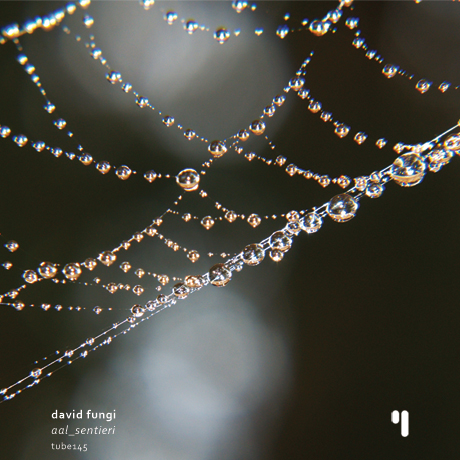
Qualche novità dalla netlabel test tube. Per una volta c’è un italiano.
David Fungi, from Varese, Italy, is clearly inspired by nature. Field recordings pop up from the initial sounds of “aal_sentieri”, blended with synthetic and metallic electronic sounds which produce the kind of ambience one might recognize from William Basinski. It is this razor edge that defines the strong personality of this recording. Even though “Aal_sentieri” is ambient music, it is also restless, menacing, provokes the listener and gives him a sense of travelling through a mysterious and dark forest. As the piece unfolds through its 23 minutes, the sound layering becomes more complex, while one can only guess the origin of the animal noises underneath. When the path comes to an end, a climax appears in the last 4 minutes, first with a burst of industrial noise and finally an orchestral and cinematic climax, finishing the track. “aal_sentieri” leaves the listener in the company of silence, which in a strange kind of way almost works as a reverberation of the track. It is not easy to capture one’s imagination like this, but David Fungi has that skill to mix disparate sounds in a coherent manner, making “aal_sentieri” a fine and peculiar release.» [César A. Laia]
L’apprezzabile Concerto per viola e orchestra di Sofia Gubaidulina scritto nel 1996-97 è qui eseguito da Yuri Bashmet che ne è il dedicatario. L’orchestra è la sinfonica di Colonia diretta da Seymon Bychkov.
La campagna lanciata dagli atei di Londra tramite la sezione “Comment is free” del Guardian, portata avanti con l’affissione su alcuni bus londinesi della scritta “Probabilmente Dio non esiste. Ora smettete di preoccuparvi e godetevi la vita” ha avuto grande successo.
A fronte delle 5500 sterline chieste ai lettori di CIF per sostenere la campagna, ne sono state raccolte ben 135000. Ora si annunciano manifestazioni simili in altre grandi città del mondo.
Ricordiamo che la campagna era partita in risposta ad una analoga inserzione che guidava al sito jesussaid.org sulla cui home page campeggiava un passo del vangelo di Matteo secondo la quale i non credenti sarebbero stati condannati alla separazione eterna da Dio e a passare l’eternità nei tormenti dell’inferno descritto da Cristo come un lago di fuoco.
Alan Jaras (aka “Reciprocity”) captures surreal refraction patterns of light, passing through molded plastic.
These are light refraction patterns or ‘caustics’ formed by a light beam passing through a shaped and textured plastic form. The pattern is captured directly on to 35mm film by removing the camera lens and putting the transparent object in its place. The processed film is digitally scanned for uploading. Please note these are not computer generated images but a true analogue of the way light is refracted by the objects I create.
Da un vinile del 1965 ormai fuori catalogo, Leonard Bernstein Conducts Music of Our Time, Bernstein dirige la New York Philharmonic in Atmosphères di Gyorgy Ligeti, un brano di cui abbiamo già parlato qualche tempo fa, ma che è sempre emozionante riascoltare.
La direzione di Bernstein è sorprendentemente chiara, ma quello che mi ha sconvolto è che è altrettanto sorprendentemente breve. Solo 6’30” contro i circa 8’30” di altre esecuzioni. Due minuti di differenza sono tanti, così ho tirato fuori la partitura. Il calcolo della durata totale non è immediato perché il tempo cambia spesso da 40 a 60 alla semiminima, ma un po’ di conti mi danno come risultato 8’34”.
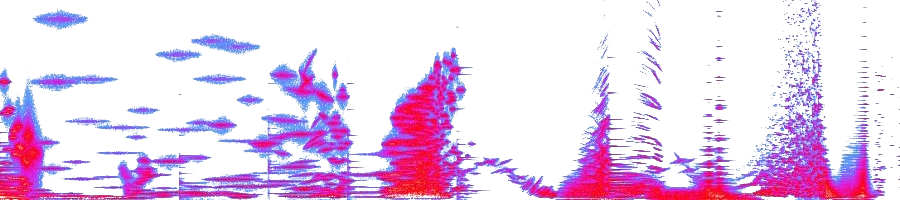
Così ho confrontato i file audio dell’esecuzione di Bernstein e di quella di Nott usando Audacity e il risultato è questo. Sopra Nott e sotto Bernstein (click per allargare):
Come vedete l’esecuzione di Bernstein è temporalmente compressa, oltre ad essere dinamicamente più alta. Sembra che vada all’incirca il 25% più veloce. Qui sotto le due esecuzioni
1 come One Laptop Per Child.
Con un po’ di stregoneria digitale, John Lennon ritorna, con la sua immagine e la sua voce, per sostenere la campagna One Laptop Per Child (OLPC) finalizzata al superamento del digital divide.
Si tratta del famoso progetto di Negroponte partito con l’idea di progettare un laptop vendibile a $100. Attualmente ha preso il nome di XO-Laptop e il prezzo di partenza è di $199, con l’intenzione di scendere via via che la produzione aumenterà. L’idea è di vendere negli USA e in Europa, tramite Amazon, un bundle di due laptop a $399 in totale, uno dei quali viene consegnato all’acquirente mentre l’altro va all’OLPC.
Il video è una piccola magia perché, se è facile montare un discorso partendo da materiale registrato, è difficile farlo con la giusta inflessione e inoltre è difficile che Lennon, da vivo, abbia mai pronunciato il neologismo “laptop”.
 Iain David McGeachy, meglio noto come John Martyn è morto in Irlanda all’età di 60 anni. Nato nel 1948, nel Surrey (Inghilterra), era cresciuto a Glasgow (Scozia), dove, a 19 anni, aveva cominciato a farsi conoscere per il suo stile caratterizzato da una miscela di blues e folk.


 Cosa non si può fare con un po’ di FFT e di convoluzione?
 Searching the old releases from
  Qualche novità dalla netlabel



 1 come One Laptop Per Child.