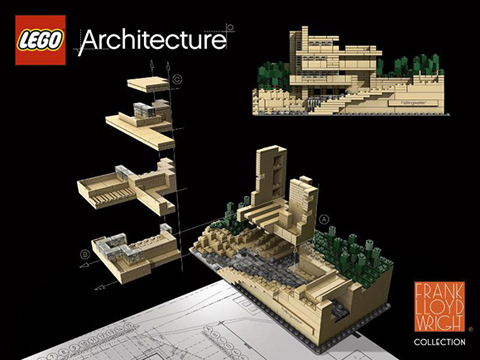
 La Frank Lloyd Wright Foundation e Lego celebrano l’opera di uno degli architetti universalmente più noti con una collezione di sei costruzioni che vanno ad aggiungersi ad altre già presenti nella serie Lego Architecture, nata dalla collaborazione tra il colosso danese e Adam Reed Tucker.
Monthly Archives: May 2009
Grande Polyphonie
L’opera più rappresentativa di François Bayle (di cui abbiamo già parlato qui) messa in linea da Avant Garde Project. Ve la presentiamo qui in un’unica playlist della durata di circa 36′ (putroppo ci può essere un piccolo intervallo fra un brano e l’altro).
L’intera composizione può essere scaricata in formato flac da AGP sia in 16 che in 24 bit.
Lo schema del brano, tratto dalle note di programma, è il seguente:
- Appel…
- …aux lignes actives
The simplest concrete element, the line, thin and melodic arrives fastest at an abstraction of qualities. Active, passive, or intermediate, the true line is, according to Klee, the line subjected to a strong tension. - …aux notes repetées
Brief, equal, clear values scrabled by the patter of bells emitting call signals. Rigid, transposed, very tense repetition. Followed by a third, deep, abbreviated repetition. Transition, interrupted rubato. - …au jardin
A polyphony of space and colors. Contrast between very brief, delicate fragments–dry versus fluid – and ample quivering sheets having harmonic colors – static versus moving. - …figures doubles
Combination of symmetries. Two contrasting parts – like male and female – organized in series of paired cells. These are varied up to the eighth repetition, where the first element is then brought to a completion. The mirror-repeats are enriched with successive transformations through added harmonics.
Then a new, very dynamic element appears – a man’s mask bringing tidings… - …grande polyphonie
A brief moment in the guise of a preface prepares the final “rappell”. Seven interconnected sections [a me sembrano 5, nota mia; le sezioni sono 7 in tutto] – though it is not immediately clear how they are related. Various sound signals are heard at frequent intervals, making it manifest that the role of the previous polyphonies was to lead up to the final combination. This makes it possible to listen in a musical way with a great deal of freedom, independence, superposing different voices. All the sound spaces used here resemble each other, from the more artificial and abstract ones to the totally concrete ones, which range from bird calls and songs to human calls and songs.
And finally, the initial call signal dissolves in a long breath, - Rappell…
Il collasso del tempo e gli ultimi echi
Le ultime due parti di Echoes of Time and the River (Echoes II), di George Crumb ripulite, per quanto possibile, dalle impurità del vecchio vinile. Si intitolano Collapse of Time e Last Echoes of Time.
The most free and fantastic movement is the portentous Collapse of Time. Like the celebrated amphibians of Aristophanes, the string players croak out the nonsense syllables “Krek-tu-dai! Krek-tu-dai!” while the xylophone taps out the name of the composer in Morse code. As the movement proceeds and the underlying pulse falls away, the music heads off into a wide range of special effects – quasi-improvised fragments passed around among the various soloists, notated in circular patterns in the score. The descent into the solitude of the finale, Last Echoes of Time, comes at first as a relief and relaxation from all the foregoing; once the listener is convinced of the retrospective nature of these last pages, he can begin to explore more securely the implications in these echoes of all that has gone before. [Robert McMahan]
George Crumb – from Echoes of Time and the River, Collapse of Time / Last Echoes of Time
Melodie Rituali
Ritual Melodies è una composizione del 1990 di Jonathan Harvey realizzata all’IRCAM.
A dispetto delle sonorità, alcune delle quali a un primo ascolto possono sembrare strumentali, si tratta invece di pura computer music. Tutti i suoni sono generati e manipolati dal computer. Nessuno è stato campionato, se non per fini di analisi e risintesi.
Questo procedimento è stato attuato per creare un materiale sonoro in continua trasformazione. I suoni base del brano sono risintesi di strumenti di origine cerimoniale e/o rituale (es: oboe indiano, campane tibetane, flauto di bambù, frammenti vocali di diversa origine…) le cui caratteristiche vengono poi alterate in fase di sintesi per creare suoni intermedi.
A mio avviso è decisamente un bel brano, sia dal punto di vista compositivo che da quello tecnico. L’unico lato che per me è un po’ disturbante è costituito da alcune sonorità di tipica marca IRCAM, come quel maledetto scampanio sulle frequenze alte, che sarà anche bello a un primo ascolto, ma ormai si trova in quasi tutti i brani realizzati laggiù.
Morsure Souffle
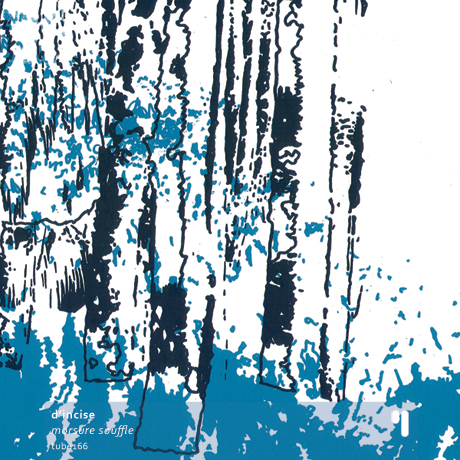 Laurent Peter è un musicista svizzero (Ginevra) più noto come d’incise, attivo nell’area elettronica /dub / free jazz / found / environmental sound. Morsure Souffle è il suo album più recente, distribuito dalla netlabel Test Tube.
Morsure Souffle, has all the audio hallmarks of a highly subtle sound collage. Released on Portugese netlabel Testube, it is at once found/environmental sound collected, collated and fused into shapes. Then moments of sound echo of improvisational jazz, or at least the stripped echoes of the oeuvre, or even semi-precise mimicry triggering found moments in the audience. Yet the action of extreme electronic manipulation is never far from the palette and the guise of nature as a backdrop to audio acoustic experimentation is as sensible a template as any. Even the sound of the chime, catching the wind, or the approximation of it combined with a sonic hum/purr and gently advancing triangle alarm is enough of a sound argument. Then there is the central track la Banquise living up to its name, a feast of noise terror, (a humorous notion in itself), mutating in to crisp audio action of imaginary violated string experiments on a vanquished piano; reason enough to display control and succinctness of digital prowess.
[innerversitysound [Cyclic Defrost] / May 02, 2009]
L’intero album è scaricabile qui. Alcuni estratti:
Emoticons 1881
Tutti quelli che pensano che gli emoticons siano una invenzione arrivata con internet (cioè quasi tutti), diano un’occhiata a questa parte di una pagina di Puck, un giornale satirico americano della fine dell’800. La pagina risale al 30 Marzo 1881 e la si può vedere nella sua interezza grazie a wikimedia.

Lego recreation
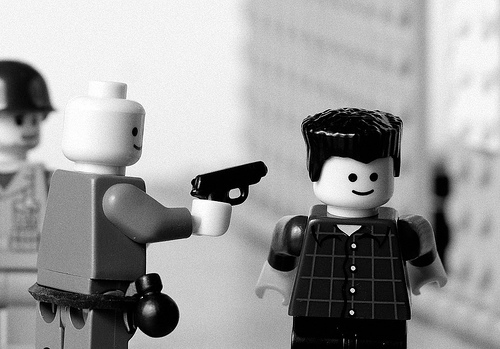
Prendete una serie di foto famose, ricostruitele in Lego e otterrete, per esempio, questo.
La quasi intera collezione è qui.
|
|
|
|
|
|


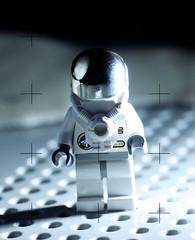
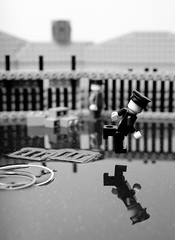
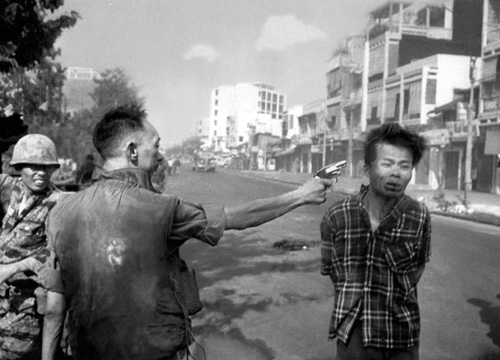
PS: il vedere gli omini della Lego impegnati a mimare queste azioni storiche mi dà una strana sensazione, un misto fra l’ilarità e l’incazzatura. Il punto è che gli omini Lego non hanno alcuna espressione, o meglio, hanno sempre la stessa espressione giocherellona e producono una scissione schizoide rispetto all’immagine originale. La cosa è particolarmente evidente nel caso di situazioni drammatiche come questa. This Associated Press photograph, “General Nguyen Ngoc Loan executing a Viet Cong prisoner in Saigon,” (February 1, 1968) won a 1969 Pulitzer prize for its photographer Eddie Adam (from wikipedia)
 |
 |
In questo senso segue la linea tracciata da molta arte pop postmoderna, come le varie versioni dell’Ultima Cena o la corrente cult following.
Solo Observed
Summer 1981, Lukas Foss began to compose SOLO, his first piano piece in twenty-eight years, for the pianist Yvar Mikhashoff who premiered it in Paris in March 1982. An initial twelve-tone motive reigns. Yet this is not twelve-toone music. The motive is like a theme which undergoes constant change. Nor is this minimal music; in spite of insistent repetitions, each repetition also contains a change implying development, growth and forward movement. Solo is a long development section, “senza sonata”; lumbering, struggling eighth-notes, circling, spiralling, forging ahead, always on the way, never pausing, never giving up, forever closing in on…
In the Spring of 1982, Lukas Foss and the Lincoln Center Chamber Players premiered a new version of Solo at the New World Festival in Miami, Florida. This version has an extended coda in which three other instruments join the piano, after some ten minutes of silent observing of the solo part. The three instruments are a keyboard instrument, a harp or cello and percussion.
The score has the word “Fine” written a bar before the end. This paradox should be explained: the last bar is like an appendage or error–the piano playing on without its master or the phonograph needle (metaphorically speaking) returning to the opening automatically, as the engine stops.
and here the 1982 version, called Solo Observed, with the add of cello (or harp), vibraphone (or marimba), and electric organ (or accordion) after 9/10 minutes.
Curriculum Vitae
Another piece by Lukas Foss, this time for accordion, an uncommon instrument in contemporary music (with some excellent exceptions, e.g. Gubaidulina).
The title, Curriculum Vitae, is explained by the fact that this piece contains some autobiographical reminiscences dating back to the composer’s youth which we find in the form of quotations: one of Brahms’ Hungarian Dances, the Turkish March, the Nazi anthem.
Beyond these flashbacks, however, there are no other quotes in the song. Although some appear to be, such as the tango fragment, they are actually fake and a work of imagination.
It is an interesting piece, both tragic and comic, tonal and atonal, simple and complex.
- Lukas Foss, Curriculum Vitae (1977), for accordion
Guy Klucevsek, accordion
Sculture semoventi

Delle sculture semoventi mosse dal vento di Theo Jansen abbiamo già parlato 3 anni fa.
Questo scultore olandese ha delle idee geniali. Progetta e costruisce le sue opere con tubi di plastica e bottiglie abbandonate (sempre in plastica, materiali leggeri) e gli oggetti che ne risultano esibiscono movimenti sempre più naturali. Adesso ha un bel sito ricco di immagini che potete ammirare qui.

Un video di 10 minuti con particolari costruttivi
String Quartet no. 3
Lukas Foss, compositore nato a Berlino nel 1922 ed emigrato negli USA con la famiglia per sfuggire al nazismo. Deceduto il 1 febbraio di quest’anno a 86 anni, Foss è tanto conosciuto e apprezzato negli USA quanto poco in Europa.
Eccovi il suo furioso String Quartet no. 3 del 1975, nell’esecuzione del Columbia Quartet (Benjamin Hudson, violin; Carol Zeavin, violin; Janet Lyman Hill, viola; Andre Emelianoff, cello).
Alcune note:
STRING QUARTET NO. 3 is Foss’ most extreme composition; it is themeless, tuneless, and restless. It is probably the first quartet without a single pizzicato since Haydn. The four strings are made to sound like an organ furiously preluding away. The sound vision which gave birth to this quartet may be the most merciless in the quartet literature.
Though some of the pages of the music may look unusual (see image, click to enlarge), QUARTET NO. 3 is notated in every detail. There are no performer choices, except for the number of repeats of certain patterns. Repetition? Actually something is always changing, even in the introduction, which contains only two pitches, A and C, combining in various ways – a kind of prison from which the players are liberated by a sudden all-interval flurry. There follows an extended fortissimo section of broken chord-waves with ever-changing rhythmic inflections. This leads into a rigidly structured pianissimo episode of accelerating and retarding twenote cells. The idea of an exhausting fortissimo followed by an equally unalleviated pianissimo is reminiscent of Beethoven’s Grosse Fuge, a work for which Foss has a special passion. Foss’ pianissimo section is however unmelodic and active. At one point near the end, the musicians are granted the one and only sustained sound; then the frantic waves and counter waves resume, this time in rhythmic unison, each moment of change cued by the first violin. The closing C major chord is neither a peaceful resolution nor a joke, but rather like an object on which the music stumbles, as if by accident, causing a short circuit, which brings the rush of broken chord patterns to a sudden halt.
STRING QUARTET NO. 3 was written for the Concord Quartet who obtained a grant from the New York State Council toward the commission of the piece and premiered it at Alice Tully Hall, New York on March 15, 1976.
Verona Risuona 2009
Un percorso sonoro che dal 2007 invade annualmente di note il centro storico con concerti per strumenti insoliti, installazioni interattive, performance di musicisti, ballerini e semplici passanti.
Un laboratorio aperto alla cittadinanza, che punta ad avvicinare il pubblico alla musica d’avanguardia, coinvolgendolo in prima persona per abbattere le frontiere tra fruitore ed esecutore.
La musica esce dai luoghi istituzionali e si impadronisce del tessuto urbano, dimostrando che la creatività è la carta vincente per coinvolgere la gente e stimolarne la passione e l’interesse culturale.
Evento Promosso dal Conservatorio Dall’Abaco e dall’Accademia Cignaroli di Verona in collaborazione con l’Accademia di Musica e Teatro dell’Università di Göteborg.
Inizia il 16 Maggio. Qui il sito.
Let’s Drink 100% Healthy Milk and Study Hard!
Visto che gli esami si avvicinano, anzi, per qualcuno sono già qui, mi sembra adatto.
Henry Kaiser – Let’s Drink 100% Healthy Milk and Study Hard!
Il ricordo del tempo
La seconda parte di Echoes of Time and the River (Echoes II), di George Crumb. Anche questa “ripulita” dalle impurità del vecchio vinile.
The second movement, Remembrance of Time, begins with the most distant and delicate sounds imaginable (piano, percussion, harp), echoed by a phrase from García Lorca (“the broken arches where time suffers”). Fragments of joyful music erupt from various wind and brass players on stage and off, and the commotion eventually gives way to a kind of Ivesian reminiscence, evoked by serene string harmonics: “Were You There When They Crucified the Lord?”
George Crumb – from Echoes of Time and the River, Remembrance of Time
Echoes of Time and the River
Nel 1970, mentre l’Europa era in pieno strutturalismo e in America impazzavano minimalismo e grafismi vari, George Crumb scriveva questo Echoes of Time and the River (Echoes II), per orchestra, un brano fortemente emozionale in quattro parti. Il titolo reca l’indicazione Echoes II perché precedentemente Crumb aveva composto Echoes of Autumn (1965).
Qui vi presentiamo il primo movimento Frozen Time che
features a collage of mysterious and muted textures in overlapping 7/8 metric patterns. After a time, three percussionists make their way ritualistically across the stage intoning the motto of the state of West Virginia: “Montani semper liberi?” (Mountaineers are always free); the “ironic” question mark has been added by the composer. The music swells to an intense fff in the middle section with glissandos in all the string parts. As if in answer, the mandolinist exits playing and whispering the same motto darkly as he disappears off stage
[from program notes]
Il brano è stato recuperato da un vecchio vinile molto rovinato. L’ho pulito per quanto possibile, senza intaccare l’incisione, ma la provenienza si sente.
George Crumb – from Echoes of Time and the River, Frozen Time
Fender Coffee Table

Qualche chitarrista hai mai osato immaginare un tavolo così? Eppure esiste. Qualcuno ha guardato un oggetto per lui comune con un occhio diverso.
Le 7 meraviglie abbandonate (in Europa)
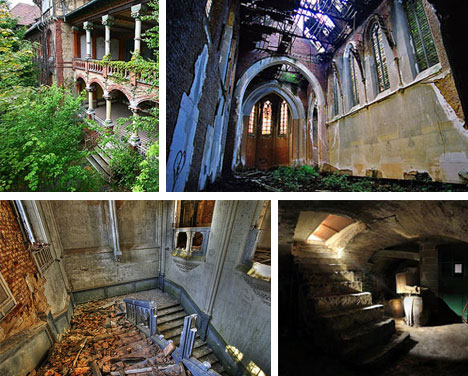
L’estate si avvicina ed è tempo di cominciare a pensare alle vacanze. Senza andare molto lontano, eccovi 7 meraviglie abbandonate in Europa, dalla Germania, al Belgio, alla Danimarca, all’Inghilterra, a Finlandia, Polonia e infine Francia. Questo è l’articolo che ne parla.
Unusual Architecture
Non perdete unusual architecture. Click to enlarge.
 Kansas City Library (Missouri, USA) |
 The Basket Building (Ohio, USA) |
 Forest Spiral (Darmstadt, Germany) |
 The Crooked House (Sopot, Poland) |
Octandre
 Octandre è rappresentativo di un modo di comporre tipico di Edgar Varèse, sviluppando e variando piccoli frammenti sonori. Lo stesso compositore lo descrive mediante una analogia con la crescita di un cristallo.
Questo modo di procedere è ben visibile nel corso del primo movimento, mentre il secondo si sviluppa per accrescimento. Gran parte del materiale del terzo, invece, deriva dai primi due, come il tema della tromba del primo movimento o il duetto di oboe e fagotto del secondo.
Octandre, peraltro, è l’unica opera di Varèse divisa in movimenti i cui tempi sono: Assez lent, Très vif et nerveux, Grave-Animé et jubilatoire. Ognuno si apre con uno strumento diverso: oboe, ottavino e fagotto.
Altra cosa interessante in questo brano è l’assenza totale di percussioni, cosa inusuale per Varèse. Il suo tipico ritmare nervoso, però, non scompare ed è affidato ai fiati, nella maggior parte dei casi ai tre ottoni.
- Edgar Varèse – Octandre
per flauto, clarinetto, oboe, fagotto, corno, tromba, trombone e contrabbasso (1923)
ASKO Ensemble, Riccardo Chailly (1997).
Déserts

Musiche di Edgar Varèse e Olivier Messiaen
Ora: 6 Maggio 2009 da 21:00 a 23:30
Luogo: Teatro Camploy
Via: Via cantarane 32
Città: Verona
Sito web o mappa: http://www.teatrocamploy.it
Recapiti: 0458009549 – 0458008184
Tipo di evento: concerto
Organizzato da: Intersezioni
PROGRAMMA
Edgar Varèse – Density 21.5
per flauto solo
Gino Maini, flauto
Scarica articolo: Varese_Maini.pdf
Edgar Varèse – Déserts
per ensemble di strumenti a fiato, percussioni ed elettronica
Ensemble dell’Arena di Verona
Direttore Jukka Isakkila
Mauro Graziani, regia del suono
Installazioni video di Piero Matarrese
Scarica articolo: varèse_déserts.pdf
Olivier Messiaen – Fantasia per violino e pianoforte
Oleksandr Semchuk, violino
Leonardo Zunica, pianoforte
Olivier Messiaen – Oiseaux Exotiques
per pianoforte, ensemble di strumenti a fiato e percussioni
Leonardo Zunica, pianoforte
Ensemble dell’Arena di Verona
Direttore Jukka Isakkila
Scarica articolo: stranocasomessiaen.pdf
Il più bell’orologio online
Gli orologi online sono migliaia, ma timebeat è decisamente uno dei più eleganti.

Il paradosso di Feldman
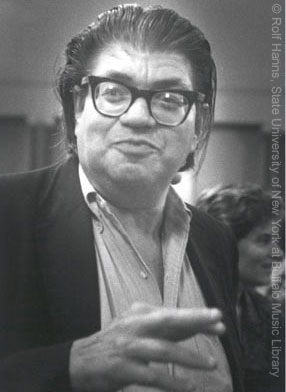 …consiste nel fatto che un uomo corpulento, gioviale e ciarliero si metta a scrivere della musica ai limiti dell’udibile. In un secolo rumoroso come il nostro, Morton Feldman ha scelto di essere silenzioso e soffice come la neve.
Feldman iniziò a comporre già negli anni Quaranta, sebbene i suoi lavori giovanili (spesso marcati da una certa influenza di Alexander Scriabin) siano stilisticamente molto differenti da quello che avrebbe composto più tardi, e che lo avrebbe reso universalmente noto per il suo linguaggio affatto personale, differente dalla maggior parte dei compositori a lui coevi.
Fu dopo il suo incontro con John Cage che Feldman iniziò a scrivere musica che non era correlata con le tecniche del passato, né con quelle in voga in quegli stessi anni (in particolare modo lo strutturalismo), utilizzando sistemi di notazione musicale non convenzionali (spesso basati su “griglie” o altri elementi grafici), delegando all’interprete (o al caso) la scelta di determinati parametri (talvolta Feldman determinava in partitura soltanto il timbro ed il registro, lasciando libera la scelta delle altezze all’esecutore, altre volte invece semplicemente specificando il numero di note che debbono essere suonate in determinati momenti, senza specificare quali).
In quell’epoca segnata dal suo interesse nei confronti dell’alea, Feldman applicò anche elementi derivati dal calcolo delle probabilità alle sue composizioni, traendo in questo senso ispirazione da certe opere di Cage come Music of Changes.
A partire dalla metà degli anni Cinquanta, e poi definitivamente dal 1967, per necessità di maggiore precisione nel controllo della sua musica, e per evitare che la particolare notazione venisse travisata come un invito all’improvvisazione, ritornò alla notazione musicale tradizionale. Per il suo frequente utilizzo di ripetizioni, fu spesso ritenuto un precursore del minimalismo.
Trovò spesso ispirazione nel lavoro degli amici pittori legati all’espressionismo astratto, tanto che negli anni Settanta compose numerosi brani (spesso con durate attorno ai venti minuti) sotto questo specifico influsso (tra cui Rothko Chapel del 1971, brano scritto per l’omonimo edificio che ospita opere di Mark Rothko, che potete ascoltare nel video. I dipinti sono, appunto, opera di Mark Rothko, che si vede anche in persona alla fine del video. L’organico è soprano, contralto, coro, viola, percussioni e celesta).
Nel 1977 compose la sua unica opera, Neither, su testo di Samuel Beckett.
A partire dalla fine degli anni Settanta iniziò a produrre lavori molto lunghi (raramente più brevi di mezz’ora, ed anzi spesso molto più lunghi), generalmente composti da un movimento unico, dove la concezione della durata viene dilatata fin quasi a voler annullare la stessa percezione del tempo; questi lavori comprendono Violin and String quartet (1985, due ore circa), For Philip Guston (1984, quattro ore circa), fino all’estremo String quartet II del 1983, la cui durata supera abbondantemente le cinque ore (senza nessuna pausa). La sua prima esecuzione integrale fu data nel 1999 presso la Cooper Union di New York dal Flux Quartet, il quale ha pure registrato lo stesso brano nel 2003 (per una durata totale di 6 ore e 7 minuti). Com’è tipico della sua tarda produzione, questo brano non presenta nessun cambiamento d’umore, rimanendo per la sua quasi totalità su dinamiche estremamente ridotte (piano o pianissimo); Feldman del resto negli ultimi anni ha dichiarato che i suoni di bassa intensità (quiet sounds) erano gli unici che lo interessavano.
[in parte da wikipedia]
Morton Feldman – Neither, Opera in one act (1977)
text by Samuel Beckett
Sarah Aristidou, soprano
ORF Radio-Symphonieorchester Wien
Roland Kluttig, conductor
Lontano
Secondo me uno dei brani più belli e rappresentativi del Ligeti delle grandi fasce orchestrali: Lontano del 1967.
Spazi Inabitabili
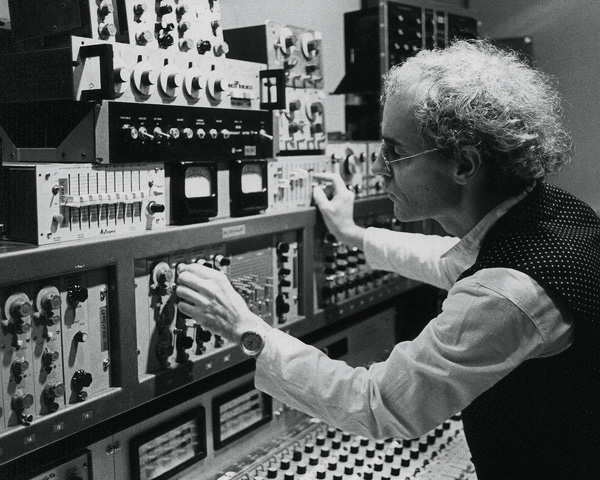
François Bayle, french, born in Madagascar, student then assistant of Pierre Schaeffer (1958 to 62), director of INA/GRM musical research center from 1975 to 1997, can be seen as the founder of acousmatic music.
Acousmatic music is a specialised sub-set of electroacoustic music. It is created using non-acoustic technology, exists only in recorded form in a fixed medium, and is composed specifically to be heard over loudspeakers.
The term comes from the akusmatikoi, the outer circle of Pythagoras’ disciples who only heard their teacher speaking from behind a veil. In a similar way, one hears acousmatic music from behind the ‘veil’ of loudspeakers, without seeing the source of the sound.
Acousmatic composers use this invisibility of sound sources as a positive aspect of the creative process, in one of two ways. The first is to separate the listener from the visual and physical context of the sounds being used, in order to permit a more concentrated and abstract form of listening unencumbered by the real-world associations or ‘meaning’ of the sounds. This form of listening is known as reduced listening (a term coined by the acousmatic music pioneer Pierre Schaeffer), and it allows both acoustic and synthetic sounds to be used to create an abstract musical discourse the focus of which is the detail of individual sounds, and the evolution and interaction of these sounds. The second approach is to deliberately evoke real-world associations by using identifiable sounds (real world objects, voices, environments) to create mental images in sound.
Here you can listen to the Espaces inhabitables, d’après Bataille et Jules Vernes (1967)