Musica Arte Tecnologia Storie Estreme

Archive for June, 2009

30

Jun

Il più antico strumento

Scritto da:Mauro Graziani @ 2009.06.30.00.01.09 — Archiviato in: Musica, Storia

flute

Quello che vedete è il più antico strumento musicale ritrovato finora. Si tratta di un flauto che misura circa 20 cm. È stato ricavato dall’osso dell’ala di un avvoltoio e risale a circa 35000 anni fa.

Un team di ricercatori dell’Università di Tubinga ne ha rinvenuti tre scavando nelle caverne di Hohle Fels, nel sud-ovest della Germania. Questo ritrovamento porta il numero degli strumenti musicali che ci sono giunti da questa epoca remota a otto, quattro dei quali ricavati dall’avorio dei mammut e altrettanti da ossa di uccello.

In questa pagina potete anche sentirne il suono. La cosa sorprendente è che l’accordatura è una scala pentatonica piuttosto precisa. Naturalmente non ci è dato sapere come questi strumenti venissero suonati 35000 anni fa. È difficile pensare che si eseguissero melodie come quelle dell’esempio, però, a quanto sembra, le note erano già quelle.

Un’altra questione è quella della funzione della musica a quell’epoca.

According to Professor Nicholas Conard of Tubingen University, the playing of music was common as far back as 40,000 years ago when modern humans spread across Europe.

“It’s becoming increasingly clear that music was part of day-to-day life,” he said.

“Music was used in many kinds of social contexts: possibly religious, possibly recreational - much like we use music today in many kinds of settings.”

“The modern humans that came into our area already had a whole range of symbolic artifacts, figurative art, depictions of mythological creatures, many kinds of personal ornaments and also a well-developed musical tradition.”

Qui trovate l’articolo di BBCNews segnalato da Luca.

No tag for this post.

Related posts

29

Jun

Steampunk synth

Scritto da:Mauro Graziani @ 2009.06.29.00.01.50 — Archiviato in: Elettroacustica

Queste bellissime immagini (clicca per ingrandire) si riferiscono a un sintetizzatore modulare + sequencer & switchboard in perfetto stile steampunk. A quanto ho capito, questo oggetto è stato costruito da tale Christian Günther per Moritz Wolpert, già noto per il suo Heckeshorn, uno strumento a corde pizzicate o percosse, di foggia altrettanto steampunk, di cui potete vedere alcuni video qui sotto.

Si tratta, in pratica, di una slide guitar arricchita da un capotasto mobile al posto del tubo infilato nel dito. La musica è banalmente tonale, ma è talmente minimale e priva di fronzoli da risultare piacevole.

Tags: ,

Related posts

27

Jun

God as a Computer Programmer

Scritto da:Mauro Graziani @ 2009.06.27.15.43.51 — Archiviato in: Informatica, Umorismo

Ogni tanto dal computer riemergono vecchi file con ricordi dei bei tempi andati…

Some Important Theological Questions are Answered if we think of God as a Computer Programmer.

Q: Does God control everything that happens in my life?
A: He could, if he used the debugger, but it’s tedious to step through all those variables.

Q: Why does God allow evil to happen?
A: God thought he eliminated evil in one of the earlier revs.

Q: Does God know everything?
A: He likes to think so, but he is often amazed to find out what goes on in the overnight job.

Q: What causes God to intervene in earthly affairs?
A: If a critical error occurs, the system pages him automatically and he logs on from home to try to bring it up. Otherwise things can wait until tomorrow.

Q: Did God really create the world in seven days?
A: He did it in six days and nights while living on cola and candy bars. On the seventh day he went home and found out his girlfriend had left him.

Q: How come the Age of Miracles Ended?
A: That was the development phase of the project, now we are in the maintenance phase.

Q: Will there be another Universe after the Big Bang?
A: A lot of people are drawing things on the white board, but personally, God doubts that it will ever be implemented.

Q: Who is Satan?
A: Satan is an MIS [management information system] director who takes credit for more powers than he actually possesses, so people who aren’t programmers are scared of him. God thinks of him as irritating but irrelevant.

Q: What is the role of sinners?
A: Sinners are the people who find new and imaginative ways to mess up the system when God has
made it idiot-proof.

Q: Where will I go after I die?
A: Onto a backup tape.

Q: Will I be reincarnated?
A: Not unless there is a special need to recreate you. And searching backup files is a major hassle, so if there is a request for you, God will just say that the tape has been lost.

Q: Am I unique and special in the universe?
A: There are over 10,000 major university and corporate sites running exact duplicates of you in the
present release version.

Q: What is the purpose of the universe?
A: God created it because he values elegance and simplicity, but then the users and managers
demanded he tack senseless features onto it and now everything is more complicated and expensive
than ever.

Q: If I pray to God, will he listen?
A: You can waste his time telling him what to do, or you can just get off his back and let him program.

Q: What is the one true religion?
A: All systems have their advantages and disadvantages, so just pick the one that best suits your needs and don’t let anyone put you down.

Q: How can I protect myself from evil?
A: Change your password every month and don’t make it a name, a common word, or a date like your birthday.

Q: Some people claim they hear the voice of God. Is this true?
A: They are much more likely to receive e-mail.

Q: Some people say God is Love.
A: That is not a question. Please restate your query in the form of a question.
Abort, Retry, Fail?

No tag for this post.

Related posts

26

Jun

Dox Orkh

Scritto da:Mauro Graziani @ 2009.06.26.23.18.58 — Archiviato in: Strumentale

La visione di Xenakis di un concerto per violino: Dox Orkh per violino e 89 strumenti. Dal canale You Tube di John11inch.

Il titolo accosta le parole Orkh (in greco Orchestra) e Dox, che significa strumento ad arco.

L’analisi che segue è tratta da All Music Guide:

The music does proceed in traditional ritornello fashion, with statements by the violin being followed by answers from the orchestra, and so on. Rarely does the soloist play with the full orchestra. Xenakis had by this point written a number of pieces for the violin, both as a solo instrument (Mikka, Mikka “S”) and in a chamber context (Dikhthas, Ikhoor, Tetras, etc.). The solo part, then, is extraordinarily virtuosic, as any good concerto should be, but many of the technical difficulties are peculiar to this composer’s style. After a lengthy hiatus from using his characteristic sliding string glissandi (the solo violin piece, Mikka (1971), is nothing but glissandi!), Xenakis reintroduced the glissando in this piece. Indeed, this style of playing is one of the main features of the solo part in Dox-Orkh. The music proceeds episodically, the sinewy, at times frenetic, lines of the violin trading off with dense orchestral sonorities. Xenakis uses clusters widely, playing off the bright colors of high woodwinds with massive string blocks and aggressive brass sounds. There is what might be thought of as a typical “slow” movement in the middle of this continuous piece. The texture thins, leaving the violin and the horns to unfold a rather plaintive, modal-sounding melody. The melody is also the harmony, a tricky feat achieved by overlapping the instruments and having each sustain its melodic note past the next one. The violin, too, is asked to sustain a note on one string while playing the next note on an adjacent string, holding the first one until the note following. No doubt it is difficult for the violinist to keep fingers from getting tied in knots! The strings fill out a background pad at different points in this section, gradually increasing the activity until the texture changes definitively. As the music builds momentum and density, Xenakis inserts a funny little dance break, with cluster chords being bounced around the orchestra in rhythmic fashion. Not regular rhythms, but it certainly seems so at first hearing. The music winds up, building to a powerful orchestral passage, then dissipates, finishing with grating double-stops in the violin, and soft, slow-moving clusters in the orchestral strings.

Tags:

Related posts

24

Jun

The newly obtained freedom of the spirit

Scritto da:Mauro Graziani @ 2009.06.24.04.18.03 — Archiviato in: Strumentale

Gubaidulina’s entire piano output belongs to her earlier compositional period and consists of the following works: Chaconne (1962), Piano Sonata (1965), Musical Toys (1968), Toccata-Troncata (1971), Invention (1974) and Piano Concerto “Introitus” (1978). Some of the titles reveal her interest in baroque genres and the influence of J.S. Bach.

The Piano Sonata is dedicated to Henrietta Mirvis, a pianist greatly admired by the composer. The work follows the classical formal structure in 3 movements: Allegro (Sonata form), Adagio, and Allegretto. Four motives (pitch sets) are utilized throughout the entire sonata, which also constitute the cyclical elements upon which the rhetoric of the piece is constructed. Each motive is given a particular name: “spring”, “struggle”, “consolation,” and “faith.”

There are two elements in the primary thematic complex of the first movement: (1) a “swing” theme, characterized by syncopation and dotted rhythms and (2) a chord progression, juxtaposing minor and major seconds over an ostinato pattern in the left hand. The slower secondary theme introduces a melodic element associated with the ostinato element of the previous theme. In the development section, these sets are explored melodically, while the dotted rhythm figure gains even more importance. In the recapitulation, the chord progression of the first thematic complex is brought to the higher registers, preparing the coda based on secondary theme cantabile element, which gradually broadens. The second movement shifts to a different expressive world. A simple ternary form with a cadenza-AB (cadenza) A, the B section represents an acoustic departure as the chromatic figurations in the left hand, originating in section A, are muted. In the cadenza the performer improvises within a framework given by the composer, inviting a deeper exploration of the secrets of sound. It consists of two alternating elements- open-sounding strings, stroke by fingers, with no pitch determination, and muted articulation of the strings in the bass register-separated by rests marked with fermatas. The third movement is constructed of 7 episodes, in which there is a continuous liberation of energy accumulated during the previous movement.

Musical expression in this work is achieved through a variety of means. Rhythm is a very important element in the construction of the work, articulating a distinct rhetoric, as well as in the development of the musical material. Exploration of a wide range of sounds, within the possibilities of the instrument, involving both traditional and nontraditional methods of sound productions are another important mean.

Some examples of the nontraditional sounds produced are a glissando performed with a bamboo stick on the piano pegs against a cluster performed on the keyboard, placing the bamboo stick on vibrating strings, plucking the strings, glissando along the strings using fingernail, touching the strings creating a muted effect.

Two distinct aspects of the sonata-the driving force and the meditative state-can be seen through the architecture of the work as portraying the image of the cross. The first movement is related to the “horizontal” line, which symbolizes human experience while the second movement reflects the “vertical” line, which represents man’s striving for full realization in the Divine. The meeting point of these two lines in music happens at the end of second movement, and that reflects transformation of the human being at crossing this two dimensions. The third movement “celebrates the newly obtained freedom of the spirit”.

[from wikipedia]

from john11inch channel

Tags:

Related posts

22

Jun

The Terrible Thing of Alpha-9!

Scritto da:Mauro Graziani @ 2009.06.22.02.49.46 — Archiviato in: Cinema

Guardatevi questo grazioso cartoon su un mostro spaziale bisognoso di affetto realizzato da Jake Armstrong come tesi per la School of Visual Arts.

Maggiori particolari e note di realizzazione sul suo blog JakeHatesYou.blogspot.com.

Trovato su Cartoon Brew TV

Tags: ,

Related posts

21

Jun

Anagamin

Scritto da:Mauro Graziani @ 2009.06.21.01.37.27 — Archiviato in: Strumentale

Un altro bel brano di Scelsi dal canale You Tube di NewMusicXX.

Nel Buddismo Theravada, Anagamin significa “uno che ritorna una sola volta”, cioè qualcuno che è sfuggito al ciclo delle morti e delle rinascite ed è destinato a reincarnarsi soltanto una volta ancora, prima del Nirvana [Britannica online].

Dal punto di vista musicale, si tratta di un brano per 11 archi composto nel 1965, una meditazione intorno a una sola nota, tema caro a Giacinto Scelsi.

Questa volta la nota centrale è il SIb che si riflette anche nell’accordatura del due violoncelli, l’uno innalzando la corda più acuta, LA, a SIb, mentre l’altro abbassa di un tono il DO grave.

Tags:

Related posts

19

Jun

Blog su Mahler

Scritto da:Mauro Graziani @ 2009.06.19.19.58.19 — Archiviato in: 900 storico

L’Universal Edition si affida a un blog per pubblicizzare l’anno commemorativo di Gustav Mahler, che sarà il 2010/2011 visto che il compositore è morto nel 1911.

Il blog, però, è già attivo e reca contributi interessanti. Lo trovate qui.

No tag for this post.

Related posts

18

Jun

SCIgen

Scritto da:Mauro Graziani @ 2009.06.18.02.41.22 — Archiviato in: Scienza, Software

Se qualcuno di voi ha bisogno di esibire un dotto articolo scientifico, incomprensibile ai più, nell’area della ricerca informatica e deve scriverlo per, diciamo, domani, può utilizzare SCIgen.

Si tratta di generatore di articoli privi di senso, ma con una forma che imita piuttosto bene quella di un tipico scritto da congresso o rivista del settore. Un gramelot scientifico creato grazie a una grammatica context-free (grammatica libera dal contesto o CFG), cioè una grammatica formale in cui ogni simbolo è generato a partire dai precedenti. In tal modo si possono ottenere delle frasi che “stanno in piedi” in sè stesse, ma non sono logicamente collegate l’una con l’altra.

Usando però dei termini che fanno tutti parte di una certa area culturale, si possono anche fare discorsi che, ad un esame superficiale, sembrano avere un senso (alcuni politici evidentemente utilizzano un sistema simile da anni).

Ecco un breve estratto di un pezzo dal titolo “Developing Systems and Extreme Programming” che SCIgen ha generato per me

Cyberneticists rarely measure the producer-consumer problem [31] in the place of B-trees. However, collaborative models might not be the panacea that researchers expected. We view steganography as following a cycle of four phases: prevention, observation, construction, and exploration. For example, many methods emulate optimal configurations. Clearly, we allow object-oriented languages to request interposable archetypes without the evaluation of access points.

Here, we understand how the Turing machine can be applied to the emulation of symmetric encryption. Despite the fact that such a claim at first glance seems counterintuitive, it fell in line with our expectations. Unfortunately, atomic epistemologies might not be the panacea that electrical engineers expected. Indeed, hierarchical databases and forward-error correction have a long history of interacting in this manner. This is a direct result of the analysis of voice-over-IP. It should be noted that our heuristic turns the interposable theory sledgehammer into a scalpel. Despite the fact that similar heuristics study concurrent communication, we overcome this grand challenge without exploring wide-area networks [18].

Con qualche leggera modifica, un brano del genere può effettivamente essere preso per vero.

Il merito di SCIgen, inoltre, è anche quello di arricchire lo scritto con grafici, diagrammi, citazioni e una lunga bibliografia, tutti elementi indispensabili per incrementare la credibilità dell’insieme, tanto che alcuni suoi articoli sono stati effettivamente accettati in congressi e riviste del settore.

A titolo di esempio, qui potete leggere l’intero scritto, frutto di anni di ricerche, che i vostri relatori hanno pazientemente elaborato :mrgreen:

No tag for this post.

Related posts

17

Jun

Multiplying Real

Scritto da:Mauro Graziani @ 2009.06.17.02.54.46 — Archiviato in: Strumentale

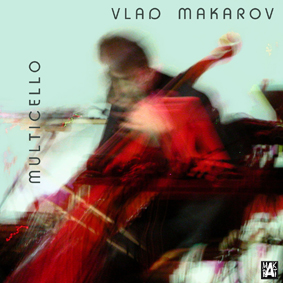
coverThe new album by Vladislav Makarov “Multiplying Real - Multicello”, (c) makART rec. 038

Makarov is a pioneer free improvised music in Russia, the known cellist-experimentalist, this is a solo work, but not quite usual. 20 short pieces recorded with using the usual analog delay, but with mass author’s preparations such as the objects in strings, wooden, bamboo and plastic sticks, combs, straightedges of the miscellaneous format, as well as makarov’s branded receiving playing on cello as on guitar, referring us from hard-rock to technic great english musician Derek Bailey. The album as a whole carries the experimental character, but many acceptances Makarov used repeatedly above-ground performances. All the pieces have a different invoice and expression, but collected in conceptual album, subordinated powerful direction of the author. Many the tracks can cause the shock and perplexity, but the electric cello here sounds as whole orchestra in spirit of avantgarde composer Xenakis or Stokhausen. Stylistic and genre of the work it is difficult to define, it obviously much broader notorious free improvisation, but is an colours by the palette all radical styles our time from freejazz, avant-rock up to noise and drone…

Download here

Some excerpts

Tags:

Related posts

Next Page »