Il più antico strumento

flute

Quello che vedete è il più antico strumento musicale ritrovato finora. Si tratta di un flauto che misura circa 20 cm. È stato ricavato dall’osso dell’ala di un avvoltoio e risale a circa 35000 anni fa.

Un team di ricercatori dell’Università di Tubinga ne ha rinvenuti tre scavando nelle caverne di Hohle Fels, nel sud-ovest della Germania. Questo ritrovamento porta il numero degli strumenti musicali che ci sono giunti da questa epoca remota a otto, quattro dei quali ricavati dall’avorio dei mammut e altrettanti da ossa di uccello.

In questa pagina potete anche sentirne il suono (peccato che la pagina esista ancora ma il file audio no).

La cosa sorprendente è che l’accordatura è una scala pentatonica piuttosto precisa. Naturalmente non ci è dato sapere come questi strumenti venissero suonati 35000 anni fa. È difficile pensare che si eseguissero melodie come quelle dell’esempio, però, a quanto sembra, le note erano già quelle.

Un’altra questione è quella della funzione della musica a quell’epoca.

According to Professor Nicholas Conard of Tubingen University, the playing of music was common as far back as 40,000 years ago when modern humans spread across Europe.

“It’s becoming increasingly clear that music was part of day-to-day life,” he said.

“Music was used in many kinds of social contexts: possibly religious, possibly recreational – much like we use music today in many kinds of settings.”

“The modern humans that came into our area already had a whole range of symbolic artifacts, figurative art, depictions of mythological creatures, many kinds of personal ornaments and also a well-developed musical tradition.”

Qui trovate l’articolo di BBCNews.

Steampunk synth

Queste bellissime immagini (clicca per ingrandire) si riferiscono a un sintetizzatore modulare + sequencer & switchboard in perfetto stile steampunk. A quanto ho capito, questo oggetto è stato costruito da tale Christian Günther per Moritz Wolpert, già noto per il suo Heckeshorn, uno strumento a corde pizzicate o percosse, di foggia altrettanto steampunk, di cui potete vedere alcuni video qui sotto.

Si tratta, in pratica, di una slide guitar arricchita da un capotasto mobile al posto del tubo infilato nel dito. La musica è banalmente tonale, ma è talmente minimale e priva di fronzoli da risultare piacevole.

God as a Computer Programmer

Ogni tanto dal computer riemergono vecchi file con ricordi dei bei tempi andati…

Some Important Theological Questions are Answered if we think of God as a Computer Programmer.

Q: Does God control everything that happens in my life?
A: He could, if he used the debugger, but it’s tedious to step through all those variables.

Q: Why does God allow evil to happen?
A: God thought he eliminated evil in one of the earlier revs.

Q: Does God know everything?
A: He likes to think so, but he is often amazed to find out what goes on in the overnight job.

Q: What causes God to intervene in earthly affairs?
A: If a critical error occurs, the system pages him automatically and he logs on from home to try to bring it up. Otherwise things can wait until tomorrow.

Q: Did God really create the world in seven days?
A: He did it in six days and nights while living on cola and candy bars. On the seventh day he went home and found out his girlfriend had left him.

Q: How come the Age of Miracles Ended?
A: That was the development phase of the project, now we are in the maintenance phase.

Q: Will there be another Universe after the Big Bang?
A: A lot of people are drawing things on the white board, but personally, God doubts that it will ever be implemented.

Q: Who is Satan?
A: Satan is an MIS [management information system] director who takes credit for more powers than he actually possesses, so people who aren’t programmers are scared of him. God thinks of him as irritating but irrelevant.

Q: What is the role of sinners?
A: Sinners are the people who find new and imaginative ways to mess up the system when God has made it idiot-proof.

Q: Where will I go after I die?
A: Onto a backup tape.

Q: Will I be reincarnated?
A: Not unless there is a special need to recreate you. And searching backup files is a major hassle, so if there is a request for you, God will just say that the tape has been lost.

Q: Am I unique and special in the universe?
A: There are over 10,000 major university and corporate sites running exact duplicates of you in the present release version.

Q: What is the purpose of the universe?
A: God created it because he values elegance and simplicity, but then the users and managers demanded he tack senseless features onto it and now everything is more complicated and expensive than ever.

Q: If I pray to God, will he listen?
A: You can waste his time telling him what to do, or you can just get off his back and let him program.

Q: What is the one true religion?
A: All systems have their advantages and disadvantages, so just pick the one that best suits your needs and don’t let anyone put you down.

Q: How can I protect myself from evil?
A: Change your password every month and don’t make it a name, a common word, or a date like your birthday.

Q: Some people claim they hear the voice of God. Is this true?
A: They are much more likely to receive e-mail.

Q: Some people say God is Love.
A: That is not a question. Please restate your query in the form of a question.
Abort, Retry, Fail?

Dox Orkh

La visione di Xenakis di un concerto per violino: Dox Orkh per violino e 89 strumenti.

Il titolo accosta le parole Orkh (in greco Orchestra) e Dox, che significa strumento ad arco.

L’analisi che segue è tratta da All Music Guide:

The music does proceed in traditional ritornello fashion, with statements by the violin being followed by answers from the orchestra, and so on. Rarely does the soloist play with the full orchestra. Xenakis had by this point written a number of pieces for the violin, both as a solo instrument (Mikka, Mikka “S”) and in a chamber context (Dikhthas, Ikhoor, Tetras, etc.). The solo part, then, is extraordinarily virtuosic, as any good concerto should be, but many of the technical difficulties are peculiar to this composer’s style. After a lengthy hiatus from using his characteristic sliding string glissandi (the solo violin piece, Mikka (1971), is nothing but glissandi!), Xenakis reintroduced the glissando in this piece. Indeed, this style of playing is one of the main features of the solo part in Dox-Orkh. The music proceeds episodically, the sinewy, at times frenetic, lines of the violin trading off with dense orchestral sonorities. Xenakis uses clusters widely, playing off the bright colors of high woodwinds with massive string blocks and aggressive brass sounds. There is what might be thought of as a typical “slow” movement in the middle of this continuous piece. The texture thins, leaving the violin and the horns to unfold a rather plaintive, modal-sounding melody. The melody is also the harmony, a tricky feat achieved by overlapping the instruments and having each sustain its melodic note past the next one. The violin, too, is asked to sustain a note on one string while playing the next note on an adjacent string, holding the first one until the note following. No doubt it is difficult for the violinist to keep fingers from getting tied in knots! The strings fill out a background pad at different points in this section, gradually increasing the activity until the texture changes definitively. As the music builds momentum and density, Xenakis inserts a funny little dance break, with cluster chords being bounced around the orchestra in rhythmic fashion. Not regular rhythms, but it certainly seems so at first hearing. The music winds up, building to a powerful orchestral passage, then dissipates, finishing with grating double-stops in the violin, and soft, slow-moving clusters in the orchestral strings.

The newly obtained freedom of the spirit

Gubaidulina’s entire piano output belongs to her earlier compositional period and consists of the following works: Chaconne (1962), Piano Sonata (1965), Musical Toys (1968), Toccata-Troncata (1971), Invention (1974) and Piano Concerto “Introitus” (1978). Some of the titles reveal her interest in baroque genres and the influence of J.S. Bach.

The Piano Sonata is dedicated to Henrietta Mirvis, a pianist greatly admired by the composer. The work follows the classical formal structure in 3 movements: Allegro (Sonata form), Adagio, and Allegretto. Four motives (pitch sets) are utilized throughout the entire sonata, which also constitute the cyclical elements upon which the rhetoric of the piece is constructed. Each motive is given a particular name: “spring”, “struggle”, “consolation,” and “faith.”

There are two elements in the primary thematic complex of the first movement: (1) a “swing” theme, characterized by syncopation and dotted rhythms and (2) a chord progression, juxtaposing minor and major seconds over an ostinato pattern in the left hand. The slower secondary theme introduces a melodic element associated with the ostinato element of the previous theme. In the development section, these sets are explored melodically, while the dotted rhythm figure gains even more importance. In the recapitulation, the chord progression of the first thematic complex is brought to the higher registers, preparing the coda based on secondary theme cantabile element, which gradually broadens. The second movement shifts to a different expressive world. A simple ternary form with a cadenza-AB (cadenza) A, the B section represents an acoustic departure as the chromatic figurations in the left hand, originating in section A, are muted. In the cadenza the performer improvises within a framework given by the composer, inviting a deeper exploration of the secrets of sound. It consists of two alternating elements- open-sounding strings, stroke by fingers, with no pitch determination, and muted articulation of the strings in the bass register-separated by rests marked with fermatas. The third movement is constructed of 7 episodes, in which there is a continuous liberation of energy accumulated during the previous movement.

Musical expression in this work is achieved through a variety of means. Rhythm is a very important element in the construction of the work, articulating a distinct rhetoric, as well as in the development of the musical material. Exploration of a wide range of sounds, within the possibilities of the instrument, involving both traditional and nontraditional methods of sound productions are another important mean.

Some examples of the nontraditional sounds produced are a glissando performed with a bamboo stick on the piano pegs against a cluster performed on the keyboard, placing the bamboo stick on vibrating strings, plucking the strings, glissando along the strings using fingernail, touching the strings creating a muted effect.

Two distinct aspects of the sonata-the driving force and the meditative state-can be seen through the architecture of the work as portraying the image of the cross. The first movement is related to the “horizontal” line, which symbolizes human experience while the second movement reflects the “vertical” line, which represents man’s striving for full realization in the Divine. The meeting point of these two lines in music happens at the end of second movement, and that reflects transformation of the human being at crossing this two dimensions. The third movement “celebrates the newly obtained freedom of the spirit”.

[from wikipedia]

Anagamin

Nel Buddismo Theravada, Anagamin significa “uno che ritorna una sola volta”, cioè qualcuno che è sfuggito al ciclo delle morti e delle rinascite ed è destinato a reincarnarsi soltanto una volta ancora, prima del Nirvana [Britannica online].

Dal punto di vista musicale, si tratta di un brano per 12 archi composto nel 1965, una meditazione intorno a una sola nota, tema caro a Giacinto Scelsi.

Questa volta la nota centrale è il SIb che si riflette anche nell’accordatura del due violoncelli, l’uno innalzando la corda più acuta, LA, a SIb, mentre l’altro abbassa di un tono il DO grave.

SCIgen

Se qualcuno di voi ha bisogno di esibire un dotto articolo scientifico, incomprensibile ai più, nell’area della ricerca informatica e deve scriverlo per, diciamo, domani, può utilizzare SCIgen.

Si tratta di generatore di articoli privi di senso, ma con una forma che imita piuttosto bene quella di un tipico scritto da congresso o rivista del settore. Un gramelot scientifico creato grazie a una grammatica context-free (grammatica libera dal contesto o CFG), cioè una grammatica formale in cui ogni simbolo è generato a partire dai precedenti. In tal modo si possono ottenere delle frasi che “stanno in piedi” in sè stesse, ma non sono logicamente collegate l’una con l’altra.

Usando però dei termini che fanno tutti parte di una certa area culturale, si possono anche fare discorsi che, ad un esame superficiale, sembrano avere un senso (alcuni politici evidentemente utilizzano un sistema simile da anni).

Ecco un breve estratto di un pezzo dal titolo “Developing Systems and Extreme Programming” che SCIgen ha generato per me

Cyberneticists rarely measure the producer-consumer problem [31] in the place of B-trees. However, collaborative models might not be the panacea that researchers expected. We view steganography as following a cycle of four phases: prevention, observation, construction, and exploration. For example, many methods emulate optimal configurations. Clearly, we allow object-oriented languages to request interposable archetypes without the evaluation of access points.

Here, we understand how the Turing machine can be applied to the emulation of symmetric encryption. Despite the fact that such a claim at first glance seems counterintuitive, it fell in line with our expectations. Unfortunately, atomic epistemologies might not be the panacea that electrical engineers expected. Indeed, hierarchical databases and forward-error correction have a long history of interacting in this manner. This is a direct result of the analysis of voice-over-IP. It should be noted that our heuristic turns the interposable theory sledgehammer into a scalpel. Despite the fact that similar heuristics study concurrent communication, we overcome this grand challenge without exploring wide-area networks [18].

Con qualche leggera modifica, un brano del genere può effettivamente essere preso per vero.

Il merito di SCIgen, inoltre, è anche quello di arricchire lo scritto con grafici, diagrammi, citazioni e una lunga bibliografia, tutti elementi indispensabili per incrementare la credibilità dell’insieme, tanto che alcuni suoi articoli sono stati effettivamente accettati in congressi e riviste del settore.

A titolo di esempio, qui potete leggere l’intero scritto, frutto di anni di ricerche, che i vostri relatori hanno pazientemente elaborato :mrgreen:

Multiplying Real

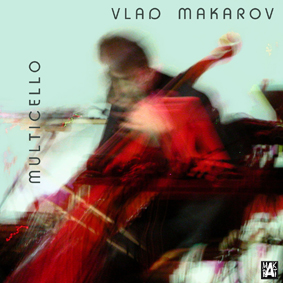
coverThe new album by Vladislav Makarov “Multiplying Real – Multicello”, (c) makART rec. 038

Makarov is a pioneer free improvised music in Russia, the known cellist-experimentalist, this is a solo work, but not quite usual. 20 short pieces recorded with using the usual analog delay, but with mass author’s preparations such as the objects in strings, wooden, bamboo and plastic sticks, combs, straightedges of the miscellaneous format, as well as makarov’s branded receiving playing on cello as on guitar, referring us from hard-rock to technic great english musician Derek Bailey. The album as a whole carries the experimental character, but many acceptances Makarov used repeatedly above-ground performances. All the pieces have a different invoice and expression, but collected in conceptual album, subordinated powerful direction of the author. Many the tracks can cause the shock and perplexity, but the electric cello here sounds as whole orchestra in spirit of avantgarde composer Xenakis or Stokhausen. Stylistic and genre of the work it is difficult to define, it obviously much broader notorious free improvisation, but is an colours by the palette all radical styles our time from freejazz, avant-rock up to noise and drone…

Download here

Some excerpts

On a Windy Day

“Written in 2003, On a Windy Day was inspired by wind chimes in Buddhist temples set deep in the mountains of Korea, where I used to visit as a child. I vaguely remember one afternoon hearing the chimes start to ring so softly and randomly that at first I didn’t even notice them. Then the wind got gustier and gustier, and the chimes got louder and faster along with the sound of leaves on the trees surrounding the temple, eventually creating this mass of loud, intense, intricate sound. Then, as soon as the wind calmed down, everything went back to its serene surroundings, yet left me with all those tingling sounds lasting in my ears.

“To emulate this experience, I wrote a descriptive score for metallic percussion and had it performed live a few times by various players; the end result was never satisfactory. However, as soon as I heard John Hollenbeck’s incredible interpretation of this score in a studio, I was more than ecstatic. An idea came to me to add Ikue Mori’s unique electronic sounds and bring even more depth and surrealism to the piece. The final recording is better than I’d ever imagined and feels just like revisiting that windy day from my long-gone childhood.”

[Okkyung Lee]

Okkyung Lee (b. 1975) is a composer and cellist whose music fuses her classical training with improvisation, jazz, traditional Korean music, and noise. Lee was born and raised in Daejon, Korea, and attended arts schools in Seoul. In 1993 she moved to Boston, Massachusetts, where she studied at Berklee College of Music and with Hankus Netsky at the New England Conservatory of Music. Since relocating to New York City in 2000, Lee has been very active in the downtown music scene, performing and recording with artists such as Derek Bailey, Nels Cline, Anthony Coleman, Shelley Hirsch, Eyvind Kang, Christian Marclay, Thurston Moore, Ikue Mori, Jim O’Rourke, Zeena Parkins, Marc Ribot, Elliott Sharp, and John Zorn, among others.

  • Okkyung Lee – On a Windy Day (2003), for percussion and electronics

Retroscan

Chris Brown‘s (b. 1953) music stems from the intersection of many different musical traditions and styles, including classical music, traditional Indonesian, Indian, Afro-American, and Cuban musics, and contemporary American experimental music. He has worked extensively with electronics, from amplified acoustic devices and analog sound modification to custom-made interactive computer systems. Collaboration and improvisation have played a significant role in the development of his work.

This [Retroscan] is the final section of a larger solo work Retrospectacles, in which the whole range of sounds possible from the piano, including sounds made directly on the strings, the frame, as well as the keyboard, provide sources for live electronic transformation by an interactive computer program. The music is a narrative about memory: each sound evolving out of the last, each playback with constantly varying pitch/time of sounds that have recently passed.
[Chris Brown]


  • Chris Brown – Retroscan (2003), for piano & live electronics
    Chris Brown, piano, live electronics

For Irving Lippel

For Irving Lippel è una composizione del 2004 di John Link (1962), compositore di Boston, allievo di Elliott Carter, aperto a varie esperienze: ha composto lavori per diversi media (orchestra, formazioni cameristiche, jazz ensembles, rock band e sistemi elettroacustici).

Questo brano è una fantasia che esplora le suggestive potenzialità della combinazione chitarra – vibrafono.

S. Francesco prega gli uccelli

Oggi ci occupiamo di Lewis Nielson (che giovane non è, essendo nato nel 1950) e di una sua composizione per orchestra del 2005, chiamata St. Francis preaches to the birds.

Lewis Nielson’s compositional influences include the music of Luciano Berio, Edgard Varèse, and Iannis Xenakis. He is also heavily influenced by a wide range of philosophers including Edmund Husserl, Karl Marx, and Ludwig Wittgenstein, as well as painting, poetry, and film.
Grants and awards for Nielson’s music include the Cleveland Arts Prize, Delius Trust, Groupe de Musique Expérimentale de Bourges in France, Ibla Foundation of Italy, International Society of Bassists, Meet the Composer, and National Endowment for the Arts. Nielson taught for 21 years at the University of Georgia in Athens, and since 2000 he has been on faculty at the Oberlin Conservatory of Music, where he is director of the composition division. His work is recorded on the aca Digital, Albany, Capstone, Centaur, innova, and MMC labels.

Di questo brano l’autore scrive

“The piece is one long phrase. The single ‘phrase’ is kept in motion (perhaps suspension is a better word) through layering and elision of material within the layers … [There is a] gradual transformation from pitched, to less-pitched, to essentially non-pitched material in the solo violin part which, in turn, radiates in widely varying and sometimes very surprising ways throughout the sub-groupings and ‘sections’ of the ensemble.

“The piece is also like a funnel, or thresher, collecting seemingly disparate material, combining it and recombining it, turning one kind of music into another, winnowing out some aspects of an idea and transforming it into something new, resulting a continuous overlapping of ideas … Alternately in support and in contrast to the solo violin music, the other instruments also make musical contributions of their own, even in the act of assimilating or transforming themselves in light of what the soloist provides.

“Two general concepts govern structural growth: communication (or lack or inability thereof) between the soloist and the various ‘sections’ of the ensemble … and transformation of musical material within and between instruments and sections. The work is a long conversation among many individuals and groups, aiming less for a convenient sense of dialogue or dependent relationship between soloist and the rest than for the maintenance of a balance within the various musical ‘languages’ generated. […]

“While I do not intend any kind of direct correlation, the actual legend of St. Francis and his sermons to the birds … can provide, by way of analogy, some approaches to the workings of the piece and some various ways to listen to it … Whether or not one believes other aspects of the St. Francis legend, it’s clear that he sought to hold the birds’ attention, and that they were as eager to understand him as he them. Equally, as he listened to them he took away knowledge of a kind that resists codification while being very meaningful to him. […]

“It will be noted that the work concludes in an unusual manner: to wit, with the soloist leading the ensemble and the conductor seated, playing celesta with the percussionists. Besides making an historical ‘tip of the hat’ to the original leadership functions of the Baroque solo concerto, the soloist at the end embodies the catalytic and transformational agent he has been all along. […]

1987

Un breve ma affascinante brano di Anna Clyne, giovane (nata nel 1980) compositrice inglese trapiantata a New York.

Di 1987, per flauto, clarinetto, violino, violoncello e nastro, composto nel 2008, l’autrice dice soltanto

Memories tucked away and tangled in threads of beads in the corner of her glass box.


Dea Varanus

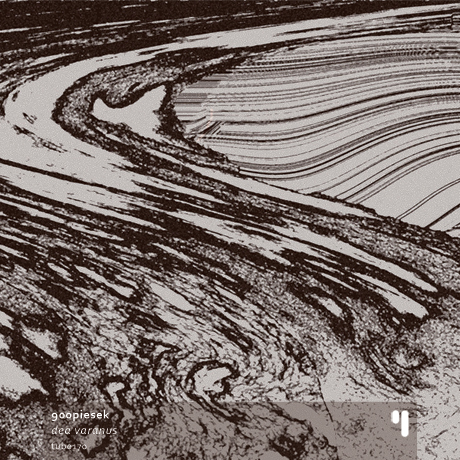
coverMatúš Mikula, aka 900piesek, è slovacco, uno dei giovani musicisti elettroacustici europei che creano una sorta di science fiction ambient con un po’ di nostalgia degli anni ’70.

L’album, dal titolo Dea Varanus, è pubblicato da Test Tube ed è scaricabile qui.

All four tracks emanate sound through a dense and foggy underwater-like world… as if we were in a different dimension. Audio data is served to you using computers and machines from another time. Referencially, this is ambient electronics circa 1970’s, while some keyboards sound definitely like Vangelis, Blade Runner period, which is actually very appropriate.

Dear listener, we recommend the use of headphones throughout this journey, as the fine subtleties of the atmospheric and environmental audio pieces you’re hearing will surely gain much detail simply because of their use.
This is a ‘vintage modern classic’, with drones. Enjoy.

[Pedro Leitão]

Excerpts: Ra

Eleven Echoes of Autumn

George Crumb – Eleven Echoes of Autumn (1966) for violin, alto flute, clarinet, and piano.

Eleven Echoes of Autumn was composed during the spring of 1966 for the Aeolian Chamber Players (on commission from Bowdoin College). The eleven pieces constituting the work are performed without interruption:

  1. Echo 1. Fantastico
  2. Echo 2. Languidamente, quasi lontano (“hauntingly”)
  3. Echo 3. Prestissimo
  4. Echo 4. Con bravura
  5. Echo 5. Cadenza I (for Alto Flute)
  6. Echo 6. Cadenza II (for Violin)
  7. Echo 7. Cadenza III (for Clarinet)
  8. Echo 8. Feroce, violento
  9. Echo 9. Serenamente, quasi lontano (“hauntingly”)
  10. Echo 10. Senza misura (“gently undulating”)
  11. Echo 11. Adagio (“like a prayer”)

Each of the echoes exploits certain timbral possibilities of the instruments. For example, echo 1 (for piano alone) is based entirely on the 5th partial harmonic, ehco 2 on violin harmonics in combination with 7th partial harmonics produced on the piano (by drawing a piece of hard rubber along the strings). A delicate aura of sympathetic vibrations emerges in echoes 3 and 4, produced in the latter case by alto flute and clarinet playing into the piano (close to the strings). At the conclusion of the work the violinist achieves a mournful, fragile timbre by playing with the bow hair completely slack.

The most important generative element of Eleven Echoes is the “bell motif” — a quintuplet figure based on the whole-tone interval — which is heard at the beginning of the work. This diatonic figure appears in a variety of rhythmic guises, and frequently in a highly chromatic context.

Each of the eleven pieces has its own expressive character, at times overlaid by quasi-obbligato music of contrasting character, e.g., the “wind music” of the alto flute and clarinet in echo 2 or the “distant mandolin music” of the violin in echo 3. The larger expressive curve of the work is arch-like: a gradual growth of intensity to a climactic point (echo 8), followed by a gradual collapse.

Although Eleven Echoes has certain programmatic implications for the composer, it is enough for the listener to infer the significance of the motto-quote from Federico García Lorca: “… y los arcos rotos donde sufre el tiempo” (“… and the broken arches where time suffers”). These words are softly intoned as a preface to each of the three cadenza (echoes 5-7) and the image “broken arches” is represented visually in the notation of the music which underlies the cadenzas.

Textures

Di Toru Takemitsu, vi presento questo delizioso Textures del 1964, recuperato da un vecchio vinile.

In questo brano, l’orchestra di 73 elementi è divisa in due gruppi uguali, piazzati da parti opposte rispetto al pianoforte, sistemato in posizione centrale. Questo espediente, coadiuvato dalla scrittura, serve ad ottenere un marcato effetto stereofonico.

La scrittura, inoltre, è solistica fino al livello del singolo esecutore per creare tessiture sonore elaborate e cangianti.

  • Toru Takemitsu – Textures (1964), per orchestra

Musica di Jean Dubuffet

dubuffetNon è un errore di stampa. Jean Dubuffet (1901-1985), scultore e pittore francese di fama mondiale, ha scritto anche della musica. Più che scritto, però, bisognerebbe usare il termine “realizzato”, trattandosi di musica concreta, in parte di origine strumentale, della quale non esiste alcuna partitura.

Oltretutto, lo stesso Dubuffet dichiara:

I find that true music should not be written, that all written music is a false music, that the musical notation which has been adopted in the west, with its notes on the staves and its twelve notes per octave, is a very poor notation which does not permit to notate the sounds and only allows the making of a totally specious music which has nothing to do with true music. It is impossible to write true music, except with a stylus on the wax, and this is what they do now in recordings.
This is a way of writing and the only one that’s proper to music.

Il suo metodo compositivo, infatti, consisteva nell’improvvisare liberamente con diversi strumenti occidentali e orientali, nonché con oggetti trovati, registrando il tutto, per passare, poi, a una fase di montaggio usando vari registratori e un mixer.

In realtà, Dubuffet aveva studiato musica da giovane, ma poi non l’aveva mai praticata o studiata con continuità. La sua attenzione era stata risvegliata, alla fine del 1960, da una serie di improvvisazioni fatte per divertimento con l’amico Asger Jorn. Ma poi la passione si era risvegliata al punto che

I transformed a room in my house into a music workshop and in the periods between our get-togethers with Asger Jorn I became a one-man band, playing each of my fifty-odd instruments in turn. Thanks to my tape recorder I was able to play each part successively on the same tape and have the machine play everything back simultaneously.

E poi

The subsequent recordings are the result of two diverging approaches which I hesitated between and which are probably both apparent in at least some pieces. The first was an attempt to produce music with, a very human touch, in other words, which expressed people’s moods and their drives as well as the sounds, the general hubbub and the sonorous backdrop of our everyday lives, the noises to which we are so closely connected and, although we don’t realize it, have probably endeared themselves to us and which we would be hard put to do without. There is an osmosis between this permanent music which carries us along and the music we ourselves express; they go together to form the specific music which can be considered as a human beings. Deep down I like to think of this music as music we make, in contrast to another very different music, which greatly stimulates my thoughts and which I call music we listen to. The latter is completely foreign to us and our natural tendencies; it is not human at all and could lead us to hear (or imagine) sounds which would be produced by the elements themselves, independent of human intervention.

Dubuffet dichiara anche:

In my music I wanted to place myself in the position of a man of fifty thousand years ago, a man who ignores everything about western music and invents a music for himself without any reference, without any discipline, without anything that would prevent him to express himself freely and for his own good pleasure.

Da queste improvvisazioni sono nati due dischi che potete trovare in formato flac su AGP74 e AGP79.

Intanto alcuni estratti:

Baudrillard rock star

baudrillardUnbelievable but true! Jean Baudrillard recites his poetry backed up by an all star band featuring Tom Watson, Mike Kelley, George Hurley, Lynn Johnston, Dave Muller and Amy Stoll, special guest vocalist Allucquère Rosanne Stone.

Recorded live as part of the Chance Festival at Whiskey Pete’s Casino in Stateline Nevada, 1996.

You’ve never heard Baudrillard like this before! Music to read Nietzsche to.

Listen to the tracks from UBUWeb.

Excerpt, track 2.

The Beatles: Rock Band

Doveva succedere prima o poi. I Beatles sono finiti in un videogame. Realizzato da MTV Games, sarà rilasciato in settembre. Alla conferenza di presentazione si sono riuniti tutti i detentori dei diritti: Paul McCartney, Ringo Starr, Yoko Ono Lennon e Olivia Harrison. Cosa non può il denaro…

Paul (“We love the game”) e Ringo (“The game is good”), hanno detto poco. Le vedove, ancora meno. Sono state anche rese note 10 delle 45 canzoni incluse nel gioco fra le quali “I Saw Her Standing There,” “Day Tripper,” “Taxman,” “Here Comes the Sun” e “Get Back.”

La notizia è apparsa dapprima sull’Ansa, ma io ho trovato anche la schermata e il trailer :mrgreen: .

Lituus

Secondo questo articolo della BBC, un antico strumento di origine romanica utilizzato, via via sempre più raramente, fino all’epoca di Bach, è stato recentemente ricostruito dai ricercatori dell’Engineering and Physical Sciences Research Council (EPSRC) e dell’Università di Edinburgo.

Il Lituus ha l’aspetto di una lunga (2.4 m) tromba di legno e produce un suono simile a quello della tromba, ma con pronunciate inflessioni vocali.

Purtroppo il video che in origine era parte dell’articolo non esiste più. Una versione del lituus leggermente diversa, più corta grazie anche alla curvatura finale, si può vedere in questo video.

Le rovine di Detroit

Yves Marchand & Romain Meffre sono fotografi che si occupano di archeologia urbana e industriale.

Sul loro sito esibiscono tre bellissime gallerie dedicate rispettivamente alle rovine di Detroit, alle vestigia industriali della Germania Est e ai teatri abbandonati d’America. Sono tutte belle, ma la prima, per me, è la più interessante.

Sviluppatasi con il boom economico del dopoguerra legato principalmente all’automobile, Detroit era arrivata a 2 milioni di abitanti negli anni ’50, diventando la quarta città degli Stati Uniti. Oggi, con la General Motors molto vicina al fallimento, Detroit ha perso la metà dei suoi abitanti e la de-industrializzazione ha lasciato enormi monumenti alla decadenza che non vengono riconvertiti perché non ci sono investimenti in una città in decadenza. Semplicemente rimangono, tracce di uno splendido passato, monumenti sopravvissuti alla perdita della loro funzione.

Amo quella foto con il pianoforte…