Sounds from Saturn

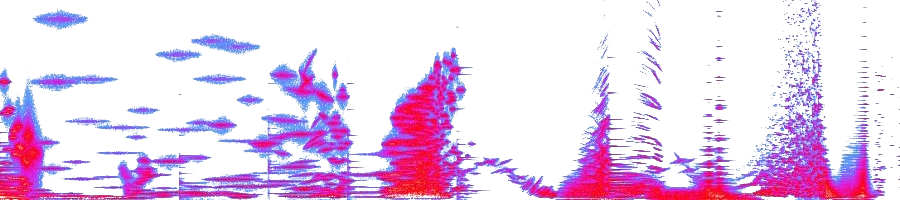
Saturn is a source of intense radio emissions, which have been monitored by the Cassini spacecraft. The radio waves are closely related to the auroras near the poles of the planet. These auroras are similar to Earth’s northern and southern lights. This is an audio file of radio emissions from Saturn.

The Cassini spacecraft began detecting these radio emissions in April 2002, when Cassini was 374 million kilometers (234 million miles) from the planet, using the Cassini radio and plasma wave science instrument. The radio and plasma wave instrument has now provided the first high resolution observations of these emissions, showing an amazing array of variations in frequency and time. The complex radio spectrum with rising and falling tones, is very similar to Earth’s auroral radio emissions. These structures indicate that there are numerous small radio sources moving along magnetic field lines threading the auroral region.

Time on this recording has been compressed, so that 73 seconds corresponds to 27 minutes. Since the frequencies of these emissions are well above the audio frequency range, we have shifted them downward by a factor of 44.

The Cassini-Huygens mission is a cooperative project of NASA, the European Space Agency and the Italian Space Agency. The Jet Propulsion Laboratory, a division of the California Institute of Technology in Pasadena, manages the mission for NASA’s Science Mission Directorate, Washington, D.C. The Cassini orbiter was designed, developed and assembled at JPL. The radio and plasma wave science team is based at the University of Iowa, Iowa City.

For more information about the Cassini-Huygens mission, visit http://saturn.jpl.nasa.gov and the instrument team’s home page, http://www-pw.physics.uiowa.edu/cassini/.

Credit: NASA/JPL/University of Iowa

spectrum

From NASA.gov

Jliat

site site

La home page del sito del rumorista inglese Jliat (James Whitehead) offre ottime cose, come una serie di drones liberamente scaricabili, esempi:

I suoi lavori si collocano sempre agli estremi: nella più assoluta cacofonia o nella quiete più totale. In ogni caso vivono in una immobilità irraggiungibile.

Si possono scaricare da Youtube e Soundcloud

Tornado

coverUn po’ di sana aggressione sonora in stile post free jazz europeo non fa mai male. Dalla netlabel Insubordinations, l’ultimo lavoro del gruppo svizzero Diatribes, un duo formato da cyril bondi (drums, percussions) e d’incise (laptop, obects, treatments), attorno ai quali gravitano molti musicisti ospiti.

Diatribes,a strongly libertarian ensemble, began its existence in a Geneva basement in Winter 2004. Their idea was to mix distinct various types and approach of the sounds, in order to develop a malleable musical mass. The instruments merge into the electronics treatments in a primary dance, where construction and deconstruction coexist, and envy and disgust unite. There are no limits in the way of playing, where rhythms, melodies and noise meet sporadically, merging into each other until they are almost forgotten. Free jazz in its approach, acoustic and electronic in its execution, the trio is capable of exploring the minute like the intense.
Initialy a trio with Gaël Riondel on saxophone, diatribes became a polymorphous formation, extending its spectrum with guest musicians such as the guitarist Christian Graf, the electroacoustician Nicolas Sordet, the pianists Jacques Demierre and Johann Bourquenez, the bassist Dragos Tara or the saxophonist Piero SK..

L’intero album è scaricabile qui.

  • Diatribes – Tornade
    cyril bondi: drums, percussions – d’incise: laptop, objects – jacques demierre: grand piano – johann bourquenez: grand piano

Hosokawa Toshio

cover“Music,” says Toshio Hosokawa, “is the place where notes and silence meet.” This identifies his aesthetic concept as a genuinely Japanese one. It is found both in Japanese landscape painting and in the music, such as the courtly gagaku, in which audible sound always stands in relation to nonsound, i.e. to silence. In their rhythmic proportions Hosokawa’s compositions are oriented around the breathing methods of Zen meditation, with their very slow breathing in and very slow breathing out: “Each breath contains life and death, death and life.”

Hosokawa Toshio (細川俊夫) è nato nel 1955 a Hiroshima. Ha studiato composizione in Europa, a Berlino e Friburgo con Isang Yong e Klaus Huber.

Di lui conoscevo solo Circulation Ocean per orchestra. Poi ho trovato questi pezzi per fisarmonica e shō (un organo a fiato tipicamente asiatico; esiste in varie fogge dall’India alla Cina; vedi wikipedia).

Alcuni di essi, come quello che potrete ascoltare, derivano da brani tradizionali del Gagaku, altri sono stati composti da Hosokawa, ma tutti sono modellati su un ritmo lentissimo, con i suoni dei due strumenti, quasi sempre nel registro acuto, che diventano praticamente indistinguibili.

Ina

Chaya Czernowin è una compositrice israeliana nata nel 1957. Vive in Austria.
Vi faccio ascoltare Ina, un buon brano con sonorità particolari, per flauto basso e 6 altri flauti (basso e ottavino) preregistrati.

Ulteriori informazioni su di lei si trovano nella sua pagina.

Chaya Czernowin – Ina, per flauto basso e 6 flauti preregistrati

Pacific Fanfare

coverPacific Fanfare (1996) è un breve brano di Barry Truax composto per celebrare il 25° anniversario della Vancouver New Music Society e del World Soundscape Project, di cui abbiamo parlato qualche giorno fa.

È basata su 10 “soundmarks” registrati nell’ambito del WSP vari anni prima (chi ascolta le nostre proposte sonore riconoscerà subito la sirena della nave con cui iniziava “Entrance to the Harbor” nel post di cui sopra.

Il concetto di “soundmarks” è fondamentale nel lavoro del WSP e designa quei suoni che caratterizzano un determinato paesaggio sonoro. Questi suoni riproposti in Pacific Fanfare sia nella loro versione originale che elaborata mediante riduonatori digitali (una riverberazione artificialmente colorata) e time-stretching (allungamento temporate del suono di solito senza alterazione della frequenza).

Il brano è incluso nel CD Islands, acquistabile sul sito dell’autore.

Crumb: Zeitgeist

George Crumb completed the final revisions for Zeitgeist (Six Tableaux for Two Amplified Pianos, Book I) in 1989. The work is approximately twenty-eight minutes in duration. It was commissioned by the Degenhardt-Kent piano duet. The first performance took place at the Charles Ives Festival in Duisburg, Germany in 1988.

After that. the composer reworked the piece to his liking. Like the rest of the Crumb catalog, this work includes enigmatic sounds and titles for the movements, such as “The Realm of Morpheus (” … the inner eye of dreams”).” The extended techniques involves the players reaching into the piano to attack the strings directly in order to achieve specific timbres that would not otherwise be available from without.

Like many of the composer’s earlier works, elements of the work suggest a coherent and exotic belief system or world view in all its eccentricities. Like his Makrokosmos series for amplified piano(s) in the 1970s, the listener is often drawn to the poetic allusions as potential clues to unlocking the arcane secrets of the composer’s mind.

The sound suggests some very concrete ideology or mystic purpose behind his clear yet unique musical formations. Webern had his naturalist Catholicism; Crumb’s point of departure is anybody’s guess. Part of its enduring interest is its lack of posturing. Scriabin, for example, reveled in the role of the eccentric, mystic genius, and played it up. Satie did something similar, though in a more modern and self-stylized way that was grounded in the Rosicrucians. It was less of a romantic cliché than was the hackneyed persona of his Russian peer.

Crumb has all the interior components of a similarly mystical artistic personality but none of the mannerisms or apparent affiliations. He is the anchor of his own spirit, and nothing else resembles his art, with the exception of a plethora of imitators.

When listening to a work such as Zeitgeist, being a world famous artist does not sound preoccupying to the composer. There is compassion to his music that does reflect back upon him as a leader of any wounded aesthetic congregation, as if he does not regard himself as the vital part of an equation consisting of listener, performer, and composer.

Above all, Crumb’s music is American. More precisely, it is nocturnal, pastoral Americana of the highest caliber, revealing a deeply compassionate, inquisitive, and independent imagination. A work such as Zeitgeist does not have more in common with the work of most composers from the United States than it does with the Europeans, with the exception of Charles Ives.

There is little in the scores themselves that verify this connection, but both demonstrate a relationship to the land that is difficult to pin down but easily recognized. Crumb uses fewer indigenous references than Ives, though the Zeitgeist’s fifth movement contains bits of an Appalachian folk song. It could be said that both composers felt less bound to music history than other composers; neither man sounds determined to either break with tradition or serve it.

The music simply is, and that is a rare quality. Even if the listener accepts these rather speculative conjectures, questions remain. Why Zeitgeist? What is the deeper meaning of its movements’ individual titles? It is the apparent importance of these questions that proves that the music is engaging. Many listeners are rarely satisfied to know a piece works. The rigor of Boulez’s syntax has everything to do with why the music works, and one can detect what is working by recognizing its nature, if not its particulars. Crumb’s music remains a mystery, a beautiful one, even with repeated listening.
[All Music Guide]

Excerpts: I have already published a post about the 3rd mov. (Monochord) here. Now go listen to the 4th and 6th.

George Crumb – Zeitgeist (Six Tableaux for Two Amplified Pianos, Book I)

The Carrillo 1/16 Tone Piano

piano 1/16 di tonopiano 1/16 di tonoQuesto, che a prima vista sembra un pianoforte normale (cliccare l’immagine per ingrandire), è in realtà accordato a 16mi di tono.

Sì. Al posto dei normali 2 semitoni, ci sono 16 suddivisioni. Di conseguenza, fra un Do e un Do#, che di solito sono contigui, qui troviamo ben 7 tasti.

La cosa è evidente ingrandendo (click) l’immagine a destra, in cui si vede chiaramente l’intervallo fra un fa (f) e un fa# (fis).

Questo strumento microtonale è costruito dalla Sauter rifacendosi alle teorie del messicano Julian Carrillo (1875 – 1965) che, nel 1895, iniziò a occuparsi di accordature microtonali. Nel 1925 ideò un sistema di notazione e fondò un ensemble che eseguiva brani microtonali insieme a Stokowski, con il quale andò in tour negli anni ’30.

Nel 1940, dopo aver depositato i brevetti di almeno 15 pianoforti microtonali, contattò la Sauter che gli costruì alcuni prototipi presentati, nel 1958, all’Expo di Bruxelles. Oggi due suoi pianoforti, accordati risp. a 1/3 e 1/16 di tono, si trovano al Conservatorio di Parigi. Altri sono a Nizza e a Mexico City.

Il piano a 1/16 di tono è accordato in modo che l’intervallo di quinta corrisponda a un semitono. Di conseguenza, l’intera tastiera copre circa una ottava, il che è sicuramente un limite. Sarebbe interessante pensare a un gruppo di 6/8 strumenti di questo tipo accordati su ottave diverse (ma mi viene un brivido immaginando la fattura dell’accordatore).

Il suono si può ascoltare in un disco da cui vi presento due estratti. Nel primo è subito evidente la peculiarità dello strumento. Val la pena di raccontare che, quando l’ho ascoltato senza sapere niente, ho subito pensato a un pianoforte elaborato digitalmente e mi sembrava interessante dal punto di vista sonoro. Solo quando ho avuto il disco mi sono reso conto che in realtà era uno strumento naturale. Il secondo, invece, non punta immediatamente sull’effetto sonoro. Alla prima nota, sembra un pianoforte normale, ma, dopo pochi accordi, chi ha un orecchio musicale si chiede cosa diavolo stia accadendo (è un po’ spiazzante, in effetti).

Il disco si intitola The Carrillo 1/16 Tone Piano (edition zeitklang, si trova per es. alla Naxos Music Library o a ClassicsOnline)

The Vancouver Soundscape

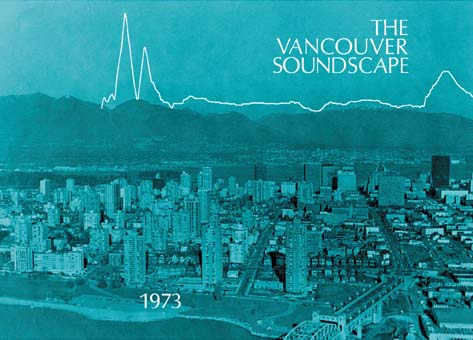
coverThe World Soundscape Project (WSP) was established as an educational and research group by R. Murray Schafer at Simon Fraser University during the late 1960s and early 1970s. It grew out of Schafer’s initial attempt to draw attention to the sonic environment through a course in noise pollution, as well as from his personal distaste for the more raucous aspects of Vancouver’s rapidly changing soundscape. This work resulted in two small educational booklets, The New Soundscape and The Book of Noise, plus a compendium of Canadian noise bylaws. However, the negative approach that noise pollution inevitably fosters suggested that a more positive approach had to be found, the first attempt being an extended essay by Schafer (in 1973) called ‘The Music of the Environment’, in which he describes examples of acoustic design, good and bad, drawing largely on examples from literature.

Schafer’s call for the establishment of the WSP was answered by a group of highly motivated young composers and students, and, supported by The Donner Canadian Foundation, the group embarked first on a detailed study of the immediate locale, published as The Vancouver Soundscape, and in 1973, on a cross-Canada recording tour by Bruce Davis and Peter Huse, the recordings from which formed the basis of the CBC Ideas radio series Soundscapes of Canada. In 1975, Schafer led a larger group on a European tour that included lectures and workshops in several major cities, and a research project that made detailed investigations of the soundscape of five villages, one in each of Sweden, Germany, Italy, France and Scotland. The tour completed the WSP’s analogue tape library which includes more than 300 tapes recorded in Canada and Europe with a stereo Nagra. The work also produced two publications, a narrative account of the trip called European Sound Diary and a detailed soundscape analysis called Five Village Soundscapes. Schafer’s definitive soundscape text, The Tuning of the World published in 1977 [trad. it. “Il Paesaggio Sonoro”, Ricordi/Unicopli], and Barry Truax’s reference work for acoustic and soundscape terminology, the Handbook for Acoustic Ecology published in 1978, completed the publication phase of the original project.

Excerpts from The Vancouver Soundscape 1973:

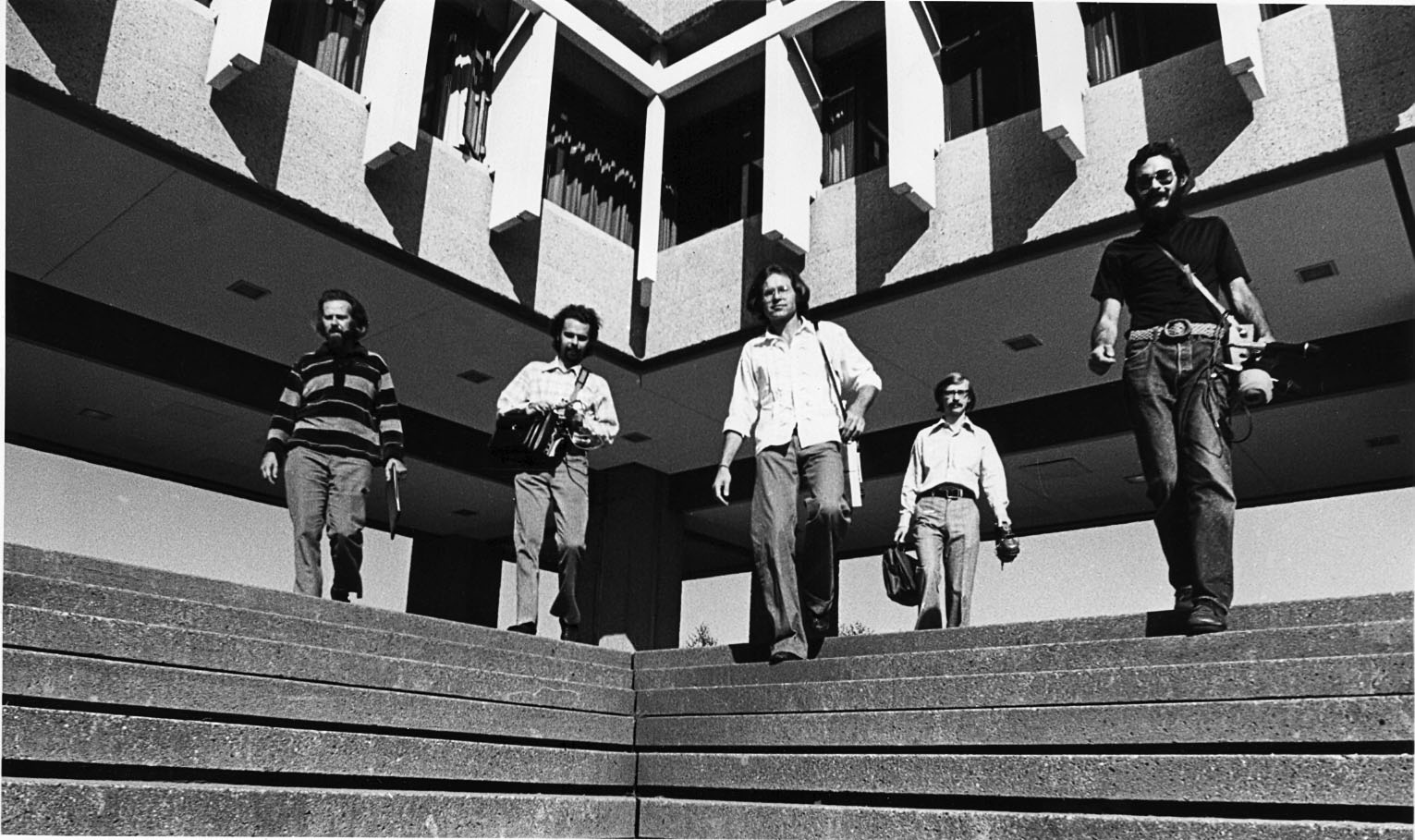
The WSP group at SFU, 1973; left to right: R. M. Schafer, Bruce Davis, Peter Huse, Barry Truax, Howard Broomfield

WSP 1973

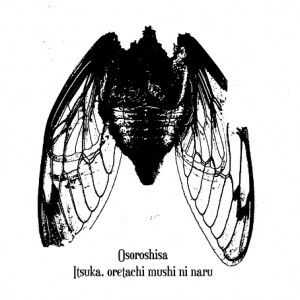
We will become insects, someday


Osoroshisa (Japanese for “the amount of terror”) is the moniker of Tim Salden from Belgium, who has both a good command of Japanese (speaking and writing).

Some notes from the author:

What does the main title mean:
Itsuka, Oretachi Mushi Ni Naru means We will become insects, someday. I kinda thought of Buddhism and  reïncarnation. And since I’m studying Japanese at the University, I wanted to write all the titles in Japanese.

Songmeanings:
The first song [Gakushou 1 – Hotaru No Shoumetsu] means: Movement 1 – Extinction Of The Firefly

Why those title:
I love the view of fireflies during summer, so I tried to recreate a summernight,
but with a bit more tension. Starting from the middle part, the fireflies start to shine their light.

Excerpt:

Listen to and download the whole album from Rain netlabel

Fürst Igor, Strawinsky

Mauricio Kagel – Fürst Igor, Strawinsky (1982)
for bass voice, English horn, French horn, tuba, viola and two percussionists

Fürst Igor, Strawinsky” was commissioned for the Biennale in Venice on the occasion of the centenary of Stravinsky’s birth. It received its premiere performance in the church on the cemetery-island San Michele, where Stravinsky is buried. As hinted in Kagel’s note for the Biennale programme, the sacred, theatrical ambience of this location was a lasting source of inspiration to the composer, who is especially susceptible to spectular sites. However, it proved impossible to carry out Kagel’s original vision of a funeral procession of gondolas transporting the audience to the performance: a thunderstorm erupted at precisely the wrong moment, bringing this cortege to nought. All that remained was the concert in the cemetery chapel.

The piece is scored for a chamber ensemble of bass voice, English horn, French horn, tuba, viola and two percussionists. The instruments lie in the middle and low registers, creating a plush, darkening sound. Besides the conventional percussion instruments, there is also a series of unusual sound-producing devices of indefinite pitch such as iron chains, cocoanut shells, the roaring of lions, wooden planks, an anvil, ratchets and metal tubs. These too have largely a muffled timbre. Kagel – who once referred to timbre as the “paramount material” of a work – here proceeds from a precisely conceived sound-image with associations related to the meaning of the composition. This sound-image is expressed not only in the choice of instruments, but also in the numerous performance instructions included in the score with the aim of making the composer’s intentions as unambiguous as possible.

The text derives from Borodin’s opera “Prince Igor”. Apart from a few repetitions to heighten the expression and a cut required for the sake of compression, the composer retains the whole of the text to Igor’s aria in Act 2, in which the captive Prince sings of his despair at his own fate and that of prostrate Russia. A comparison of Kagel’s setting and Borodin’s original, however revealing of Kagel’s methods, cannot be undertaken here. However, we can at least give a rough sketch of the way in which the picture of Igor changes in this re-composition. In Borodin’s work the Prince, though imprisoned, is still in possession of his traits as a ruler, while Kagel’s work reduces him to a complainer who has sacrificed, if not his dignity, at least any sense of his station. He gives free rein to his feelings in a Lamento with pronounced elements of self-castigation; ultimately, his deep despair borders on insanity. This is apparent, for example, in a key passage beginning with the words “geschändet ist mein Ruhm” (my fame has been desecrated), to which Kagel devotes three times as much time as Borodin, and also in the dynamic and expressive climax of the work, just after the half-way point, where the soloist, at the words “und dafür gibt man mir die Schuld” (and I am held guilty of this), is told to break out into “desperate, distorted laughter”. In the long crescendo which precedes this climax the voice part, which had previously been notated precisely, is rendered only in approximate pitch-curves – the inner turmoil bursts the form.

Although this piece is unusually expressive by Kagel’s standards, it cannot simply be pigeon-holed as an “expressive composition”. Kagel’s espressivo capsizes into the grotesque. One sign of this is the nagging, crazed, laughing sounds required of the instruments; another is the direction to the soloist during the preceding crescendo to be “excessively dramatic”, and Kagel’s helpful suggestion that he try to caricature classical Japanese theatre. Seriousness and irony, tragedy and ridiculousness merge in this paradoxical piece, and Kagel makes use of the shifting expression like a mask behind which lie his feelings, now hidden, now exposed. It is not only in the pun of the title, in the neo-classical figures such as scalar passages and parallel 7th chords, but also in this masquerade that Kagel reveals his spiritual affinity with the secretive dedicatee of his piece.

Max Nyffeler (Translation: J. Bradford Robinson)

Mauricio Kagel: Speech delivered on 5 October 1982 in the Chiesa di San Michele in Isola, located in San Michele Cemetery, Venice, on the occasion of the world premiere of “Fürst Igor, Strawinsky”.

Dear Friends and Strangers,

The news of Stravinsky’s burial in Venice gave me pause at the time to consider whether a touch of the master’s irony might also be buried in this wish of his. He was so fond of the damp – especially of that kind which is surrounded by glass – that it must have given him untold pleasure to have found his final resting place in this unique city where dampness is ever-present. We, too, who honour his memory today in our jovial manner, should take satisfaction in his decision: Stravinsky is ideally preserved in Venice, and forever within easy reach of one of the most crucial necessities of his former daily existence.

And yet – what ambiguity!

For it was precisely in the dryness, the objectivity of his music that Stravinsky – that grandseigneur of the mind and body, never content unless food and service were of the highest calibre – discovered that dimension which enabled him to turn his eye inward with such infinite profundity. His works are living documents of an apparent dichotomy. Passion and computation, unfettered inspiration and rational ingenuity, the sacred and the heathen – all mutually fertilize each other to produce an oeuvre which is well described by several expressions from the musicians’ lingua franca :sempre con passione ma senza rubato; con molta tenerezza ma non piangendo; con piacere, mai a piacere; musica pratica ma non tanto, musica poetica al piu possibile, musica viva da capo al fine.

For me, it is of course a great distinction to honour Stravinsky on this occasion and in this public forum. I belong to a generation of composers who were left with the unpleasant legacy of a family feud to which, pro or contra, we had in fact nothing new to contribute. The choice posited in Schoenberg’s canon “Tonal oder Atonal” has long, indeed has always been a question of sensibility and intelligent application rather than a hard and fast principle. Today, we no longer bother our heads by confusing a method of composition with the aesthetic of craftsmanship. I hope this will remain so in music history for a long time to come.

Stravinsky had much to offer all of us who practice music as a mental discipline. For this reason, we composers – who view the possibility of musical expression as a confirmation for many things that make our lives worth living – are very much in his debt. The very existence of a classical composer – particularly (sarcasm notwithstanding) a “classical modern” composer – is a clear challenge to anyone dedicated to the discovery of new, present worlds of music. It is my firm hope that my “Fürst Igor, Strawinsky” will prove to our honoured forebear that a goodly portion of his ‘attitude and doctrine consisted nor merely of contradictions and opposites, but also of a high-minded twinkling of the eye. In this sense my work is intended as an homage, without ambiguity: senza doppio (colpo) di lingua.

[text from ANABlog]
RIP Mike Bongiorno

Se ne va uno dei più grandi comici di tutti i tempi.

O quando chiedeva – e capitò più volte – a una concorrente notizie del marito e si sentiva rispondere “veramente sono vedova”. O gli errori di lettura. “Ma chi sarà questo signor Paolo Vi del quale non ho mai sentito parlare?”, si chiese leggendo una domanda in cui si citava in realtà Papa Paolo VI. E non ebbe alcun dubbio a pronunciare “Pio ics”, leggendo il nome di Papa Pio X. E ancora: “Un signore anziano sulla cinquantina” (“non mi chiami anziano”, replicò indispettito il concorrente a Rischiatutto); “abbiamo qui Sharon Rampin… sei inglese?” “No, sono veneta, Rampìn”.

E dotato di una certa dose di autoironia:

Enzo Bottesini, in gara, cameraman specializzato in riprese subacquee, gli disse: “Mike, so che lei è un sub eccezionale”. E lui replicò: “No, sono un sub normale”.

Threnody

Questo brano è ben noto ai cultori di musica contemporanea, ma lo proponiamo per la sua importanza storica. Il testo è tratto da wikipedia inglese (nella vers. italiana non c’è).

Threnody to the Victims of Hiroshima (Tren ofiarom Hiroszimy in Polish) is a musical composition for 52 string instruments, composed in 1960 by Krzysztof Penderecki (b. 1933), which took third prize at the Grzegorz Fitelberg Composers’ Competition in Katowice in 1960. The piece swiftly attracted interest around the world and made its young composer famous.

The piece-originally called 8’37” (at times also 8’26”)-applies the sonoristic technique and rigors of specific counterpoint to an ensemble of strings treated unconventionally in terms of tone production. Penderecki later said “It existed only in my imagination, in a somewhat abstract way.” When he heard an actual performance, “I was struck by the emotional charge of the work…I searched for associations and, in the end, I decided to dedicate it to the Hiroshima victims”. Tadeusz Zielinski made a similar point, writing in 1961, “While reading the score, one may admire Penderecki’s inventiveness and coloristic ingeniousness. Yet one cannot rightly evaluate the Threnody until it has been listened to, for only then does one face the amazing fact: all these effects have turned out to serve as a pretext to conceive a profound and dramatic work of art!” The piece tends to leave an impression both solemn and catastrophic, earning its classification as a threnody. On October 12, 1964, Penderecki wrote, “Let the Threnody express my firm belief that the sacrifice of Hiroshima will never be forgotten and lost.”

The piece’s unorthodox, largely symbol-based score directs the musicians to play at various vague points in their range or to concentrate on certain textural effects, and they are directed to play on the wrong side of the bridge, or to slap the body of the instrument. Penderecki sought to heighten the effects of traditional chromaticism by using “hypertonality”-composing in quarter tones-to make dissonance more prominent than it would be in traditional tonality. Another unusual aspect of Threnody is Penderecki’s expressive use of total serialism. The piece includes an “invisible canon,” in 36 voices, an overall musical texture that is more important than the individual notes, making it a leading example of sound mass composition. As a whole, Threnody constitutes one of the most extensive elaborations on the tone cluster.

Nanimo Nai Wakusei

Osoroshisa - Nanimo Nai Wakusei - front cover Nanimo nai wakusei means “empty planets” in Japanese and is an apt description for key elements of Tim Salden’s music as Osoroshisa. It reflects the width of uninhabited and lonesome worlds and how time becomes a secondary factor on an empty planet that lacks any point of reference for perceiving its continuous passage. In the broader sense, it may also refer to isolated persons living in a solar system of their own, without a way of taking notice of other worlds apart from theirs and where chains of events have gradually been replaced by a constant train of thoughts. Accordingly, the music is located between drone and dark ambient without being particularly representative of either genre and evolves slowly, with recurrent figures weaved into persistent drones and subtle changes in modulation rather than thematic variation and progression.
Osoroshisa (Japanese for “the amount of terror”) is the moniker of Tim Salden from Belgium, who has both a good command of Japanese (speaking and writing) and a sizable collection of obscure vinyl records with synth-music from the seventies and eighties. Perhaps it is this vintage analogue sound that left its traces in his drone inspired sound, as well as the impression of cavernous space. His musical works involve slow motion changes and addition or subtraction of sound layers (where “stock drone” has the tendency of being static and repetitive) and pictures a feeling of loneliness and sadness, the recursion of thoughts and events without an actual resolution.

Download the whole album from Internet Archive

Excerpts: