An EP collaboration of two Siberian artists – Виктор Iванiв (Victor Ivaniv) is a futurist poet from Novosibirsk. Muhmood is Alexei Biryukoff’s one man project from Barnaul, experimenting with ambient soundscapes, noises, field recordings and heavy guitar music. They met in November 2007 when Victor came to Barnaul with a presentation of his book “A Glass Man and the Green Record”. At that time they decided to try to do 2 or 3 tracks to see what would come out. By June 2009 the four tracks EP is done. They continue to work on a long playing album that will include Victor’s poems and prose.
A Million Billion is Ryan Smith based out of Queens, NYC. ‘Cavity Care’ is a collection of compositions that Ryan wrote in collaboration with several choreographers over the last 6 years.
These works are distinctively experimental in nature (especially the first four pieces), but also extremely dramatic and cinematographic in tone, and as a result most of the time they transport us to movie-like settings and places.
I like the rhythmic feeling of this work. Rhythm is the main stream around which all the sound moves. Rich rhythmic patterns that derivate from dub, hip hop, techno and other urban languages, but instead of driving us straight to the physical emotion center, they drive us to the ‘braindance’ center.
Umbrellas in the Rain is the alias of an austrian musician from Vienna, and ‘Wieder Daheim’ – german for ‘Home Again’ – his first effort at creating something mature enough worth listening to (and worth releasing, for that matter…). Well, he did it, and with flying colours. ‘Wieder Daheim’ is a delicate collection of abstract songs that really grab one’s heart. They are experimental enough to wander in, but also emotional enough – to the point of being nostalgic – to keep us down to earth.
We can also find enough drones to keep us occupied and plenty of found sounds of everyday objects to let us dream away. The songs are filled with a lot of different instruments too, among guitars, keyboards and xylophones.
Tom Johnson is really a minimalist composer; in fact, he coined the term while serving as the new music critic for the Village Voice.
He works with simple forms, limited scales, and generally reduced materials, but he proceeds in a more logical way than most minimalists, often using formulas, permutations, predictable sequences and various mathematical models.
The Four Note Opera (1972) is a work written using four notes only (D, E, A, B). It is scored for 5 singers and a piano (no orchestra) and the singers play the role of singers in a way similar to Pirandello’s Six Characters In Search of an Author:
The only sure thing is that the crucial moment in the evolution of the piece was that evening very long ago when I read, with great excitement, Luigi Pirandello’s Six Characters In Search of an Author. Normally characters are not even conscious of their existence on a stage. They are completely obedient to the author, they conform totally to the world the author creates, and they have no thoughts of their own. But Pirandello’s masterpiece was different. His characters knew they existed in a theatrical space, and only for a couple of hours. They were aware of the audience, and of the author as well. It was not the kind of theatre that asks you to believe something that is not true. It was the kind of theatre that you have to believe, because everything is true.
Pirandello’s vision had a strong impact on me, and for years one question lingered in the back of my mind: what would happen if, instead of Six Characters in Search of an Author, there happened to be some opera characters looking for a composer? It happened that some opera characters were looking for a composer, and about 10 years after reading Pirandello they found me and came to life in The Four Note Opera.
[Tom Johnson]
Prof. Vincenzo Lombardo, from the Department of Computer Science of the University of Turin, and his team have done an extraordinary job of unearthing the secrets of the legendary Philips Pavilion.
In 1958, Philips Industries commissioned Le Corbusier to build their pavilion for the World’s Fair to be a showcase of their technology. Iannis Xenakis was working for Le Corbusier at the time and ended up designing the building as well as writing music for some of the spaces (Concret P.H.).
Le Corbusier designed the visuals for the inside and chose Edgar Varèse to create the music for the main space. It was an extremely complex installation with 350 speakers, all sorts of lights, slide and film projectors, sculpture and more. Xenakis’ music and architecture was heavily based on mathematics, especially hyperbolic paraboloid shapes.
Edgar Varèse worked in Philips new sound studio in Eindhoven with two full-time technicians to create the main musical piece. Le Corbusier worked with his firm to create the visuals.
Now, the virtual recreation by Prof. Lombardo and his team give new life to this legendary space. His site it’s well worth a (long) visit enjoying all the materials archived online.
The Ghostvillage Project was created over 3 days on the west coast of Scotland. Six artists – Timid, Remi/Rough, System, Stormie Mills, Juice 126, Derm – were given free reign to paint in an abandoned 1970s village. Working together on huge collaborative walls and individually in hidden nooks and crannies all over the site the artists realised long held dreams and were inspired by the bleakness and remoteness of the site. Drawing on the history of the village the artists’ stated intent on completion of the project was to populate the Ghostvillage with the art and characters that it deserved.
A music video which was derived from the visuals for the Insen Live Tour of Alva Noto & Ryuichi Sakamoto where it was generated in realtime and shown on a LED Screen on the stage.
The same music as soundtrack of a video showing the City of Berlin seen from the window of a train.
The LRAD (Long Range Acoustic Device) can emit a tone higher than the normal human threshold of pain. It was used for the first time in the USA in Pittsburgh during the time of G20 summit on September 24-25th, 2009.
https://youtu.be/QSMyY3_dmrM
By the way, a good book about it: Sonic Warfare – Sound, Affect, and the Ecology of Fear by Steve Goodman (MIT Press, see also this review on Rhizome).
This video depicts the collaborative wearable technology project of Bio Circuit in action. Bio Circuit was created at Emily Carr University by Industrial Design student Dana Ramler, and MAA student Holly Schmidt.
Bio Circuit is a vest that provides a form of bio feedback using data from the wearer’s heart rate to determine what “sounds” they hear through the speaker embedded in the collar of the garment. The wearer places the heart rate monitor around the ribcage, resting against the skin and close to the heart. An MP3 audio player embedded in the vest plays the audio track related to that specific heart rate. The audio tracks are soundscapes mixed from a range of ambient sounds. If the wearer’s heart rate is low, the soundscape will reflect a quiet natural area with sounds such as water, birds and insects. If the wearer has a high heart rate then they will hear a cacophony of urban sounds such as people talking and traffic.
Bio Circuit stems from our concern for ethical design and the creation of media-based interactions that reveal human interdependence with the environment. With each beat of the heart, Bio Circuit connects the wearer with the inner workings of their body. In this sense the garment functions like other biofeedback devices that use sensors to provide a person with information about their physiological state. With Bio Circuit, we are proposing that these kinds of devices could extend a person’s awareness to include the environment.
Il Pierrot Lunaire diretto da Schönberg registrato negli anni ‘40, poi riedito nel 1951, è sull’Internet Archive.
Avevo già parlato di questa incisione perché era stata messa su You Tube, con un video fisso, ma ora chi volesse scaricarla in solo audio, può trovarla qui.
Cliccando qui, invece, la ascoltate in streaming audio.
SCHÖNBERG: Pierrot Lunaire.
Arnold Schönberg, conductor.
Erika Stiedry-Wagner, recitation.
Rudolf Kolisch, violin and viola.
Stefan Auber, ‘cello.
Eduard Steurermann, piano.
Leonard Posella, flute and piccolo.
Kalman Bloch, clarinet and bass clarinet.
Columbia 78rpm set MM-461 (XH 23 – XH 30). Recorded in 1940.
Digital transfer by F. Reeder
John Cage, Freeman Études for solo violin (1977). A piece whose form is due to a set of misunderstanding.
In 1977 Cage was approached by Betty Freeman, who asked him to compose a set of etudes for violinist Paul Zukofsky (who would, at around the same time, also help Cage with work on the violin transcription of Cheap Imitation). Cage decided to model the work on his earlier set of etudes for piano, Études Australes. That work was a set of 32 etudes, 4 books of 8 études each, and composed using controlled chance by means of star charts and, as was usual for Cage, the I Ching. Zukofsky asked Cage for music that would be notated in a conventional manner, which he assumed Cage was returning to in Études Australes, and as precise as possible. Cage understood the request literally and proceeded to create compositions which would have so many details that it would be almost impossible to perform them.
In 1980 Cage abandoned the cycle, partly because Zukofsky attested that the pieces were unplayable. The first seventeen études were completed, though, and Books I and II (Études 1-16) were published and performed (the first performance of Books I and II was done by János Négyesy in 1984 in Turin, Italy). Violinist Irvine Arditti expressed an interest in the work and, by summer 1988, was able to perform it at an even faster tempo than indicated in the score, thus proving that the music was, in fact playable. Arditti continued to practice the études, aiming at an even faster speed, apparently misreading Cage’s indication in the score to play every measure in “as short a time-length as his virtuosity permits”, in which Cage simply meant that the duration is different for each performer. Inspired by the fact that the music was playable, Cage decided to complete the cycle, which he finally did in 1990 with the help of James Pritchett, who assisted the composer in reconstructing the method used to compose the works (which was required, because Cage himself forgot the details after 10 years of not working on the piece). The first complete performance of all Études (1-32) was given by Irvine Arditti in Zurich in June 1991. Négyesy also performed the last two books of the Etudes in the same year in Ferrara, Italy. [wikipedia]
Princeton Laptop Orchestra (PLOrk) is a visionary new ensemble of laptopists, the first of its size and kind.
Founded in 2005 by Dan Trueman and Perry Cook, PLOrk takes the traditional model of the orchestra and reinvents it for the 21st century; each laptopist performs with a laptop and custom designed hemispherical speaker that emulates the way traditional orchestral instruments cast their sound in space. Wireless networking and video augment the familiar role of the conductor, suggesting unprecedented ways of organizing large ensembles.
In 2008, Trueman and Cook were awarded a major grant from the MacArthur Foundation to support further PLOrk developments. Performers and composers who have worked with PLOrk include Zakir Hussain, Pauline Oliveros, Matmos, So Percussion, the American Composers Orchestra, and others. In its still short lifetime, PLOrk has performed widely (presented by Carnegie Hall, the Northwestern Spring Festival in Chicago, the American Academy of Sciences in DC, the Kitchen (NYC) and others) and has inspired the formation of laptop orchestras across the world, from Oslo to Bangkok.
“Connectome” Performed by the Princeton Laptop Orchestra (PLOrk) (Director Jeff Snyder), PLOrk[10] concert, May 3 2017 Composition: Mike Mulshine Neuron model audio synthesis: Jeff Snyder and Aatish Bhatia Projection: Drew Wallace
The pack comes with 20 tracks, with everything from ambient to minimal to cheesy techno to synth-generated halloween sound fx. All of the original source code is included in case you are curious to see what these compositions look like in their original state.
Ballentine the bird is a digital drawing about 20,000 pixels tall and 30,000 pixels wide (roughly 20×30 feet @72ppi). She was drawn using one-pixel wide scribble lines colored red, yellow, blue, white, and black. Because she is so big, I’ve used the OpenLayers mapping API (similar to Google Maps) to allow zoom and scrolling features.
The concept behind the drawing is based on the idea that digital images can be infinite in size. Drawing her entirely of one-pixel wide lines (labor-intensive) is an attempt on my part to undermine the idea that drawing on the computer is merely a shortcut. She was drawn in Photoshop using a Wacom tablet.
Bloom, Trope and Air are three applications developed by Brian Eno and the musician / software designer Peter Chilvers that brings to the iPhone the concept of generative music popularized by Eno.
Part instrument, part composition and part artwork, Bloom’s innovative controls allow anyone to create elaborate patterns and unique melodies by simply tapping the screen. A generative music player takes over when Bloom is left idle, creating an infinite selection of compositions and their accompanying visualisations.
Darker in tone, Trope immerses users in endlessly evolving soundscapes created by tracing abstract shapes onto the screen, varying the tone with each movement.
Air is described as “An endless Music for Airports”. It assembles vocal and piano samples into a beautiful, still and ever changing composition, which is always familiar, but never the same.
Air features four ‘Conduct’ modes, which let the user control the composition by tapping different areas on the display, and three ‘Listen’ modes, which provide a choice of arrangement. For those fortunate enough to have access to multiple iPhones and speakers, an option has been provided to spread the composition over several players.
Dmitri N. Smirnov: String of Destiny (Piano Sonata No.4) Op.124 (2000). Alissa Firsova – piano
One-movement piano Sonata No. 4 was completed on 15th of April 2000 at St Albans. I played it to my daughter Alissa Firsova whom I dedicated it. Alissa liked the piece but criticised me for the boring title. She suggested immediately “String of Destiny”, explaining that she feels the piece as an expanding string, which leads to some important point. I did not argue and accepted the new title. Alissa played the Sonata publicly for the first time on 10th of February 2001 at The St Albans Music Club. She also recorded it on CDs (Megadisc MDC-7818, Meladina MRCD-40).
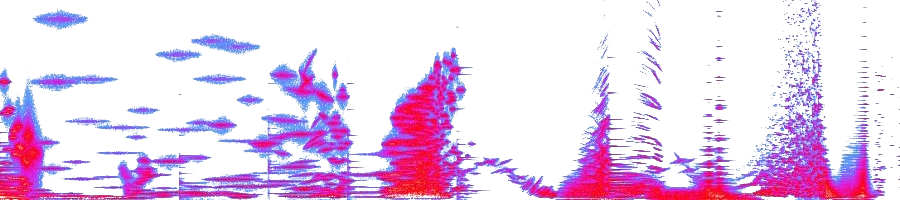
 An EP collaboration of two Siberian artists – Виктор Iванiв (Victor Ivaniv) is a futurist poet from Novosibirsk. Muhmood is Alexei Biryukoff’s one man project from Barnaul, experimenting with ambient soundscapes, noises, field recordings and heavy guitar music. They met in November 2007 when Victor came to Barnaul with a presentation of his book “A Glass Man and the Green Record”. At that time they decided to try to do 2 or 3 tracks to see what would come out. By June 2009 the four tracks EP is done. They continue to work on a long playing album that will include Victor’s poems and prose.
 A Million Billion is Ryan Smith based out of Queens, NYC. ‘Cavity Care’ is a collection of compositions that Ryan wrote in collaboration with several choreographers over the last 6 years.
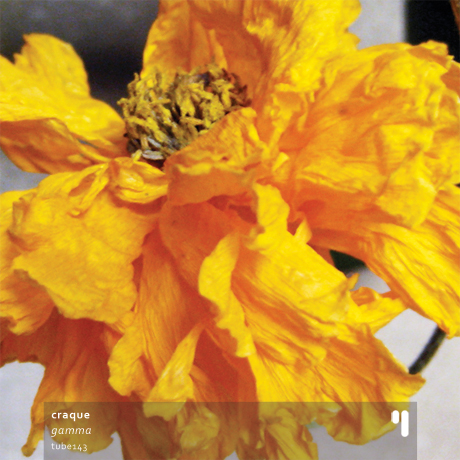 I like the rhythmic feeling of this work. Rhythm is the main stream around which all the sound moves. Rich rhythmic patterns that derivate from dub, hip hop, techno and other urban languages, but instead of driving us straight to the physical emotion center, they drive us to the ‘braindance’ center.
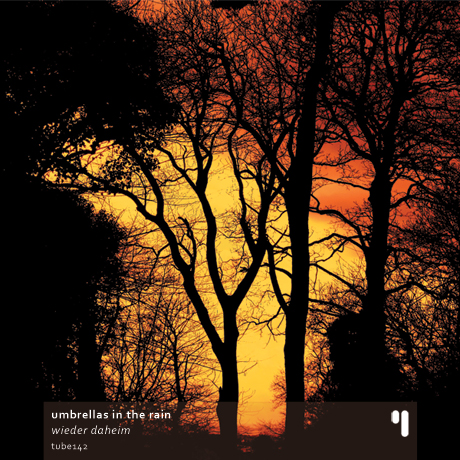 Umbrellas in the Rain is the alias of an austrian musician from Vienna, and ‘Wieder Daheim’ – german for ‘Home Again’ – his first effort at creating something mature enough worth listening to (and worth releasing, for that matter…). Well, he did it, and with flying colours. ‘Wieder Daheim’ is a delicate collection of abstract songs that really grab one’s heart. They are experimental enough to wander in, but also emotional enough – to the point of being nostalgic – to keep us down to earth.

 By
By  Bloom, Trope and Air are three applications developed by Brian Eno and the musician / software designer Peter Chilvers that brings to the iPhone the concept of generative music popularized by Eno.