A good site of “sounds of space” collected by U Iowa instruments on various spacecraft.
Here you can find many sounds “recorded” (remember that this are radio frequencies not audio frequencies) by Cassini, Voyagers and Galileo spacecrafts during the Jupiter and Saturn missions.
Here you can listen to the famous Cassini’s sound recorded near Saturn claimed to resemble to an alien voice if transposed one octave up preserving the duration:
Thomas Carter has yet another musical project called Minimal States, where he explores ambient soundscapes based on collected samples and field recordings.
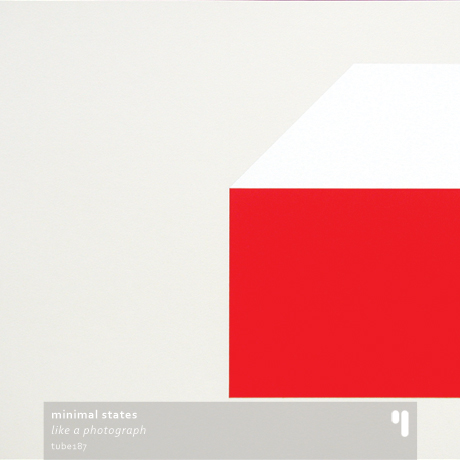
‘Like A Photograph‘ is the first set of a trilogy that Thomas intends to release on test tube.
This first work is heavily based on samples taken from the well known Fm3 Buddha Machine and CC field recordings taken from the Quiet American website. With 15 minutes spent with each piece – ‘Circadian Rhythms’ and ‘Stereopsis’ – Minimal States embraces the full spectrum of landscape generative ambient in its true form.
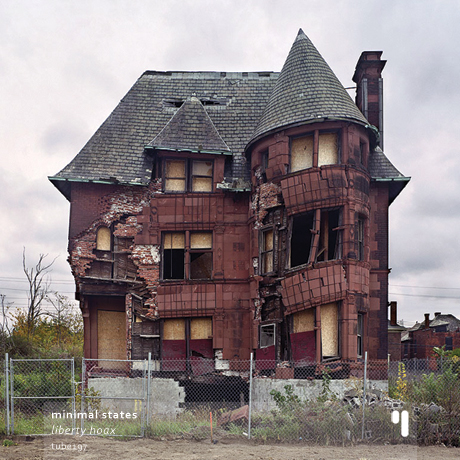
The second album in the trilogy is ‘Liberty Hoax’. Firmly based in the urban, developed and political world, far from the timelessness of the forest and natural world of the first album, it examines the vast, densely populated spaces of the inner-city and the physical and cultural wastelands that surround it.
Moreover, the album is concerned with the place of the individual amongst the masses, and with the concept of identity itself in a world where companies and the State have ever-increasing powers to access and regulate personal data. The album questions whether personal freedom is still a priority for governments and legislators, or if it is now merely a glass wall, a façade, or a mirage that will vanish when approached
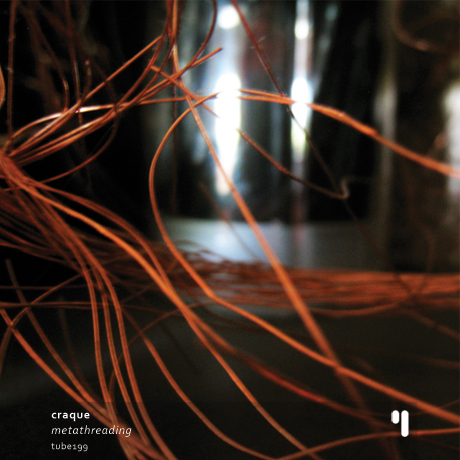
Matt’s (aka Craque) electronic music came to be regarded as a hybrid between edgy improv takes and deep IDM-ish grooves. Both languages come together through Matt’s electronics and form an intricate and complex maze of rhythms, beats and hypnotic grooves. Metathreading is no exception. Matt took various free improvisation edits – named as ‘threads’ – and some other remixes – called ‘Stacks’ – based on a handful of selected ‘threads’ and put them all together. All this was done on a live setup without a laptop. Matt only used his own prepared instruments, with only the obvious edits (also very few) made after with the aid of software.
«Brian Ruskin is a Ph.D in Geology (Stratigraphy branch) and at the same time a musician and producer from Pittsburgh, USA. Science and Art very close together. The music he makes as Mental Health Consumer falls right in the middle of the Electronic genre, slightly danceable and upbeat variant, without loosing too much focus but admittedly keen on experimental ambient explorations. With his music, Brian tries to achieve that special balance between the calculated and the emotive side of the mind.
Such is ‘Backyard Mysteries’, an extremely interesting and uncompromising collection of tracks with a full range of soft pads, techno inspired beats and soothing soundscapes, but also retaining a very curious experimental ambient side, which will keep you interested all through the end.» – Pedro Leitão
Justin Robert and Jeremy Powell are both enthusiast musicians that play live jazz for a living. Justin is a percussionist and likes to fiddle with analog synths, and Jeremy plays saxophone.
Both musicians love free jazz and improvisation, so one night they got together, Justin on synth and Jeremy on sax, and they put ‘Fluorinescence’ onto tape.
Twelve tracks lasting 65′ 20”. Download the whole album from Test Tube.
Silophone combines sound, architecture, and communication technologies to transform a significant landmark in the industrial cityscape of Montreal, Canada.
By telephone, or even the internet, they will send the sound of your choice echoing through the incredible acoustics of abandoned rusted halls and corridors of this imposing building.
Silo #5 is an abandoned grain storage facility in the port of Montréal. A quarter of a mile long and over twenty storeys high, it has a total capacity of five million bushels, or enough wheat to make 230 million loaves of bread. The building was constructed in several stages between 1903 and 1958. The newest part of the building was designed to last for generations, however due to changes in the global grain market and to the general trend of de-industrialization in North America at the end of the 20th century, the building became redundant less than forty years after its completion. Since 1994, Silo #5 has stood empty, and its fate has been hotly debated. The building is situated in one of Montréal’s oldest industrial districts, now rapidly being gentrified and renovated for high-tech commercial, luxury residential, and tourism/leisure industry uses.
The portion of the structure used by Silophone is constructed entirely of reinforced concrete, measures 200 metres long, 16 metres wide and approximately 45 metres at its highest point. The main section of the building is formed of approximately 115 vertical chambers, all 30 metres high and up to 8 metres in diameter. These tall parallel cylinders, whose form evokes the structure of an enormous organ, have exceptional acoustic properties: most notably, a stunning reverberation time of over 20 seconds. Anything played inside the Silo is euphonized, made beautiful, by the acoustics of the structure. All those who have entered have found it an overwhelming and unforgettable experience.
telephone access
Using your telephone, you can enter into — and participate in — the acoustic world of the Silo. More than one person can use the telephone system at once, so when you telephone you may find somebody else already in the Silo. This teleconference system was specifically adapted for use in the Silophone by engineers from Bell’s Emerging Technologies Group.
To call the Silophone from North America: 1.514.844.5555
From the rest of the world: 001.514.844.5555
Wait until the second ring, then start talking.
audio website Go to the play page of this website to access the on-line dimension of the Silophone musical instrument. From this page, you can send pre-recorded sound files into Silophone by browsing through the thousands of uploaded sounds, or by uploading your own soundfile.
Whenever anyone is playing the Silophone over the telephone, the web, or the sonic observatory, you can hear the results by tuning into our live RealAudio stream. To hear the Silophone stream now, click the “hear Silophone” link at the bottom left hand corner of the page.
Ragazzi, non so se vi è chiaro, ma se questa legge sulle intercettazioni passa così com’è, è la fine della libertà di stampa in questo paese.
Oggi dicono che hanno tolto il carcere per i giornalisti che pubblicano notizie su un’inchiesta prima della chiusura dell’indagine preliminare, ma è del tutto inutile finché restano le pene pecuniarie (€ 10.000 di ammenda), le sospensive e soprattutto le pene per gli editori (fino a € 464.700 di ammenda). Per pubblicare, infatti, bisogna essere in due: un giornalista e un editore.
Ma soprattutto, saremmo il primo paese occidentale e almeno sulla carta, democratico, in cui entra in vigore una legge che impedisce a un giornalista di fare il suo lavoro, cioè pubblicare le notizie di cui viene a conoscenza.
Infine, vi rendete conto che tutti i regimi autoritari, dico tutti, di destra e di sinistra, militari e mediatici, sono passati, in primis, per una limitazione della libertà di stampa?
Tanto per finire, vi ricordo che la nostra Costituzione, all’art. 21, dice:
Tutti hanno diritto di manifestare liberamente il proprio pensiero con la parola, lo scritto e ogni altro mezzo di diffusione.
La stampa non può essere soggetta ad autorizzazioni o censure.
Tristan Murail – Vampyr! for electric guitar, from Random Access Memory (1984), Wiek Hijmans electric guitar.
To be honest, I know little about this piece. It’s the sixth track from Random Access Memory, a cycle that includes a set of solo pieces for various instruments and a gold dust in the contemporary academic music where the electric guitar is seldom used.
Vampyr! is one of several works in Murail’s catalogue that do not employ spectral techniques. Rather, in the performance notes, the composer asks the performer to play the piece in the manner of guitarists in the popular and rock traditions, with a heavy overdriven rock sound. In the preface to the work, Murail writes: “The desired sound is rather like that of the solo guitar as played by Carlos Santana, Eric Clapton etc.“. And then, in bold type and with an exclamation mark: “The player should put into Vampyr! all the energy of rock music and that includes the appropriate number of decibels!” Would like to see the whole score.
The rather striking title refers to horror movies and sci-fi B-films; other titles in the cycle do so as well. This subject matter is clearly recognizable in the saturated guitar sound and the frequent, hysterical use of the tremolo arm.
Here Wiek Hijmans effortlessly transforms his Gretsch 1967 model Chet Atkins Tennesean into a ruthless yawing, squealing and screaming board.
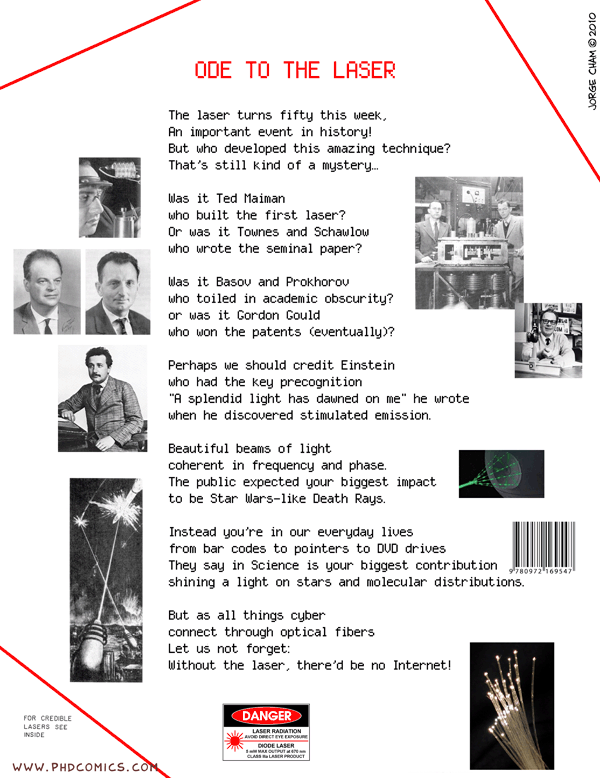
May 16 1960: Theodore Maiman presented the first laser (Light Amplification by Stimulated Emission of Radiation) to the world. 50 years later, lasers are used in everyday life in fiber-optic communications, CDs/DVDs players, laser printers, laser medical procedures, and many more applications.
But the laser has many fathers, as stated in this poetry from PhD Comics
La scomparsa del poeta Edoardo Sanguineti restituisce all’Italia letteraria tutta il proprio anelato, compiaciuto, regressivo, passatista e reazionario provincialismo culturale e accademico.
Edoardo Sanguineti era stato capace di stemperare la «peste mansueta delle discipline», rendendo armonico il distonico, facendo della parola e della musica unico suono.
Aveva traversato il Labirinto disvelandone e destrutturandone la natura, ricordandoci, lucido e incrollabile nel pensiero, l’opportunisticamente obliata connessione tra ideologia e linguaggio, la fallacia di un’estetica e di un’arte solo apparentemente fini a se stesse.
Aveva individuato nella famiglia un nucleo di resistenza e, nel suo basso parlare, nel travestire e nel parodiare, un nucleo operativo.
Ha ancora senso, si chiedevano in troppi, ripercorrere il cammino delle avanguardie, come da Sanguineti propugnato?
Ora più che mai, annaspanti nella mediocrità e nella ripetizione, avvinghiati a discutibili e desuete Muse altrui per celare la mancanza delle proprie, alienati al segno di negare l’alienazione, vinti da uno sperimentalismo solo formale, dal sonno dell’ideologia, e incatenati alle pareti del Louvre, ha senso ripercorrere quel cammino, quello delle avanguardie storiche e delle neoavanguardie, quello di Edoardo Sanguineti, ha senso porsi i quesiti irrisolti e trarne la prassi per approdare a nuovi orizzonti.
Non è questa un’apologia apocrifa o un necrologio, ma un monito, «pietra fondamentale del rifiuto»: oltre ai suoi testi, testimonianza di un praticabile altro, resta di Edoardo Sanguineti il suo motto.
Ideologia e linguaggio.
Che queste parole non si perdano mai nella palude.
Vache Sharafyan (Վաչե Շարաֆյան): Devotion No. 2 (1999) for Tar, Kemanche, Dhol, Tam-Tam, Piano and string quartet.
Tar, Kemanche, Dhol are musical instruments adopted by various middle eastern cultures like Iran, Armenia, Azerbaijan, Georgia to the Indian subcontinent. Click the names to read details from wikipedia.
Gerd Kühr: Trans, from Revue instrumentale et electronique (2004/5 according to the composer’s site, not 2007 as stated in the video)
Austrian composer Gerd Kühr is a professor of composition at the Universität für Musik und darstellende Kunst in Graz; he also works as a conductor and once studied with Sergiu Celibidache. Kühr has also taken composition with Hans Werner Henze.
Kühr’s piece Revue instrumentale et electronique is divided into six sections. It is scored for nine spatially divided instrumental groups and electronics.
The transitions between the electronics and live sections is seamless; you are listening and you gradually realize “we are hearing electronic music now” as opposed to the live instruments. Kühr is very effective at devising novel instrumental timbres, such as the palpitating percussion and fleeting winds in the opening “Intro” and in the alien atmosphere of sustained notes in “Trans.”
And this is the second pièce from the cycle Du Cristal…à la fumée, by Kaija Saariaho.
The last sound of Du Cristal – a cello trill played sul ponticello – becomes retrospectively the first sound of its successor, …à la fumée, which features solo parts for cello and amplified alto flute in addition to large orchestra. Saariaho has commented that
to my way of thinking, Du Cristal … à la fumée is a single work, two facets of the same image, but both fully drawn in, living and independent.
The difference between the two works is already manifest in the title: crystal is a classic example of repeated order, symmetrical, tense, stable mass. Smoke, on the other hand, changes its form constantly, an unpredictable, developing state. Crystal and smoke, like order and entropy, chaos. The title is inspired by a book by Henri Atlan, Entre le cristal et la fumée (Between the Crystal and the Smoke).
The single most important element in the music of Kaija Saariaho is tone colour, attached inseparably to harmony. In this sense she can be thought of as continuing the French orchestral tradition. Her music does not, however, only feast on beautiful sounds. The starting point of composition for her comes from a carefully studied theoretical basis. The origin of her music is a single sound which she penetrates, trying to uncover its structure and the laws that govern it. With these laws, just by changing the scale, the composer builds colours, harmonics, forms, rhythms – music. This starting-point ensures that all the works of Kaija Saariaho have a strong sense of unity. Elements that seem different fit together, because they are basically born from the same source.
Rather than associate Kaija Saariaho’s music with mathematical formulae or computer programs, it is more fruitful to compare it with nature – its biological and physical models. The composer herself has spoken of arctic lights, water-lilies, crystals, spirals: forms and materials which in themselves are perfect and beautiful and create aesthetic experiences, but which offer endless grounds for even scientific study. Observation of how the inner relations of organisms are built, how they change and multiply; how forms that seem simple and natural are of endless variety when examined closely: chaos and order can be closer to each other than we first suspect.
The tensions in Kaija Saariaho’s music, its dramaturgy, are built on pairs of contrasts. One important pair of contrasts is formed by sound and noise. This is manifested, for instance, in the sonority of the cello: when the bow is moved towards the bridge, adding bow pressure, the sound breaks and turns into noise. On the flute, when you blow into the tube you can create noise (which has its own tone colour) and which changes into a sound when the air hits the mouthpiece at the right angle. In rhythm, a simple pair of contrasts is created between repetitive and irregular patterns. Gradual movement between two opposites, interpolations, create and release tensions in the same way as do chordal functions in traditional tonal music.
It is no surprise that the soloists in …a la fumée are flute and cello. These would appear to be Saariaho’s favourite instruments given that many of her solo pieces have been written for them (for the flute, Canvas, Laconisme de l’aile, NoaNoa; for the cello, Petals and Près). …a la fumée however, is not a normal double concerto, in which the solo instruments are contrasted with the orchestra. In this work, flute and cello are like microscopes with which the composer penetrates deep into her material, shedding light from different angles and changing the scale.
György Ligeti, with whose earlier music Kaija Saariaho’s works have certain points in common, has spoken about a phenomenon familiar to most of us. When we go up in an aeroplane, we do not feel ourselves in motion. At the same time, details of the scenery disappear and merge into a whole. A meadow, swarming with inner energy, changes first into fields of colour, then into a bare point in the distance. The amplification of the alto flute and the cello serves this purpose: a whisper from the flute can grow to the scale of a big orchestra, a harmonic from the cello can be outlined above the whole landscape of sound. Is not one of the meanings of music, and all art, simply this? To create illusions, presentiments of a world that could be true.
Secondo La Stampa.it di oggi, il Papa ha dichiarato che
Le sofferenze per la pedofilia nella Chiesa erano state annunciate nel Terzo segreto di Fatima, un peccato «realmente terrificante», una delle «più grandi persecuzioni» che non viene da fuori, ma «da dentro la chiesa stessa».
E allora siete proprio degli idioti. Eravate stati avvisati nientemeno che dalla Madonna in persona nel lontano 1917 e non avete fatto niente!!
Kaija Saariaho – Du Cristal, 1989 – for large orchestra.
Du Cristal was commissioned jointly by the Los Angeles Philharmonic Orchestra and the Helsinki Festival, and it was first performed by the Finnish Radio Symphony Orchestra conducted by Esa-Pekka Salonen in September 1990.
It is scored for a standard large symphony orchestra with the addition of an important part for synthesizer, and featuring a highly prominent percussion section. None of Saariaho’s major works to date is without some kind of electronic element, and the presence of the synthesizer is significant in the light of Saariaho’s remark that she tends to the orchestra itself ‘as if it was a huge synthesizer’. The standard form of electronic synthesis is ‘additive’ – that is, each sound is created by piling innumerable pure tones upon each other.
Transferred to the medium of the orchestra, this means that it is as if each individual instrument were analogous to a pure tone in a synthesizer, merely a tiny part of a large, slowly evolving mass of sound. Thus there is no polyphony, nor any melody in the conventional sense, although the music is frequently lyrical in its gestures and the activity within the textures may momentarily suggest polyphony; the important thing to follow is the overall drift of the orchestral mass, and to relate the individual details to that.
It’s an approach which owes something to the dense, multi-layered orchestral works of György Ligeti, such as “Atmosphères and Lontano”, as well as to the so-called ‘spectral-music’ of French composers Tristan Murail and Gérard Grisey, all of whom Saariaho has acknowledged as influences on her music; but her won style is nevertheless thoroughly personal and has distinctly brooding, ‘Northern’ character quite distinct from any of the afore-mentioned.
The harmonic character of Du Cristal is especially focused and clearly defined as the work is dominated by the bell-chord with which it opens. During the first seven minutes, this chord is slowly and methodically dissected: all its internal components are highlighted as its orchestration is progressively shaded and softened, although the basic character of the chord remains essentially unchanged.
There follows an eruption of some violence which breaks up the harmonic continuity of the music; a dialogue ensues between onslaughts of unpitched percussion and further bell sounds from tuned percussion and synthesizer.
After this the texture thins somewhat and the rate of harmonic change increases; melodic tissues briefly emerge on the violins and the woodwind. The increased rate of change precipitates the principal climax of the work, again featuring untuned percussion prominently: chaotic, irregular rhythms gradually merge into a hammeringly regular series of ostinatos for the full orchestra – the simplest and clearest music in the piece – and out of these the sound spectrum is gradually narrowed until a single note (a unison A flat) is heard
As this fades into filigree passages for solo strings, the music drifts closer to the harmonic world of the opening, and the original chord is itself twice restated; far from subsiding, however, the music suddenly veers back to the hammering ostinato of the climax – as if the form of the whole piece thus far had been telescoped into some two minutes. Only now can the music progress to the coda, underpinned by a series of wave-like crescendos on bass drum and synthesizer as the textures dwindle to a single cello trill.
This trill will be the starting point for second work of the cycle called …à la fumée. Saariaho took her title from a book by the French writer Henri Atlan, “Entre le cristal et la fumée”, and for her it signifies the way the same acoustic material is developed in sharply different ways in the two pieces, the turbulent energy and almost expressionist outbursts of Du Cristal subsiding into the capricious, playful double concerto of…à la fumée.
Petri Alanko, alto flute; Anssi Karttunen, cello, Los Angeles Philharmonic Orchestra, dir. Esa-Pekka Salonen
Solo for Viola d’Amore by Georg Friedrich Haas performed live by Garth Knox in Graz.
This is the second half of the piece. In the final section, the sympathetic strings are plucked and bowed directly, an unusual and striking effect. These are the second set of strings on the viola d’amore, usually not played directly, only there to resonate passively. In this piece they are amplified, and controlled by a volume pedal.
Vache Sharafyan: Morning scent of the acacia’s song for duduk & string quartet (2001), commissioned by Yo-Yo Ma’s Silk Road Project Inc. publisher G. SCHIRMER/ (excerpt)
performers: Gevorg Dabaghyan, Shirly Laub, Colin Jacobsen, Daniel Heim, Jeroen den Herder, Brussels philharmonic hall rehearsal – 2002
The duduk is a traditional woodwind instrument with double reed, popular in Caucasus. Extension goes from the F# on first space to the A over the staff in treble G clef.
Jonathan Harvey: “Vivos Voco” (1980) for concrete sounds processed by computer.
Born in Warwickshire in 1939, Jonathan Harvey was a chorister at St Michael’s College, Tenbury and later a major music scholar at St John’s College, Cambridge. He gained doctorates from the universities of Glasgow and Cambridge and also studied privately (on the advice of Benjamin Britten) with Erwin Stein and Hans Keller. He was a Harkness Fellow at Princeton (1969-70).
An invitation from Boulez to work at IRCAM in the early 1980s has resulted in eight realisations at the Institute, or for the Ensemble Intercontemporain, including the tape piece Mortuos Plango Vivos Voco, Ritual Melodies for computer-manipulated sounds, and Advaya for cello and live and pre-recorded sounds. Harvey has also composed for most other genres: orchestra (including Madonna of Winter and Spring, Tranquil Abiding and White as Jasmine), chamber (including three String Quartets, Soleil Noir/Chitra, and Death of Light, Light of Death, for instance) as well as works for solo instruments.
Il gruppo satirico australiano Axis Of Awesome mostra quante volte la progressione I – V – VI – IV (es. Do – Sol – Lam – Fa) ha colpito nella storia della musica pop. E subito dopo averli visti, pensandoci un po’, mi sono venute in mente almeno altre 10 canzoni costruite nello stesso modo.
Adesso sapete come scrivere un hit. Datevi da fare.
Australian comedy group ‘Axis Of Awesome’ perform a sketch demonstrating how many hit songs are made by the same harmonic progression.
Negli USA, un reddito mensile di $1160 per un single è vicino alla soglia della povertà ($13,920 all’anno contro $10,830 sotto i quali un single è considerato povero). È il minimo per una vita decorosa. All’incirca quanto guadagna un commesso (naturalmente si tratta di una media).
Il blog The Cynical Musician ha recentemente calcolato quanto deve vendere un musicista per arrivare a questo reddito, utilizzando vari modelli di business: da quello tradizionale (vendita del CD come oggetto fisico) al download via internet, fino ai servizi di streaming audio che consentono agli utenti di ascoltare (non comprare) musica pagando un abbonamento.
Ho riassunto i risultati in questa tabella. Prezzi e costi sono quelli calcolati dal blog di cui sopra, relativi al mercato americano (l’articolo originale è qui). Per altri stati possono essere diversi.
La tabella è idealmente divisa in 3 sezioni separate da una linea verde: nella prima si ipotizza la vendita di un intero album, nella seconda di singoli brani mentre la terza è dedicata al solo ascolto, offerto da servizi come Rhapsody o Last.fm.
Si vede subito come quest’ultima possibilità sia ampiamente insoddisfacente alle condizioni attuali. Per quanto riguarda le altre due, non è facile decidere. È più facile vendere 155 album o 1595 brani singoli? Probabilmente, finché si hanno solo 1/2 album, la prima alternativa è migliore.
Inoltre bisogna ricordare che questi numeri riguardano un singolo artista. Nel caso di una band, i compensi non aumentano, per cui bisogna vendere un numero di pezzi pari a quello dato moltiplicato per i componenti e i numeri diventano elevati.
CDBabyDownload intero album$9.99$7.49155Commissioni a CDBaby 25%. C’è però un versamento di $35 per depositare l’album.CDBabyCD fisico$9.99$5.99194Commissioni a CDBaby $4 C’è però un versamento di $35 per depositare l’album.Casa discograficaCD fisico$9.99$11160Con royalties di livello medio/altoiTunesDownload intero album$9.99$0.941229Si arriva a iTunes tramite una etichetta che di solito concede all’artista royalties leggermente inferiori a quelle del CDCasa discograficaCD fisico$9.99$0.303871Con royalties di livello minimo
CDBabyDownload singolo brano$0.99$0.741595Commissioni a CDBaby 25%. C’è però un versamento di $9 per depositare il brano.Amazon iTunesDownload singolo brano$0.99$0.641813
eMusicDownload singolo branoabbonamento$0.343392
RhapsodyAscolto (no acquisto)abbonamento$0.009127473
Last.fmAscolto (no acquisto)abbonamento$0.000157733333
Servizio
Modello di business
Prezzo all’acquirente
Ricavo dell’artista per ogni pezzo
Numero di pezzi da vendere AL MESE per arrivare a $1160
Note
Vendita diretta in proprio
CD fisico venduto ai concerti (no spedizione)
$9.99
$8.12
143
Non ci sono commissioni a terzi. $1.28 vanno in scatola, booklets e supporto.
December 1952 is the notorious Earle Brown’s score consisting only by horizontal and vertical lines varying in width (see it on the video). It’s a landmark piece on graphic notation. The player must translate the symbols in music.
John Zorn: “Goetia” (2002) for solo violin. Jennifer Koh, violin.
Goetia is in fact a demon’s invocation closely tied to numerology. The piece consists of eight variations for solo violin. The work’s guiding feature is that each of the eight movements utilizes the same sequence of 277 pitches transformed by tempo variations, octave displacements, and modifications in rhythm and intensity.
 Matt’s (aka Craque) electronic music came to be regarded as a hybrid between edgy improv takes and deep IDM-ish grooves. Both languages come together through Matt’s electronics and form an intricate and complex maze of rhythms, beats and hypnotic grooves.
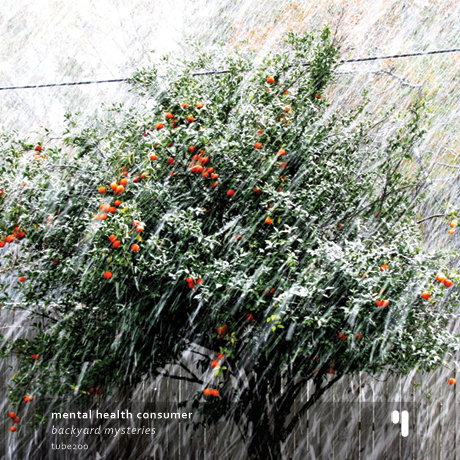 «Brian Ruskin is a Ph.D in Geology (Stratigraphy branch) and at the same time a musician and producer from Pittsburgh, USA. Science and Art very close together. The music he makes as Mental Health Consumer falls right in the middle of the Electronic genre, slightly danceable and upbeat variant, without loosing too much focus but admittedly keen on experimental ambient explorations. With his music, Brian tries to achieve that special balance between the calculated and the emotive side of the mind.
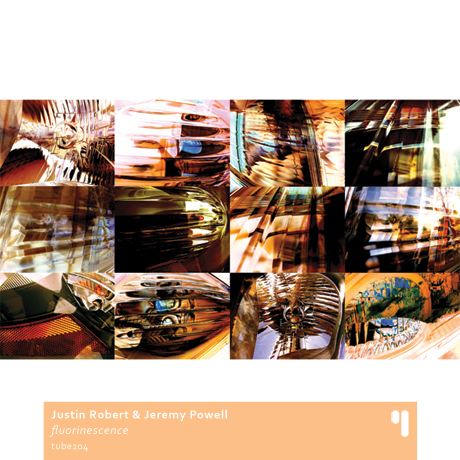 Justin Robert and Jeremy Powell are both enthusiast musicians that play live jazz for a living. Justin is a percussionist and likes to fiddle with analog synths, and Jeremy plays saxophone.


 Una bella e recente (11/5) intervista con Umberto Eco è apparsa su