Vicolo del tornado

vicolo_del_tornadoSette invettive di William Burroughs, scritte tra il 1986 e il 1989 e tradotte nel 1997 su Millelire Stampa Alternativa (ormai fuori catalogo), sono state rilasciate in CC.

Sette storie brevi che paiono come scivolate inavvertitamente fuori da una delle tasche del completo grigio di William Seward Burroughs – l’hombre invisible – come lo avevano soprannominato i ragazzini di Tangeri negli anni ’60. Sette “routine”, come le definì Allen Ginsberg, racconti sospesi nel tempo come numeri del music-hall, realtà fatta a fette che permette a ciascuno di vedere cosa c’è in cima alla propria forchetta, il pasto nudo.

Le potete scaricare in formato PDF o RTF.

A John Dillinger
con la speranza che sia
sempre vivo


This post is about a book in italian. Seven short stories by William Burroughs, in italian translation, had been released under CC license (PDF or RTF format).

Da Classici Stranieri

Maledetto calcio

Sento ora che ieri pomeriggio, durante il secondo tempo della partita Italia – Slovacchia, il sito sui mondiali gestito dalla RAI ha totalizzato 1.500.000 pagine viste. Metà di questa gente guardava la partita in streaming dall’ufficio.

Infatti per tutto il secondo tempo, l’internet italiana era praticamente bloccata. La wireless mi dava 4 Mb/s (di solito è a 54).

Si conferma l’enorme superiorità della TV nella diffusione di eventi di massa.

Pubblicato in Web

Southern lights from above

aurora from above

Una aurora boreale vista dall’alto, fotografata dalla ISS il 29 maggio scorso. Cliccare l’immagine per ingrandire.


Astronauts onboard the International Space Station found out on May 29th when they flew through a geomagnetic storm and witnessed this green ribbon snaking over the Indian Ocean.

Click the image to enlarge.

Is anything real?

UPDATE 2024:
Così scrivevo 14 anni fa e anche il video ha la stessa età

Con tecnologia digitale verrà un momento in cui nessuna foto e nessun film saranno più ammissibili come prova in un processo. Date un’occhiata qui.

The digital technology will ban photos and films from the trials, some day.

Fight free culture

Questo è il testo di una lettera che ASCAP (la SIAE americana) ha inviato ai suoi membri (i compositori di musica) per chiedere fondi per la lotta contro di Creative Commons, Public Knowledge, e l’EFF.

Ciò che sorprende è il tono della comunicazione. Creative Commons, Public Knowledge, e del FEP sono rappresentati come criminali, che “non vogliono pagare per l’uso della musica“. Invece, le suddette organizzazioni non hanno mai detto che voi (gli utenti) dovreste rubare la musica e non pagare i CD. Stanno solo cercando di diffondere un diverso modello di marketing tra i musicisti diffondendo musica priva di copyright come un modo per accrescere la propria notorietà e guadagnare in modo diverso (più concerti, gadget, ecc.). Si può essere d’accordo o meno, si può pensare che è una bella idea oppure che non possa funzionare, ma, in ogni caso, è una posizione legittima che non giustifica appelli come quello di cui sopra.


This is a mail that ASCAP sent to his members (the music composers) to solicit funds to fight Creative Commons, Public Knowledge, and the EFF.

What is surprising is the feeling of the communication. Creative Commons, Public Knowledge, and the EFF are depicted as criminals that “do not want to pay for the use of music“. Instead this organizations never said that you (the user) must stole the music not paying the CDs. They are only trying to spread a different marketing model between the musicians. They say that the musicians should spread their music with no copyright at all as a way to gain more fans and find revenues in a different way (more concerts, gadgets, etc).

Sun Boxes

Sun Boxes is a sound installation created by Craig Colorusso.

It’s comprised of twenty speakers operating independently each powered by solar panels. There is a different guitar sample in each box all playing together making the composition. The guitar samples are all of different lengths so the whole piece keeps evolving.

Participants are encouraged to walk amongst the speakers. It sounds different inside of the array.  There is a different sense of space inside. Certain speakers will be closer and louder therefore the piece will sound different to different people in different positions throughout the array. Creating a unique experience for everyone.

There are no batteries involved. The Sun Boxes are reliant on the sun. When the sun sets the music stops. The piece changes as the length of the day changes making the participants aware of the cycle of the day.

It’s a very interesting idea. I would like to know how powerful each speaker is. 5 Watt? 10?

Devuvuzelator

If you find hard to tolerate the vuvuzelas constantly playing below the World Cup’s matches, there is a solution.

According to isophonic.net, this instrument plays a note about 230-235 Hertz (roughly the B-flat below middle C). So we can apply a notch filter on the fundamental frequency and the first harmonic (460-470) to greatly reduce the buzz. Listen to the before and after audio to confirm that it has indeed worked: you can still hear the horns, because the higher partials are intact, but they aren’t so loud. (Note that the effect takes a couple of seconds to work, at the start of the “after” sample.)

People at isophonic.net has created a VST plugin for windows and a LADSPA plugin for Mac OS/X that makes the job. Download from isophonic.net page.

The LADSPA plugin should work on Linux also, but we can do the same work using jack-rack. Here there are instructions that works on any linux box with jack and jack-rack.

But the real solution is to love the vuvuzelas. As John Cage argues:

If something is boring after two minutes, try it for four. If still boring, then eight. Then sixteen. Then thirty-two. Eventually one discovers that it is not boring at all.

The sound of a “God particle”

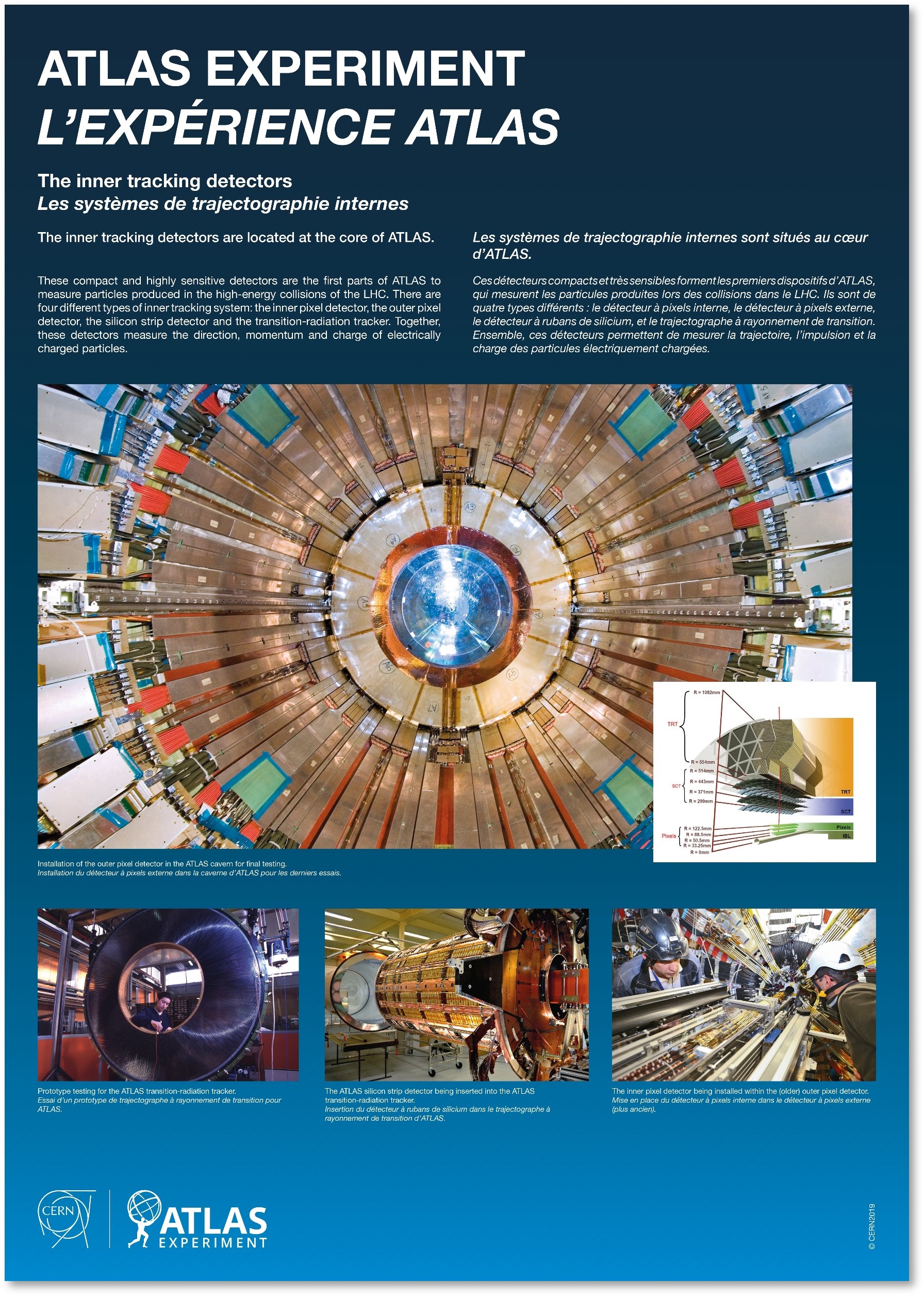
ATLAS

ATLAS is a particle physics experiment at the Large Hadron Collider at CERN. Starting in late 2009/2010, the ATLAS detector will search for new discoveries in the head-on collisions of protons of extraordinarily high energy. ATLAS will learn about the basic forces that have shaped our Universe since the beginning of time and that will determine its fate. Among the possible unknowns are the origin of mass, extra dimensions of space, unification of fundamental forces, and evidence for dark matter candidates in the Universe.

ATLAS is known because of the research for the Higg’s Boson, the so called “God particle”. Now this research generates sounds. Lily Asquith is a particle physicist who has just finished her PhD at University College London. Her work on this project has been to identify physics processes for sonification and to convert real and simulated ATLAS data into files readable by audio software. Lily came up with this idea whilst trying to describe to a very patient friend what she thought different particles would sound like.

Now a group of particle physicists, composers, software developers and artist is working on sonification of ATLAS data. The data are first processed using the vast and all-powerful ATLAS software framework. This allows raw data (streams of ones and zeroes) to be converted step-by-step into ‘objects’ such as silicon detector hits and energy deposits. We can reconstruct particles using these objects. The next step is to convert the information into a file containing two or three columns of numbers known as a “breakpoint file”. It can also be used as a “note list”. This kind of file can be read by compositional software such as the Composers Desktop Project (CDP) and Csound software used for this project.

An excerpt.

  • The decay of a God particle
    This example maps properties of the Higgs jet to properties of sound. A jet is made up of lots of cells containing energy deposits. Each cell has an energy, a distance and an angular distance (dR) associated with it. So each cell can be heard as a separate note in this example. This is quite a long track (about 90 seconds). The sounds reduce in density very much towards the end, with isolated events separated by silences of several seconds.


Dreaming in R’lyeh

The nightmare corpse-city of R’lyeh…was built in measureless eons behind history by the vast, loathsome shapes that seeped down from the dark stars. There lay great Cthulhu and his hordes, hidden in green slimy vaults.
[H. P. Lovecraft, The Call of Cthulhu]

R’lyeh is a fictional city that first appeared in the story “The Call of Cthulhu,” by H. P. Lovecraft. R’lyeh is also referred to in Lovecraft’s “The Mound” as Relex. R’lyeh is a sunken city located deep under the Pacific Ocean and is where the godlike being Cthulhu is buried.

R’lyeh is sometimes referred to in the ritualistic phrase “Ph’nglui mglw’nafh Cthulhu R’lyeh wgah’nagl fhtagn“, which roughly translates to “In his house at R’lyeh dead Cthulhu waits dreaming”.

For sure H. P. Lovecraft fans are Josef Nadek and DMAH, the authors of this work published by suRRism-Phonoethics that no longer exists and today it is found on the Internet Archive (click here to download).

Snorkel Quintet

The SuRRism-Phonoethics net label was a Frankfurt, Germany based non-profit netlabel specializing in Experimental music (The domain is now for sale). Some of their releases could be classified as Electronic art music/Electronic music, industrial or experimental music with sub-genres like Electro-Acoustic, Improvisation & Cut-Up.

Their official launch occurred in 2008, with a release for Undress Béton (aka Jaan Patterson). All their releases are free for download under Creative Commons or Copyleft licenses.

SuRRism-Phonoethics production was very interesting, dedicated to artists who wish to push the boundaries.

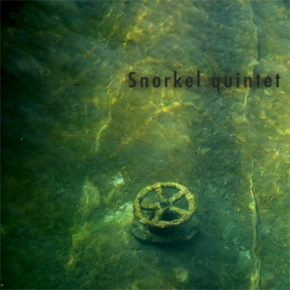
Today I am pleased to present you the Snorkel Quintet,  here on Free Music Archive and here on SoundCloud, a Barcelona-based group of six (yes!) players devoted to improvisation and influenced by contemporary music and jazz.

Some excerpt from their album called Snorkel Quintet – Improvisaciones realizadas entre enero-abril 2010 Barcelona, España. Go to this page to download the whole work.

If it was your home

the oil disaster

Go there and center the oil spill around your home.


Imagine a big black blob from Torino to Udine, from Le Havre to Bruxelles, from Cardiff beyond Norwich covering London, from Münster to Berlin…


UPDATE 19/06/2010

The big black blob 10 days after

logo


UPDATE 11/07/2010

The big black blob 30 days after

In C

In C continues to receive numerous performances every year, by professionals, students, and amateurs. It has had repeated recordings since its 1968 LP premiere, and most are still in print. It welcomes performers from a vast range of practices and traditions, from classical to rock to jazz to non-Western. Recordings range from the Chinese Film Orchestra of Shanghai—on traditional Chinese instruments—to the Hungarian “European Music Project” group, joined by two electronica DJs manipulating The Pulse. It rouses audiences to states of ecstasy and near hysteria, all the while projecting an inner serenity that suggests Cage’s definition of music’s purpose—”to sober and quiet the mind, thus making it susceptible to divine influences.” In short, it’s not going away.
[Robert Carl]

An interesting analysis/commentary about Terry Riley’s seminal composition by Robert Carl.

The original recording by Terry Riley dated 1964

Here is the execution by the Shanghai Film Orchestra

A funky peformance by Band On A Can group from NYC

2015-02-10 Tate Modern and Africa Express

Boiler Room Amsterdam Live Performance

2022-10-20 The Young Gods present Play Terry Riley In C Documentary & Live from Les Forces Motrices, Geneva

Rdio

Non è una bestemmia, ma il nuovo servizio di streaming e sottoscrizione musicale supportato dai denari di Niklas Zennstrom e Janus Friis, due che con la musica e il multimedia in rete ci trafficano da sempre o quantomeno sin dai tempi dell’esplosione della supernova di Napster nel 2001. Per la coppia Zennstrom/Friis il nuovo orizzonte musicale online non è più il download del P2P ma lo streaming a pagamento basato su sottoscrizione.

I due imprenditori sono responsabili prima della creazione di Kazaa – network di condivisione divenuto tristemente noto per il malware proliferante e le decine di migliaia di cause legali intentate dalle major multimediali – e poi del VoIP di Skype. Rdio è una novità che in parte sa di già sentito, un servizio di streaming che promette libertà di utilizzo e condivisione in salsa social dei gusti e delle opinioni degli utilizzatori.

Disponibile nei “tagli” da 4,99 e 9,99 dollari al mese, Rdio offrirà accesso a un ricco catalogo musicale composto da 5 milioni di brani apparentemente con bollino di approvazione da parte delle Grandi Sorelle del disco (EMI, Sony, Warner, Universal). La differenza di prezzo starebbe nel tipo o nella quantità di dispositivi che si possono abilitare alla fruizione dei propri acquisti, capaci di raggiungere l’utenza iPhone come quella BlackBerry e in futuro anche Android.

Questo il succo della notizia di fonte Punto Informatico.

È indubbio che quello a cui stiamo assistendo è un cambiamento epocale: dalla cultura della vendita a quella del servizio. Nello stesso tempo è interessante osservare quanto sia lungo e complesso questo passaggio, sia per le major che per gli utenti.

Le prime stanno rallentando il più possibile nella vana speranza di tenere sotto controllo la faccenda, ovviamente senza riuscirci, perché il colpo più grosso in questo settore lo ha invece messo a segno Apple, una major informatica, non musicale che con una sola mossa ha spiazzato tutti i tradizionali produttori di musica.

Gli utenti, d’altro canto, non riescono ancora a rendersi conto appieno della portata di questo mutamento. Fra i commenti su Punto Informatico, qualcuno si chiedeva come fare a passare i brani sul proprio lettore MP3, senza capire che, con questo nuovo modello di marketing, questa possibilità proprio non si dà.

Per cominciare, Rdio sarà disponibile solo negli USA, per arrivare più tardi in Europa. E qui vengono al pettine anche tutti i paletti e i ritardi posti alla diffusione della banda larga nel nostro paese, fra gli altri, dal famigerato decreto Bondi, che impone l’identificazione certa di tutti coloro che si collegano alla rete, rendendo di fatto difficile la diffusione di qualsiasi rete civica.
Tesla Coil Music

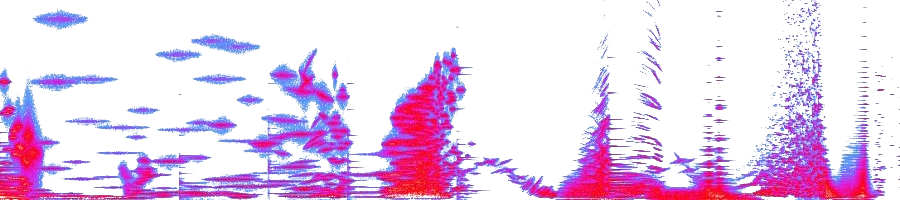
The sound is really produced by the coils. To play an A at 440 Hz the coil generate 440 lightnings per second. The temperature of the lightning is so high that compress the air around generating an audio wave.