A Cartographic Anomaly

David Toop (born 5th May 1949, Enfield, London, England) is a musician, writer and sound curator. He has published three books, currently translated into six languages: Rap Attack (now in its third edition), Ocean of Sound, and Exotica (selected as a winner of the 21st annual American Books Awards for 2000).

His first album, New and Rediscovered Musical Instruments, was released on Brian Eno’s Obscure label in 1975; since 1995 he has released six solo albums – Screen Ceremonies, Pink Noir, Spirit World, Museum of Fruit, Hot Pants Idol and 37th Floor At Sunset: Music For Mondophrenetic – and curated six acclaimed CD compilations for Virgin Records – Ocean of Sound, Crooning On Venus, Sugar & Poison, Booming On Pluto, Isolationism and Guitars On Mars. In 1998 he composed the soundtrack for Acqua Matrix, the outdoor spectacular that closed every night of Lisbon Expo ’98 from May until September.

He has recorded shamanistic ceremonies in Amazonas, appeared on Top Of The Pops with The Flying Lizards, worked with musicians including Brian Eno, John Zorn, Prince Far I, Jon Hassell, Derek Bailey, Talvin Singh, Evan Parker, Max Eastley, Scanner, Ivor Cutler, Haruomi Hosono, Jin Hi Kim and Bill Laswell, and collaborated with artists from many other disciplines, including theatre director/actor Steven Berkoff, Japanese Butoh dancer Mitsutaka Ishii, sound poet Bob Cobbing visual artist John Latham, filmmaker Jae-eun Choi and author Jeff Noon.

As a critic and columnist he has written for many publications, including The Wire, The Face, The Times, The Sunday Times, The Guardian, Arena, Vogue, Spin, GQ, Bookforum, Urb, Black Book, The New York Times and The Village Voice. He has curated Sonic Boom, the UK’s largest ever exhibition of sound art, displayed at the Hayward Gallery, London, from April to June, 2000. In 2001-02 he was sound curator for Radical Fashion, an exhibition of work by designers including Issey Miyake, Junya Watanabe, Martin Margiela and Hussein Chalayan, held at the Victoria and Albert Museum in 2001-2002 and featuring music by Björk, Ryuichi Sakamoto, Akira Rabelais, Paul Schütze and others.
[Text from Last-FM]

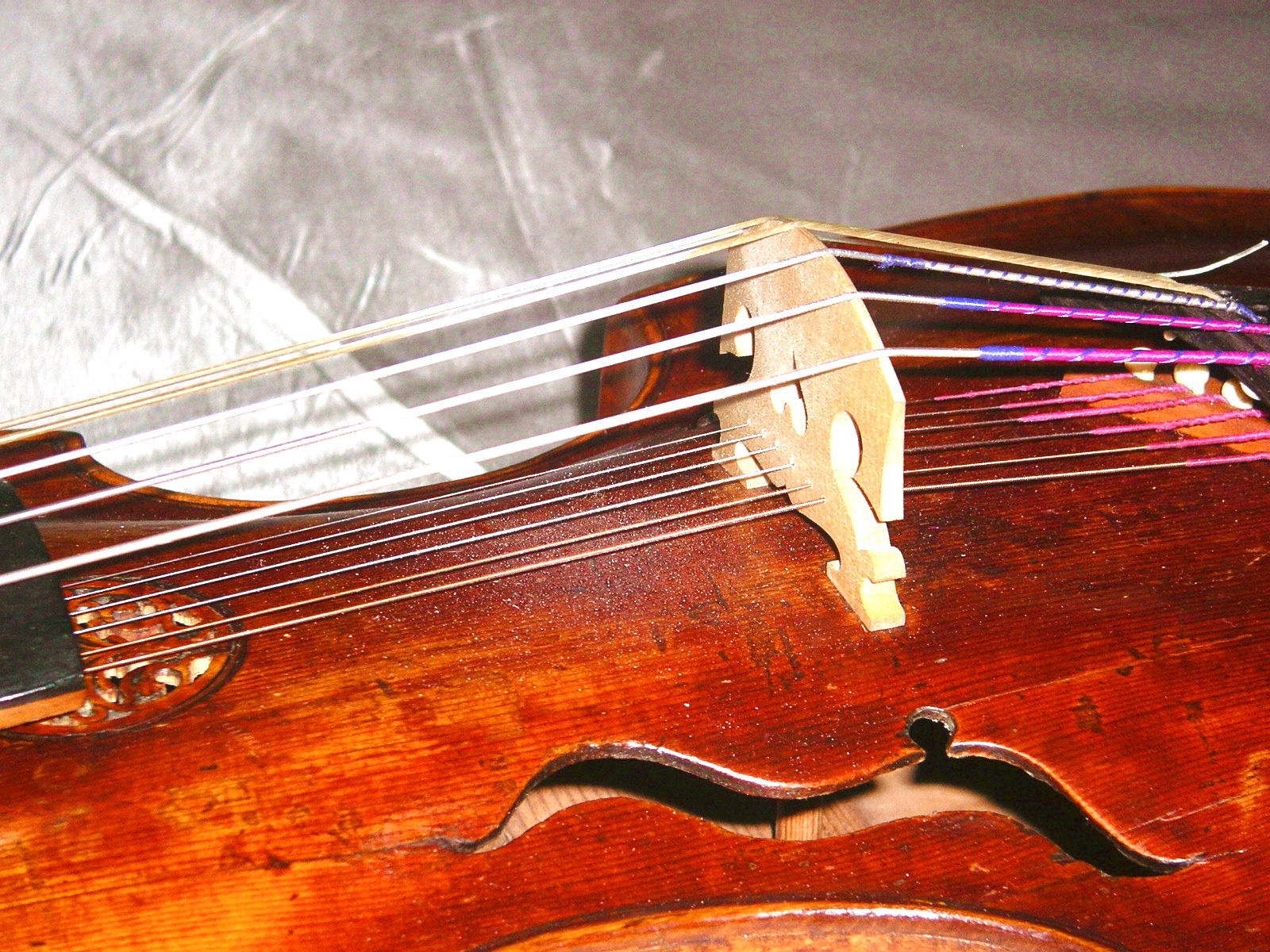
David Toop – A Cartographic Anomaly from Hot Pants Idol album

Wyatt sings Cage

Robert Wyatt sings John Cage’s The Wonderful Widow of Eighteen Springs for voice and piano. The piano stay closed and is used as a percussion instrument.

The song was commissioned by singer Janet Fairbank, who later became known for pioneering contemporary music. Cage chose to set a passage from page 556 of Finnegans Wake, a book he bought soon after its publication in 1939. The composition is based, according to Cage himself, on the impressions received from the passage. The Wonderful Widow of Eighteen Springs marks the start of Cage’s interest in Joyce and is the first piece among many in which he uses the writer’s work.

The vocal line only uses three pitches, while the piano remains closed and the pianist produces sounds by hitting the lid or other parts of the instrument in a variety of ways (with his fingers, with his knuckles, etc.) Almost immediately after its composition the song became one of Cage’s most frequently performed works, and was several times performed by the celebrated duo of Cathy Berberian and Luciano Berio. Cage later composed another piece for voice and closed piano, A Flower, and a companion piece to The Wonderful Widow of Eighteen Springs, called Nowth upon Nacht, also based on Joyce’s book.

From Obscure 1 LP

Listening to the Silence

Listening to the Silence is a film by the english musician John Collins that explores a kaleidoscope of musical examples from Ghana: children’s games and their musical bands; traditional drums; sensual dances; trance dances; animated funeral music; and many other examples from the Ewe, Ashanti, Ga, and Frafra peoples of Ghana. Throughout the program, the leitmotif is social participation and the strikingly complex rhythmic sensibilities of the people.

Here is a gorgeous excerpt taped at a post office.

Mammoth Earth image

If you desire high-resolution images of the Earth, the good folks at Unearthed Outdoors have made available the 250m True Marble image set for a free download with a Creative Commons Attribution 3.0 license. It’s a map of the Earth made up of 32 tiles, where each tile is a 21,000 pixel square, available in png and tif formats. There’s also a series of smaller files that may be more useful — in case you don’t need a map of the Earth that ends up being 84,000 pixels tall and 168,000 pixels across. Printed at 600 dpi, that’s about 12 feet by 24 feet (m 3.66 x 7.31)!

Click here to reach the download page.

A beautiful sonic boom

In particular conditions the sound waves can become visible. This Atlas V launched from Kennedy Space Center at Feb. 11 2010, fly through a sun dog.

A sun dog is a prismatic bright spot in the sky caused by sun shining through ice crystals. The Atlas V rocket exceeded the speed of sound in this layer of ice crystals, making the shock wave visible from the ground (from 1’56”).

Fibers that hear and sing

After the fibers made by cassette tape played by moving a tape head over the fabric, here it is fibers that can hear and sing by themselves.

To Yoel Fink, an associate professor of materials science and principal investigator at MIT’s Research Lab of Electronics, the threads used in textiles and even optical fibers are much too passive. For the past decade, his lab has been working to develop fibers with ever more sophisticated properties, to  enable fabrics that can interact with their environment.

In the August issue of Nature Materials, Fink and his collaborators announce a new milestone on the path to functional fibers: fibers that can detect and produce sound. Applications could include clothes that are themselves sensitive microphones, for capturing speech or monitoring bodily functions, and tiny filaments that could measure blood flow in capillaries or pressure in the brain.

Despite the delicate balance required by the manufacturing process, the researchers were able to build functioning fibers in the lab. “You can actually hear them, these fibers,” says Chocat, a graduate student in the materials science department. “If you connected them to a power supply and applied a sinusoidal current” — an alternating current whose period is very regular — “then it would vibrate. And if you make it vibrate at audible frequencies and put it close to your ear, you could actually hear different notes or sounds coming out of it.”

In addition to wearable microphones and biological sensors, applications of the fibers could include loose nets that monitor the flow of water in the ocean and large-area sonar imaging systems with much higher resolutions: A fabric woven from acoustic fibers would provide the equivalent of millions of tiny acoustic sensors.

Read more details here.

Anime Salve… in terra e in mare

Arriva a Verona, dopo i successi riscontrati all’estero, lo spettacolo di danza contemporanea “Anime Salve… in terra e in mare”, ideato e realizzato da allievi italiani della Rotterdam Dance Academy, una delle più prestigiose in Europa.

Per la prima volta viene creata una coreografia ispirata ad un intero album di Fabrizio De Andrè, “Anime Salve” del 1996.

Nell’opera poetico-musicale di De Andrè i 12 danzatori, tra i quali la nostra saltuaria collaboratrice Valeria Bergamini, hanno individuato tematiche e riflessioni molto vicine alla propria sensibilità artistica e personale, e grazie alla forza comunicativa della danza e al linguaggio artistico che hanno sviluppato in Olanda, basato sull’onestà emotiva e sulla potenza espressiva del movimento, vogliono proporre la loro rilettura delle canzoni di “Anime Salve” ad un pubblico italiano.

mercoledì 21 luglio alle ore 21, al Castello di Montorio

Un estratto:

Sub Contrabass Recorder

I think that a few of you have ever seen (and listen to) a sub contrabass recorder, a monster from early music (around 1600). So here it is played by Karel van Steenhoven.

Denoising Field Recordings

Interesting idea by Richard Reigner

Denoising Field Recordings documents an early attempt at using denoising-techniques in a creative and compositional manner. Instead of utilising noise-reduction-algorithms for their intended purpose (the restoration of damaged audio signals), these processes are applied to various field recordings of trains, streets, swimminghalls and public transport. Due to the fact that these recordings consist entirely of noises this operation transforms the originals into an uncanny hybrid of newly introduced processing artefacts, occasional silence and sporadically audible traces of the original field recordings. What kind of sound-aesthetics can emerge while denoising field recordings? Which audible parameters are able to resist this audio-erasement-process? How are these traces comparable to the visual remanences of Robert Rauschenberg’s erasure of a De Kooning drawing?

Denoising Field Recordings is released as a limited edition of see-through 12″ vinyl with an intruiging white-on-white cover designed by Hans Renzler. The digital version is available exlusively at Zero” (not free – must register to download).

Click here or here to listen to some results of applying noise reduction algorithms to noise.

More Tarkowsky

Thanks to the Film Annex, you can now watch the complete collection of Tarkovsky films online for free in original language with english subtitles.

The soundtrack of three films, Solaris, The Mirror and Stalker, has been written and recorded by the russian electronic composer Eduard Artemiev.

From Open Culture

Il polpo Paul

polpo PaulIl polpo Paul ha pronosticato correttamente il vincitore di tutte le partite della Germania, nonché quello della finale.

Non risulta che qualcuno dei cosiddetti esperti umanoidi sia riuscito a fare altrettanto.

Ne consegue che il polpo Paul deve essere considerato il maggior esperto di calcio internazionale esistente al mondo.

In caduta libera

Nota: mi rendo conto che, in questi ultimi tempi, vi sto parlando un po’ poco di musica contemporanea e un po’ più di altre cose. Ciò è dovuto ad una certa noia che sto provando nell’ascoltare parecchie produzioni recenti. Passerà. Nel frattempo vi passo qualche consiglio che vi sarà di certo più utile, considerato che molti di voi stanno per salire su un aereo.


Free fallDunque, se a un certo punto vi svegliate, o meglio, riprendete conoscenza con addosso una gran nausea, il cuore che va a mille, un grande freddo, la sensazione di non riuscire a respirare e vi rendete conto che state cadendo, rallegratevi: significa che siete sopravvissuti all’esplosione del vostro aereo.
Probabilmente vi trovate alla quota di circa 9000 metri e state per svenire per mancanza di ossigeno. Vi riprenderete a circa 5/6000 metri, se siete fortunati anche più in alto, quando l’atmosfera sarà abbastanza ricca per mantenere un briciolo di coscienza e l’aria fredda vi risveglierà senza troppa grazia.

Qui comincia la fase finale. State cadendo e la vostra destinazione finale è il suolo. Se potete fare qualcosa per salvarvi, dovete farlo adesso. Non lasciatevi andare. Ci sono stati molti casi di cadute di questo tipo in cui il soggetto è sopravvissuto ed anche piuttosto bene.

Innanzitutto, una distinzione basilare:

  1. siete in caduta libera, solo;
  2. siete un wreckage rider, uno che cavalca rottami, ovvero mentre precipitate siete più o meno connesso a parti dell’aereo.

La situazione (b) è la più comune e di gran lunga la migliore. Se state cavalcando qualche rottame fate il possibile per non abbandonarlo. I rottami possono veleggiare nell’aria e offrire resistenza fino a ridurre la velocità a livelli accettabili. Inoltre offrono una certa protezione al momento dell’impatto.

Se invece vi trovate nella situazione (a), non disperate. Il tempo gioca a vostro favore. Pensate che cadere da un grattacielo è molto peggio: innanzitutto avete solo pochi secondi a disposizione e poi quasi certamente vi schianterete su qualcosa di duro.

Nel caso della caduta libera il vostro nemico è uno solo: l’accelerazione di gravità. 9.8 metri al secondo per secondo, ovvero la vostra velocità aumenta di 9.8 m/sec per ogni secondo di caduta. Se esistesse solo l’accelerazione di gravità, precipitando da 10000 m, arrivereste al suolo a più di 1500 km/h.
Fortunatamente avete due amici che sono in grado di limitare notevolmente la vostra velocità di caduta: la spinta di Archimede e l’attrito. La prima è la stessa che fa sì che le navi possano galleggiare nonostante il loro peso. Un corpo immerso in un fluido riceve una spinta dal basso verso l’alto pari al peso del fluido spostato. L’aria è come l’acqua, con l’unica differenza che il suo peso è decisamente inferiore, perciò anche la spinta verso l’alto che ricevete è minore e non vi permette di galleggiare facendo il morto.
Tuttavia, fare il morto è un ottimo sistema per spostare più aria e massimizzare la spinta di Archimede. Quindi assumete la posizione del paracadutista che veleggia nell’aria: braccia e gambe larghe e distese, testa alta e petto in fuori.
Così facendo, esponete la massima superficie e sfruttate a dovere anche l’attrito.

Queste due forze combinate costituiscono un freno molto potente, al punto che un corpo umano in caduta libera riesce a rallentare fino a circa 150 km/h (per avere un’idea della loro potenza, considerate che varie fonti indicano in circa 250 km/h la massima velocità che un corpo umano può raggiungere se fa il possibile per accelerare, cioè assume la posizione di massima aerodinamica). Sfruttate i vestiti: una giacca chiusa, ma larga, può creare un ottimo effetto tunnel aiutandovi a veleggiare e aggiunge una componente laterale alla vostra velocità, il che significa ridurre la componente verticale.

E qui arriviamo all’ultimo atto: il suolo. L’impatto con il terreno è rimandabile, ma inevitabile.

La consistenza del suolo è un fattore determinante. Il miglior terreno su cui atterrare è sicuramente la neve alta. Molte persone si sono salvate per questo, cadendo anche da altezze notevoli.
Al secondo posto sta il terreno paludoso e morbido. Nel 1995 una bambina colombiana di 9 anni è sopravvissuta a una caduta da 9000 metri atterrando in una palude.
Anche gli alberi sono buoni, a patto di non finire impalati. L’ambiente migliore è la giungla, soprattutto quella di tipo amazzonico, con alberi alti fino a 30 m e un fittissimo sottobosco, tale da costituire un ambiente a sé stante. Ma anche le foreste di conifere non sono male perché le punte sono cedevoli.
Infine l’acqua. Terreno ingannevolmente amico perché non comprimibile. Cadere di piatto sull’acqua, a questa velocità, è come cadere sul cemento, con l’unica differenza che l’oceano non restituirà i vostri frammenti. L’unico sistema è entrare in acqua dritti come una freccia, con i piedi in avanti (punte in su e talloni in giù), braccia distese in alto e mani unite, a proteggere la testa (non fate i tuffatori, è imperativo proteggere la testa).

Ricordate che, in caduta libera, voi siete il pilota e il vostro corpo è l’aereo. I dati riportati dai paracadutisti indicano che lo spostamento laterale che si può raggiungere senza tute apposite, è di circa 2/3 rispetto alla quota da cui si cade, quindi, cominciando a lavorare a circa 5000 m, potete spostarvi lateralmente per più di 2 km.

Dunque, per quanto possibile, scegliete il terreno. Alla partenza, siate consapevoli della rotta del vostro aereo e quando, alla fine, l’aereo rollerà dolcemente sulla pista della vostra destinazione, pensate che ormai i voli commerciali sono molto sicuri e raramente avrete l’opportunità di mettere in pratica questi consigli, ma meglio conoscerli che ignorarli. In fondo, attualmente, il numero di incidenti catastrofici annuali nel mondo, per l’aviazione  commerciale, è dell’ordine di 25, cui corrisponde all’incirca un migliaio di vittime.


Altre informazioni: The Free Fall Research Page

(or click the logo)
AnthroPosts

anthropostAnthroPosts organizes a growing collection of found Post-it notes in a variety of views, which colorful and symmetrical, evoke the simple beauty of a mandala. The project also features sound recordings of anonymous online workers (solicited through Amazon’s Mechanical turk) reading the notes. The inferred significance of these notes contrasts our current age of shortened communication “bursts”, and causes the viewer to find a new appreciation in the individuality of the notes themselves. Additionally, he is provided with a renewed perspective on contemporary society: it’s pace and consumption, and the double-edged sword of technology, at once enabling communication and isolating (some of) us from one another.

Noah Pedrini is a digital artist interested in exploring the changing face of community in contemporary society through interactive works.

Click the image to go.

Studies for Player Piano

Conlon Nancarrow (October 27, 1912 – August 10, 1997) was born in the USA, but he lived in Mexico from 1940 to his death in 1997 because of his membership in the communist party.

It was in Mexico that Nancarrow did the work he is best known for today. He had already written some music in the United States, but the extreme technical demands they made on players meant that satisfactory performances were very rare. That situation did not improve in Mexico’s musical environment, also with few musicians available who could perform his works, so the need to find an alternative way of having his pieces performed became even more pressing. Taking a suggestion from Henry Cowell’s book New Musical Resources, which he bought in New York in 1939, Nancarrow found the answer in the player piano, with its ability to produce extremely complex rhythmic patterns at a speed far beyond the abilities of humans. So, he wrote studies of ever growing complexity, exploiting the mechanical nature of player piano system.

Nancarrow’s first pieces combined the harmonic language and melodic motifs of early jazz pianists like Art Tatum with extraordinarily complicated metrical schemes. The first five rolls he made are called the Boogie-Woogie Suite (later assigned the name Study No. 3 a-e). His later works were abstract, with no obvious references to any music apart from Nancarrow’s itself.

Many of these later pieces (which he generally called studies) are canons in augmentation or diminution or prolation canons. In music, a prolation canon or mensuration canon is a musical composition wherein the different voices play the same melody at different speeds (or prolations, a metrical term that dates to the medieval and Renaissance eras).

While most canons using this device, such as those by Ockeghem, Desprez or J.S. Bach, have the tempos of the various parts in quite simple ratios, like 2:1 or 3:2, Nancarrow’s canons are in far more complicated ratios. The Study No. 40, for example, has its parts in the ratio e:pi (i.e. 2.71828:3.14159, an irrational time ratio unplayable by humans), while the Study No. 37 has twelve individual melodic lines, each one moving at a different tempo.

He became better known in the 1980s, and was lauded as one of the most significant composers of the century. The composer György Ligeti called his music “the greatest discovery since Webern and Ives … the best of any composer living today“.

Here you can listen to the full playlist. By going to YouTube you can select them one by one

The Mandelbulb

Take a look at this 3D rendering of Mandelbrot set, slightly modified to work in 3D spherical coordinates instead of 2D polar.

The story start around 20 years ago with a guy named Rudy Rucker, an American mathematician, computer scientist and science fiction author (and in fact one of the founders of the cyberpunk science-fiction movement). Back then of course, the hardware was barely up to the task of rendering the 2D Mandelbrot, let alone the 3D version – which would require billions of calculations to see the results, making research in the area a painstaking process to say the least.

So the idea slumbered for 20 years until around 2007 when the researcher, Daniel White, independently pictured the same concept and published the formula for the first time in November 2007 at the fractalforums.com web site. The basic idea is that instead of rotating around a circle (complex multiplication), as in the normal 2D Mandelbrot, we rotate around phi and theta in 3 dimensional spherical coordinates (see here for details). In theory, this could theoretically produce our amazing 3D Mandelbrot, but there was some mathematical problems to be solved. Then the work of other fractal explorers and mathematicians, like Paul Nylander and David Makin, gave life to the Mandelbulb, the 3D version of Mandelbrot set.

In this Daniel White’s page you can find the whole story, links to the mathematical concepts and many beautiful images.

Fuori dal tempo

MandelaParliamo un po’ di Sud Africa in un altro modo.

Questo volto è stato per 27 anni quello di Nelson Mandela. Arrestato nel 1963 e condannato all’ergastolo nel 1964 per tradimento e sabotaggio, cioè per aver guidato l’ala militare dell’African National Congress (Umkhonto we Sizwe, la Lancia della nazione) organizzando la lotta armata anti-apartheid, Mandela rimase in carcere fino al 1990, anno della sua liberazione in seguito al crescere della pressione internazionale.

Nel frattempo, fuori, si stampavano clandestinamente manifesti e magliette con il suo viso, ma, un po’ perché il regime non diffondeva volentieri sue immagini, un po’ perché così si voleva ricordarlo, l’aspetto di Mandela non cambiava mai.

Non era morto. Era in carcere e invecchiava, ma all’esterno, per la gente e perfino per i media, il suo viso era sempre quello. Per 27 anni l’immagine di Mandela è rimasta fuori dal tempo, bloccata a quel 1963, rientrandovi bruscamente solo l’11 Febbraio 1990 al momento della sua relativamente inattesa liberazione. Inattesa perché è vero che la pressione internazionale stava montando e si pensava che prima o poi il regime, sempre più isolato, avrebbe dovuto cedere, ma non si capiva quando sarebbe avvenuto.

nelson mandela freedIn quel giorno, per quelli che non lo avevano più visto dal 1963 e per i moltissimi che non lo avevano mai visto e che di lui conoscevano solo quell’immagine e il messaggio che era riuscito a far uscire dal carcere nel 1980 (“Unitevi! Mobilitatevi! Lottate! Tra l’incudine delle azioni di massa ed il martello della lotta armata dobbiamo annientare l’apartheid!”; ricordiamo che nel 1985 aveva rifiutato un’offerta di liberazione in cambio della rinuncia alla lotta armata), Mandela è riemerso, con il viso e le movenze tremolanti di un vecchio (aveva 72 anni e il carcere non lo aveva certo aiutato a invecchiare bene).

Da quel momento è ritornato nel tempo. Ha smesso di essere un’icona ed è tornato ad essere una persona. Ovviamente non una persona comune, è sempre un eroe ed è stato presidente del Sud Africa da 1991 al 1999, ma è un uomo che si vede cambiare con il tempo, lo si vede invecchiare, anche se il suo paese, a giudicare dalla statua, imponente ma bruttina, che gli dedicato (qui sotto), lo vorrebbe per sempre giovane.

Mandela

Piano Migrations Installation

Installation by Kathy Hinde
The inside of an old upright piano, rescued from destruction, is transformed into a kinetic sound sculpture. Video projections move across the surface of the piano strings, triggering small machines to twitch and flutter causing the strings to resonate. The video is visually akin to a musical score or piano roll, and this installation can also become the site for a live performance.
The video is analysed by a MaxMSP patch which divides the screen into a 5×5 grid to correspond to the motors and solenoids which are also arranged in a 5×5 grid on the piano. Movement or any change sensed in the video triggers a device in the corresponding square of the grid – the result is that the fluttering and movement of a bird triggers a device closest to it on the piano.
MaxMSP programming by Matthew Olden
Commissioned by Lumin, May 2010