Musica Arte Tecnologia Storie Estreme

15

Mar

Save Our Sounds

Scritto da:Mauro Graziani @ 2010.03.15.05.07.29 — Archiviato in: Audio

In a radio programme called Save Our Sounds, the BBC asked their listeners to upload sound recordings from where they live in order to create an audio map of the world.

Here is the call:

Help to create a snapshot of the world in sound!

We’re really excited about Save Our Sounds, but we need your help to create an audio map of the world. We’re especially keen to preserve endangered sounds for future generations.

You can get involved by sending us sounds from where you live, and then listen your way around the world with our interactive map.

Please upload your sounds onto our map.

Find out more about Save Our Sounds and follow our recording tips in order to collect the best quality sound.

So get recording and take us all on a journey through sound!

In this page you can listen to audio fragments from the whole world.

Tags:

Related posts

7

Mar

Ice sounds

Scritto da:Mauro Graziani @ 2010.03.07.22.04.47 — Archiviato in: Audio, Scienza

Besides the ocean audio stream, the Alfred Wegener Institute has many recordings of underwater acoustic phenomena and ice sounds that you can listen from this page.

Among this materials, there are some sounds caused by the icebergs whose origin is not yet known. Click the image.

Tags:

Related posts

26

Feb

PALAOA

Scritto da:Mauro Graziani @ 2010.02.26.05.33.19 — Archiviato in: Audio, Scienza

The hydrophones of German Alfred-Wegener-Institut transmitting live from the Ocean below the Antarctic Ice in the Atka Bay. This project is called PALAOA (PerenniAL Acoustic Observatory in the Antarctic Ocean) that means “whale” in Hawaiian.

Click here for mp3 audio stream.

Please note, this transmission is not optimized for easy listening, but for scientific research. It is highly compressed (24kBit Ogg-Vorbis), so sound quality is far from perfect. Additionally, animal voices may be very faint. Amplifier settings are a compromise between picking up distant animals and not overdriving the system by nearby calving icebergs. So you might need to pump up the volume - but beware of sudden extreamely loud events.

There is also a webcam showing images like this one (click to enlarge)

palaloa

Tags:

Related posts

3

Nov

Symphonies of the Planets 1

Scritto da:Mauro Graziani @ 2009.11.03.05.40.59 — Archiviato in: Audio, Confine, Scienza

coverIn the August and September 1977, two Voyager spacecraft were launched to fly by and explore the great gaseous planets of Jupiter and Saturn.
Voyager I, after successful encounters with the two, was sent out of the plane of the ecliptic to investigate interstellar space.
Voyager II’s charter later came to include not only encounters with Jupiter (1979) and Saturn (1981), but also appointments with Uranus (1986) and Neptune (1989).
The Voyagers are controlled and their data returned through the Deep Space Network, a global spacecraft tracking and communications system operated by the JPL for NASA.

Although space is a virtual vacuum, this does not mean there is no sound in space. Sound does exist as electronic vibrations. The especially designed instruments on board of the Voyagers performed special experiments to pick up and record these vibrations, all within the range of human hearing.

These recordings come from a variety of different sound environments, e.g. the interaction of the solar wind with the planet’s magnetosphere; electromagnetic field noise; radio waves bouncing between the planet and the inner surface of the atmosphere, etc.

In 1993 NASA published excerpts from these recordings in a set of 5 CD (30 minutes each) called Symphonies of the Planets (now out of print).

This is the CD 1.

Tags: , ,

Related posts

15

Sep

The Vancouver Soundscape

Scritto da:Mauro Graziani @ 2009.09.15.19.27.14 — Archiviato in: Audio

coverThe World Soundscape Project (WSP) was established as an educational and research group by R. Murray Schafer at Simon Fraser University during the late 1960s and early 1970s. It grew out of Schafer’s initial attempt to draw attention to the sonic environment through a course in noise pollution, as well as from his personal distaste for the more raucous aspects of Vancouver’s rapidly changing soundscape. This work resulted in two small educational booklets, The New Soundscape and The Book of Noise, plus a compendium of Canadian noise bylaws. However, the negative approach that noise pollution inevitably fosters suggested that a more positive approach had to be found, the first attempt being an extended essay by Schafer (in 1973) called ‘The Music of the Environment’, in which he describes examples of acoustic design, good and bad, drawing largely on examples from literature.

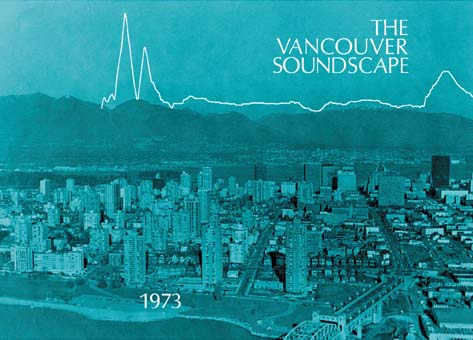
Schafer’s call for the establishment of the WSP was answered by a group of highly motivated young composers and students, and, supported by The Donner Canadian Foundation, the group embarked first on a detailed study of the immediate locale, published as The Vancouver Soundscape, and in 1973, on a cross-Canada recording tour by Bruce Davis and Peter Huse, the recordings from which formed the basis of the CBC Ideas radio series Soundscapes of Canada. In 1975, Schafer led a larger group on a European tour that included lectures and workshops in several major cities, and a research project that made detailed investigations of the soundscape of five villages, one in each of Sweden, Germany, Italy, France and Scotland. The tour completed the WSP’s analogue tape library which includes more than 300 tapes recorded in Canada and Europe with a stereo Nagra. The work also produced two publications, a narrative account of the trip called European Sound Diary and a detailed soundscape analysis called Five Village Soundscapes. Schafer’s definitive soundscape text, The Tuning of the World published in 1977 [trad. it. “Il Paesaggio Sonoro”, Ricordi/Unicopli], and Barry Truax’s reference work for acoustic and soundscape terminology, the Handbook for Acoustic Ecology published in 1978, completed the publication phase of the original project.

Excerpts from The Vancouver Soundscape 1973:

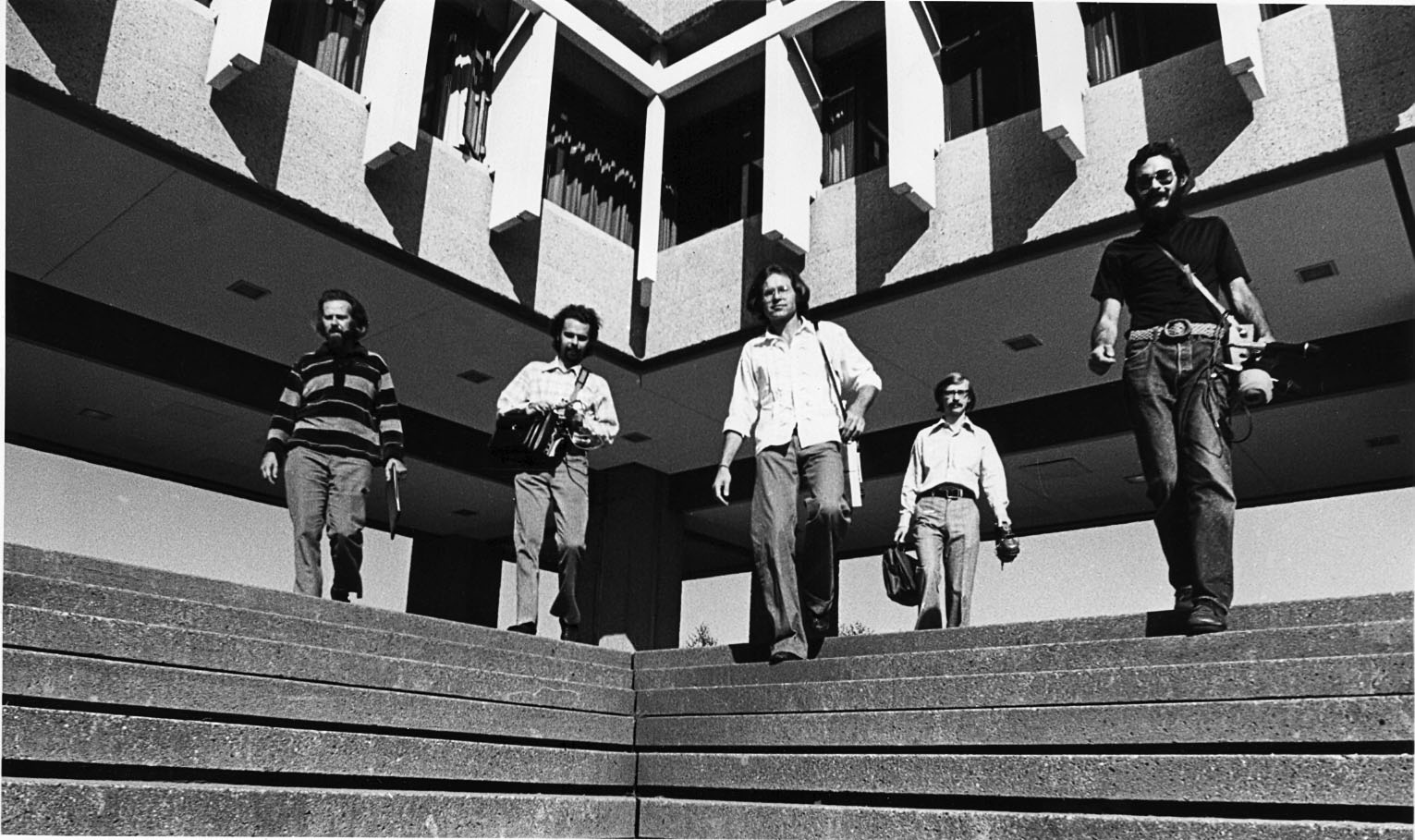
The WSP group at SFU, 1973; left to right: R. M. Schafer, Bruce Davis, Peter Huse, Barry Truax, Howard Broomfield

WSP 1973

Tags:

Related posts

31

Aug

Ocean & Cricket Music

Scritto da:Mauro Graziani @ 2009.08.31.03.18.14 — Archiviato in: Audio, Land Art

Walter De Maria (nato ad Albany, in California, nel 1935) è uno dei principali esponenti della corrente artistica detta Land Art alla quale è passato dopo un’iniziale esperienza di scultore nell’ambito della Minimal Art (alcune sue opere di questo periodo, come “Balldrop” del 1961, si trovano al Guggenheim Museum di New York).

Tra gli anni ‘60 e ‘70 inizia a intervenire direttamente sul territorio con le sue monumentali earth sculptures: nel 1968, per esempio, disegna con la calce delle linee parallele all’interno del Mojave Desert, in California, mentre nel 1977, in occasione di documenta, la grande rassegna di arte contemporanea che si svolge a Kassel, in Germania, ogni cinque anni, fa penetrare nel terreno un’asta metallica per un chilometro.

La sua opera più famosa, però, rimane senza dubbio “The Lightning Field” (1977): in questa monumentale installazione posta in un angolo remoto del deserto del New Mexico De Maria cerca la complicità della natura per mettere in scena un evento sempre straordinario. Dopo aver conficcato in verticale nel terreno 400 pali metallici appuntiti su un’area di circa 3 chilometri quadrati, ne sfrutta l’effetto-parafulmine durante i temporali raccogliendo e moltiplicando la potenza dei fulmini a servizio di un grandioso spettacolo di luce (nell’immagine).
[da Wikipedia]

Non tutti sanno, però, che De Maria ha anche firmato alcune opere sonore in cui lui stesso suona la batteria e la mixa con field recording, ora disponibili su UbuWeb.

Walter De Maria

Tags:

Related posts

29

Aug

Sounds of Everglades

Scritto da:Mauro Graziani @ 2009.08.29.16.14.42 — Archiviato in: Audio

coverSempre nel campo del field recording, ecco Sounds of the Everglades, una cassetta di circa 30 minuti registrata nelle paludi della Florida. Nel 1990 era in vendita a $3.99.

Tags:

Related posts

26

Aug

Tropical Rain Forest

Scritto da:Mauro Graziani @ 2009.08.26.03.50.30 — Archiviato in: Audio

Il titolo dice tutto. Quello che vi propongo oggi è un esempio di field recording che risale al 1986.

Si tratta di una registrazione di 22 minuti, effettuata in una foresta tropicale (dai suoni si direbbe localizzata in America del Sud, prob. Brasile), distribuita negli anni ‘80 su cassetta da Moods Gateway Recording. Nessun trattamento, né montaggio sembra essere stato fatto. La qualità è quella dei registratori portatili a nastro dell’epoca, comunque buona, qui digitalizzata e convertita in mp3 a 128 kbps.

La varietà dei suoni e delle loro combinazioni è fantastica. La potete ascoltare in streaming o scaricare in mp3 (att.ne: è circa 21 Mb).

NB: attualmente esistono vari cd con questo titolo disponibili via internet. La registrazione non è questa. Questa non è più in distribuzione. Spesso quelle attuali sono registrazioni di sottofondo con musichetta applicata sopra, oppure sono divise in brani (uccelli, animali vari, indigeni, etc). Qui, invece, c’è la registrazione della foresta, pura e semplice, con la pioggia che va e viene, per 22 minuti.

Tags:

Related posts

30

Jul

Loci_

Scritto da:Mauro Graziani @ 2009.07.30.00.01.25 — Archiviato in: Computer Art

Loci_ is another audio-visual project by Blake Carrington.

“Loci_” is a series of prints generated by a custom sound-to-image visualizer.  Audio field recordings are fed into the system, then manipulated into abstract imagery that brushes against architectural and topographic representation.  The project deals with perceptual analogues to the conversion of audiovisual data, and is motivated by a statement from R. Murray Schafer: “All visual projections of sounds are arbitrary and fictitious”.

The author is currently working on re-writing the Max/MSP/Jitter patch to accommodate a much larger physical scale. The imagery is created in real-time and relies much on feedback loops of matrix data to create the forms. Possible developments for the future include vinyl mural prints and audiovisual performance with widescreen high-definition projection.

Tags: ,

Related posts

29

Jul

Suomenlinna Ornithological Society

Scritto da:Mauro Graziani @ 2009.07.29.04.38.36 — Archiviato in: Concettuale

logoAt the core of “Suomenlinna Ornithological Society” is the invention of new bird species with electronic birdsongs. The concrete sources of these birdsongs are samples taken from a Suomenlinna museum film about the history of the island. Explosions, cannonball whistles, and grisly vocal narrations are re-shaped into the rhythms, timbres and frequencies of birdsong. This transformation references the Electronic Voice Phenomenon (EVP), a supposedly paranormal occurrence where voices of the dead are heard via electronic technology.

The project has thus far been realized in three different forms:

  1. The Society’s Website archives the invented bird species as well as a number of real species found in Finland. A curious presence can also be detected by the inquisitive visitor.
  2. An “electro concrète” remix of the archive was commissioned by MUU Gallery for their net radio series Audio Autographs. This is an excerpt from the upcoming full-length album titled Ghost Cycle~, to be released under the moniker Suomenlinna Ornithological Society.
  3. Three small audio devices were created with the Arduino board + Waveshield by Adafruit Industries. These devices were placed in trees and gun shafts in the environment, playing the artificial birdsongs.

Project by Blake Carrington
Blake Carrington is an artist based in New York, exploring the interstices of geography and phenomenology. He recently completed residencies at HIAP in Helsinki and Atlantic Center for the Arts with Carsten Nicolai, and received an MFA in the Department of Transmedia at Syracuse University. With his two collaborators in the artist group Avalanche Collective, he co-founded Urban Video Project, a public arts initiative that used the post-industrial landscape of Syracuse as context for multimedia projections. Before coming to New York he lived in Japan for two years, working for the Japan Exchange and Teaching Programme.

View more work at http://blakecarrington.com

Tags: , ,

Related posts

Next Page »