Musica Arte Tecnologia Storie Estreme

9

Jun

Snorkel Quintet

Scritto da:Mauro Graziani @ 2010.06.09.14.23.52 — Archiviato in: Confine, Storia

coverThe SuRRism-Phonoethics net label is a Frankfurt, Germany based non-profit netlabel specializing in Experimental music. Some of their releases could be classified as Electronic art music/Electronic music, industrial or experimental music with sub-genres like Electro-Acoustic, Improvisation & Cut-Up.

Their official launch occurred in 2008, with a release for Undress Béton. All their releases are free for download under Creative Commons or Copyleft licenses.

SuRRism-Phonoethics production is very interesting, dedicated to artists who wish to push the boundaries.

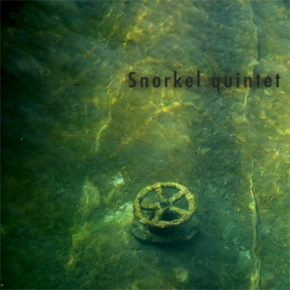
Today I am pleased to present you the Snorkel Quintet, a Barcelona-based group of six (yes!) players devoted to improvisation and influenced by contemporary music and jazz.

Some excerpt from their album called Improvisaciones realizadas entre enero-abril 2010 Barcelona, España. Go to this page to download the whole work.

Tags:

Related posts

26

May

Fluorinescence

Scritto da:Mauro Graziani @ 2010.05.26.21.49.50 — Archiviato in: Confine, Jazz

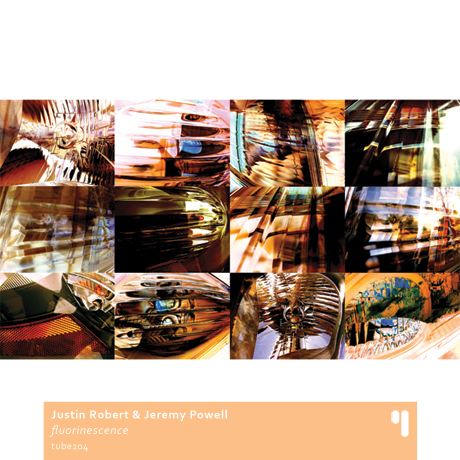
coverJustin Robert and Jeremy Powell are both enthusiast musicians that play live jazz for a living. Justin is a percussionist and likes to fiddle with analog synths, and Jeremy plays saxophone.
Both musicians love free jazz and improvisation, so one night they got together, Justin on synth and Jeremy on sax, and they put ‘Fluorinescence’ onto tape.

Twelve tracks lasting 65′ 20”. Download the whole album from Test Tube.

Excerpts:

Tags:

Related posts

1

Feb

Interlace

Scritto da:Mauro Graziani @ 2010.02.01.03.53.32 — Archiviato in: Elettroacustica

logoThe English netlabel INTERLACE devotes to concerts featuring free improvisation, live electronic music, interactive composition, and, of course, a mixture of it all. It is a continuous series of concerts aiming at 3 or 4 times per year.

Excerpts from the Interlace archives: three improvisations from the concert dated 18 July 2009

Tags:

Related posts

6

Sep

AMM live

Scritto da:Mauro Graziani @ 2009.09.06.04.13.48 — Archiviato in: Elettroacustica

Che AMM, il gruppo di improvvisazione fondato a Londra nel 1965 da Keith Rowe, Lou Gare & Eddie Prevost e di cui fece parte anche Cornelius Cardew, sia ancora vivo e scalciante, è una bella notizia.

Dopo 40 anni e innumerevoli cambiamenti di organico, anche in considerazione del fatto che il gruppo è sempre stato aperto alle collaborazioni più varie, qui abbiamo un estratto di un concerto del 2001 in formazione Rowe, Prevost e Tilbury. L’attività del gruppo continua attualmente con Prevost e Tilbury come membri base, attorno a cui ruotano numerosi ospiti.

Il video è tratto dal sito MishMusic, ricco di filmati dedicati agli improvvisatori inglesi.

AMM Live 2001 (excerpt) quicktime video

Tags: ,

Related posts

4

Aug

Nos Meilleurs Stockhausen

Scritto da:Mauro Graziani @ 2009.08.04.00.01.15 — Archiviato in: Strumentale

coverEra tempo che qualcuno diffondesse una nuova versione di alcuni brani del ciclo Aus den sieben Tagen, eseguendola indipendentemente dall’autore. In realtà di esecuzioni ce ne sono state, ma poche sono state registrate e diffuse, al di fuori di quelle dirette dallo stesso Stockhausen (oggi ne possiamo vedere alcune grazie a YouTube).
La difficoltà è data dal fatto che i brani che fanno parte di Aus den sieben Tagen, composti nel Maggio 1968, sono definiti dall’autore come “musica intuitiva”, cioè musica prodotta mediante l’intuizione, più che dall’intelletto.

La partitura di ciascuno di essi si compone unicamente di una breve serie di istruzioni comportamentali, spesso di carattere esoterico, che richiedono all’esecutore anche un impegno meditativo non banale, a volte tale da portarlo vicino allo stato del Buddha («…arriva a uno stato di non pensiero…»).

Un esempio è il seguente, che si riferisce a Setz die Segel zur Sonne:

Play a tone for so long
until you hear its individual vibrations

Hold the tone
and listen to the tones of the others
- to all of them together, not to individual ones –
and slowly move your tone
until you arrive at complete harmony
and the whole sound turns to gold
to pure, gently shimmering fire

Qui trovate un commento a questi brani, con tutti i testi che ne costituiscono le partiture e una intervista sulla musica intuitiva con lo stesso Stockhausen.

Ora un gruppo di improvvisatori francesi, noto con il nome di Le Car de Thon, ha eseguito tre brani pubblicati dalla netlabel Insubordinations. Qui vi faccio ascoltare la loro versione di Setz die Segel zur Sonne (att.ne: inizia pianissimo e cresce). L’intero album è scaricabile qui.

  • Le Car de Thon - Setz die Segel zur Sonne
    Esecutori:
    Yannick Barman: trompette
    Brice Catherin: violoncelle et électronique
    Vincent Daoud: saxophone
    Jean Keraudren: spatialisation et effets
    Christian Magnusson: trompette
    Benoît Moreau: clarinette
    Luc Müller: percussions
    Cyril Regamey: percussions
    Jocelyne Rudasigwa: contrebasse
Tags: ,

Related posts

17

Jun

Multiplying Real

Scritto da:Mauro Graziani @ 2009.06.17.02.54.46 — Archiviato in: Strumentale

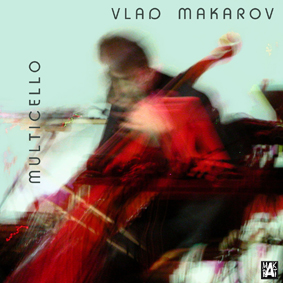
coverThe new album by Vladislav Makarov “Multiplying Real - Multicello”, (c) makART rec. 038

Makarov is a pioneer free improvised music in Russia, the known cellist-experimentalist, this is a solo work, but not quite usual. 20 short pieces recorded with using the usual analog delay, but with mass author’s preparations such as the objects in strings, wooden, bamboo and plastic sticks, combs, straightedges of the miscellaneous format, as well as makarov’s branded receiving playing on cello as on guitar, referring us from hard-rock to technic great english musician Derek Bailey. The album as a whole carries the experimental character, but many acceptances Makarov used repeatedly above-ground performances. All the pieces have a different invoice and expression, but collected in conceptual album, subordinated powerful direction of the author. Many the tracks can cause the shock and perplexity, but the electric cello here sounds as whole orchestra in spirit of avantgarde composer Xenakis or Stokhausen. Stylistic and genre of the work it is difficult to define, it obviously much broader notorious free improvisation, but is an colours by the palette all radical styles our time from freejazz, avant-rock up to noise and drone…

Download here

Some excerpts

Tags:

Related posts

5

Jun

Musica di Jean Dubuffet

Scritto da:Mauro Graziani @ 2009.06.05.00.01.32 — Archiviato in: Elettroacustica

dubuffetNon è un errore di stampa. Jean Dubuffet (1901-1985), scultore e pittore francese di fama mondiale, ha scritto anche della musica. Più che scritto, però, bisognerebbe usare il termine “realizzato”, trattandosi di musica concreta, in parte di origine strumentale, della quale non esiste alcuna partitura.

Oltretutto, lo stesso Dubuffet dichiara:

I find that true music should not be written, that all written music is a false music, that the musical notation which has been adopted in the west, with its notes on the staves and its twelve notes per octave, is a very poor notation which does not permit to notate the sounds and only allows the making of a totally specious music which has nothing to do with true music. It is impossible to write true music, except with a stylus on the wax, and this is what they do now in recordings.
This is a way of writing and the only one that’s proper to music.

Il suo metodo compositivo, infatti, consisteva nell’improvvisare liberamente con diversi strumenti occidentali e orientali, nonché con oggetti trovati, registrando il tutto, per passare, poi, a una fase di montaggio usando vari registratori e un mixer.

In realtà, Dubuffet aveva studiato musica da giovane, ma poi non l’aveva mai praticata o studiata con continuità. La sua attenzione era stata risvegliata, alla fine del 1960, da una serie di improvvisazioni fatte per divertimento con l’amico Asger Jorn. Ma poi la passione si era risvegliata al punto che

I transformed a room in my house into a music workshop and in the periods between our get-togethers with Asger Jorn I became a one-man band, playing each of my fifty-odd instruments in turn. Thanks to my tape recorder I was able to play each part successively on the same tape and have the machine play everything back simultaneously.

E poi

The subsequent recordings are the result of two diverging approaches which I hesitated between and which are probably both apparent in at least some pieces. The first was an attempt to produce music with, a very human touch, in other words, which expressed people’s moods and their drives as well as the sounds, the general hubbub and the sonorous backdrop of our everyday lives, the noises to which we are so closely connected and, although we don’t realize it, have probably endeared themselves to us and which we would be hard put to do without. There is an osmosis between this permanent music which carries us along and the music we ourselves express; they go together to form the specific music which can be considered as a human beings. Deep down I like to think of this music as music we make, in contrast to another very different music, which greatly stimulates my thoughts and which I call music we listen to. The latter is completely foreign to us and our natural tendencies; it is not human at all and could lead us to hear (or imagine) sounds which would be produced by the elements themselves, independent of human intervention.

Dubuffet dichiara anche:

In my music I wanted to place myself in the position of a man of fifty thousand years ago, a man who ignores everything about western music and invents a music for himself without any reference, without any discipline, without anything that would prevent him to express himself freely and for his own good pleasure.

Da queste improvvisazioni sono nati due dischi che potete trovare in formato flac su AGP74 e AGP79, mentre le versioni mp3 sono qui e qui.

Intanto alcuni estratti:

Tags: ,

Related posts

24

Mar

Information Mechanics

Scritto da:Mauro Graziani @ 2009.03.24.00.01.34 — Archiviato in: Elettroacustica

Un impressionante brano del chitarrista e improvvisatore Henry Kaiser tratto da ANABlog

This is the equipment HK most typically uses when performing or recording

ELECTRIC GUITARS

Steve Klein Custom Electrics
Danny Ransom guitars
Modulus Graphite Neck guitars
Moonstone M-80
Moonstone Z-80
James L. Mapson 7-string
Tom Anderson Cobra
Tom Anderson Classic strat type
Rick Turner Model T

BASS GUITARS

Jerry Jones 6 string bass
Rick Turner Rennaisance fretless bass

SPEAKERS

JBL D-120JBL D-130

EFFECTS RACK

Lexicon MPX-1
Eventide 3500
Lexicon PCM-42
Eventide 4000
TC 2290
Aleisis Midiverb II

PICKUPS

Alembic Activator
Bartolini
Sunrise
Turner

ACOUSTIC GUITARS

Monteleone Eclipse
Dana Bourgeois Anniversey Model
Dana Bourgeois Bourgeois Blues
Stefan Sobell 12 fret
Bohmann 12 fret
Ralph Bown baritone
Ralph Bown 12 fret
Danny Ferrington baritone
Santa Cruz Koa D
Marc Silber K&S Leadbelly Model 12 string

AMPS

Dumble Overdrive Special
Dumble Steel String Singer
ADA Cobra
Fender Super Champ
THD V-Front
Trainwreck Rocket
Trainwreck Liverpool

PICKGUARDS

Clown Vomit

Tags: ,

Related posts

17

Mar

Audiogrammes

Scritto da:Mauro Graziani @ 2009.03.17.01.13.37 — Archiviato in: Elettroacustica

Audiogrammes è un brano di Benoit Moreau il cui titolo si rifà ai Calligrammi (poesie in forma grafica datate 1913) di Guillaume Apollinaire. Si tratta di musica in parte scritta e in parte improvvisata che esiste in due versioni:

AUDIOGRAMMES I : versione per quattro solisti

  • flauti dolci
  • sassofoni
  • percussioni
  • elettronica

AUDIOGRAMMES II: versione per quattro solisti e quattro ensembles

  • flauti dolci solo + flauto traversiere, violino, contrabbasso
  • sax solo + clarinetti, trombone, violoncello
  • percussioni solo + viola, percussioni
  • elettronica solo + pianoforte

Qui ascoltiamo Audiogrammes II, eseguita il 7 Giugno 2008 al Conservatorio di Ginevra.

Benoit Moreau - Audiogrammes II

Anne Gillot: flûtes à bec
Laurent Estoppey: saxophones
Alexandre Babel: percussion
Benoit Moreau: composition, électronique

Il brano è scaricabile dall’Internet Archive

Tags:

Related posts

31

Dec

Zar di tutti gli artropodi

Scritto da:Mauro Graziani @ 2008.12.31.00.01.27 — Archiviato in: Duo

Jaekelopterus rhenaniaeCome ultimo post dell’anno, dedichiamo questa lunga improvvisazione, che sa di insetti e di palude devoniana, allo Jaekelopterus rhenaniae, il più grande artropode (insieme all’Arthropleura) che abbia mai mosso le chele sul nostro pianeta, circa 390 milioni di anni fa.

Al di là della dedica, questo è un altro brano in cui accostiamo alle sonorità sintetiche dei veri suoni di insetti che il sottoscritto ha pazientemente raccolto e pulito per una installazione fatta a Mantova l’estate scorsa. Questi suoni sono stati campionati, trasposti varie ottave in basso e rallentati, per portare in evidenza la loro struttura complessa che sfugge se li ascoltiamo alla velocità e alla frequenza a cui gli insetti li emettono e costituiscono l’ossatura della prima parte e il foreground della seconda.

Tags: ,

Related posts

Next Page »