Musica Arte Tecnologia Storie Estreme

7

Feb

Hubble look at Pluto

Scritto da:Mauro Graziani @ 2010.02.07.23.06.27 — Archiviato in: Scienza

plutoSince its discovery in 1930, Pluto has been a speck of light in the largest ground-based telescopes. But NASA’s Hubble Space Telescope has now mapped the dwarf planet in never-before-seen detail. The new map is so good, astronomers have even been able to detect changes on the dwarf planet’s surface by comparing Hubble images taken in 1994 with the newer images taken in 2002-2003. The task is as challenging as trying to see the markings on a soccer ball 40 miles away.

Hubble’s view isn’t sharp enough to see craters or mountains, if they exist on the surface, but Hubble reveals a complex-looking and variegated world with white, dark-orange, and charcoal-black terrain. The overall color is believed to be a result of ultraviolet radiation from the distant Sun breaking up methane that is present on Pluto’s surface, leaving behind a dark, molasses-colored, carbon-rich residue. Astronomers were very surprised to see that Pluto’s brightness has changed — the northern pole is brighter and the southern hemisphere is darker and redder. Summer is approaching Pluto’s north pole, and this may cause surface ices to melt and refreeze in the colder shadowed portion of the planet. The Hubble pictures underscore that Pluto is not simply a ball of ice and rock but a dynamic world that undergoes dramatic atmospheric changes.

Click the image to enlarge. Original site is here.

Tags:

Related posts

8

Jan

Earthrise

Scritto da:Mauro Graziani @ 2010.01.08.12.22.36 — Archiviato in: Scienza

Some years ago, the japanese Kaguya spacecraft orbited the moon with a HD camera onboard and take this movie.

The colors of the Earth rising above the horizon suggest our planet is a beautiful place to see from far away.

Sorry for the music and the comments.

from: Open Culture

Tags:

Related posts

19

Dec

The Known Universe in Six Minutes

Scritto da:Mauro Graziani @ 2009.12.19.22.27.08 — Archiviato in: Scienza

The Known Universe takes viewers from the Himalayas through our atmosphere and the inky black of space to the afterglow of the Big Bang. Every star, planet, and quasar seen in the film is possible because of the world’s most complete four-dimensional map of the universe, the Digital Universe Atlas that is maintained and updated by astrophysicists at the American Museum of Natural History. The new film, created by the Museum, is part of an exhibition, Visions of the Cosmos: From the Milky Ocean to an Evolving Universe, at the Rubin Museum of Art in Manhattan through May 2010.

Tags:

Related posts

28

Nov

NASA Image Archive

Scritto da:Mauro Graziani @ 2009.11.28.00.17.34 — Archiviato in: Scienza

The huge NASA Image Archive is now online thanks to the Internet Archive.

The site nasaimages.org is divided into five sections: Universe, Solar System, Earth, Aeronautics, and Astronauts, but the content is also indexed by a nice timeline.

Tags:

Related posts

24

Nov

Aurora from Saturn

Scritto da:Mauro Graziani @ 2009.11.24.23.59.26 — Archiviato in: Scienza

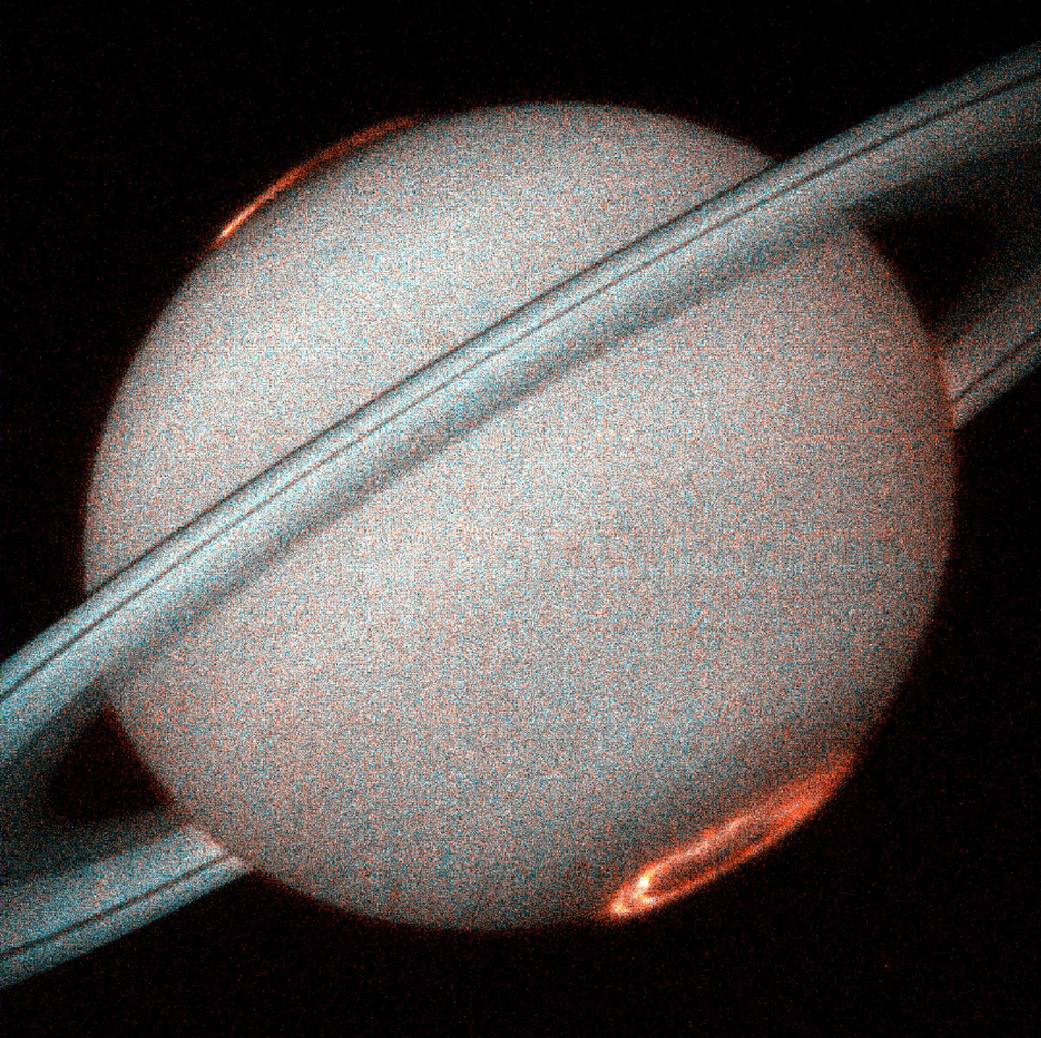
saturn auroraFrom the NASA site, last news about the Cassini mission.

An aurora, shining high above the northern part of Saturn, moves from the night side to the day side of the planet in this movie (QuickTime, no audio, 9 MB) recorded by Cassini.

These observations, taken over four days, represent the first visible-light video of Saturn’s auroras. They show tall auroral curtains, rapidly changing over time when viewed at the limb, or edge, of the planet’s northern hemisphere. The sequence of images also reveals that Saturn’s auroral curtains, the sheet-like formations of light-emitting atmospheric molecules, stretch up along Saturn’s magnetic field and reach heights of more than 1,200 kilometers (746 miles) above the planet’s limb. These are the tallest known “northern lights” in the solar system.

These auroral displays are created by charged particles from the magnetosphere that plunge into the planet’s upper atmosphere and cause it to glow. The magnetosphere is the region of electrically charged particles that are trapped in the magnetic field of the planet. The auroral curtains shown in the movie reveal the paths that these charged particles take as they flow along lines of the magnetic field between the planet’s magnetosphere and ionosphere.

The day side of Saturn scatters light toward Cassini, creating the overexposed triangle at the center of the left of the frame. Stars can be seen above the limb of the planet, trailing across the field of view.

Read more…

Tags:

Related posts

3

Nov

Symphonies of the Planets 1

Scritto da:Mauro Graziani @ 2009.11.03.05.40.59 — Archiviato in: Audio, Confine, Scienza

coverIn the August and September 1977, two Voyager spacecraft were launched to fly by and explore the great gaseous planets of Jupiter and Saturn.
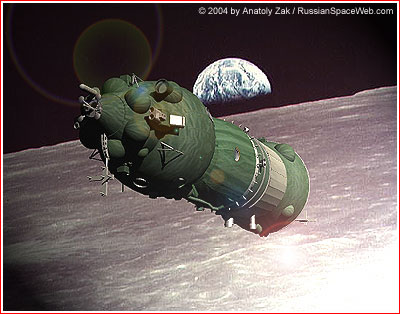
Voyager I, after successful encounters with the two, was sent out of the plane of the ecliptic to investigate interstellar space.
Voyager II’s charter later came to include not only encounters with Jupiter (1979) and Saturn (1981), but also appointments with Uranus (1986) and Neptune (1989).
The Voyagers are controlled and their data returned through the Deep Space Network, a global spacecraft tracking and communications system operated by the JPL for NASA.

Although space is a virtual vacuum, this does not mean there is no sound in space. Sound does exist as electronic vibrations. The especially designed instruments on board of the Voyagers performed special experiments to pick up and record these vibrations, all within the range of human hearing.

These recordings come from a variety of different sound environments, e.g. the interaction of the solar wind with the planet’s magnetosphere; electromagnetic field noise; radio waves bouncing between the planet and the inner surface of the atmosphere, etc.

In 1993 NASA published excerpts from these recordings in a set of 5 CD (30 minutes each) called Symphonies of the Planets (now out of print).

This is the CD 1.

Tags: , ,

Related posts

30

Sep

Sounds from Saturn

Scritto da:Mauro Graziani @ 2009.09.30.03.22.18 — Archiviato in: Audio, Scienza

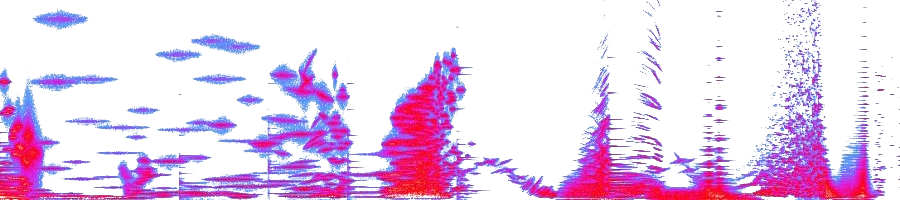
Saturn is a source of intense radio emissions, which have been monitored by the Cassini spacecraft. The radio waves are closely related to the auroras near the poles of the planet. These auroras are similar to Earth’s northern and southern lights. This is an audio file of radio emissions from Saturn.

The Cassini spacecraft began detecting these radio emissions in April 2002, when Cassini was 374 million kilometers (234 million miles) from the planet, using the Cassini radio and plasma wave science instrument. The radio and plasma wave instrument has now provided the first high resolution observations of these emissions, showing an amazing array of variations in frequency and time. The complex radio spectrum with rising and falling tones, is very similar to Earth’s auroral radio emissions. These structures indicate that there are numerous small radio sources moving along magnetic field lines threading the auroral region.

Time on this recording has been compressed, so that 73 seconds corresponds to 27 minutes. Since the frequencies of these emissions are well above the audio frequency range, we have shifted them downward by a factor of 44.

The Cassini-Huygens mission is a cooperative project of NASA, the European Space Agency and the Italian Space Agency. The Jet Propulsion Laboratory, a division of the California Institute of Technology in Pasadena, manages the mission for NASA’s Science Mission Directorate, Washington, D.C. The Cassini orbiter was designed, developed and assembled at JPL. The radio and plasma wave science team is based at the University of Iowa, Iowa City.

For more information about the Cassini-Huygens mission, visit http://saturn.jpl.nasa.gov and the instrument team’s home page, http://www-pw.physics.uiowa.edu/cassini/.

Credit: NASA/JPL/University of Iowa

spectrum

From NASA.gov

Tags:

Related posts

30

Aug

ISS cresce

Scritto da:Mauro Graziani @ 2009.08.30.23.42.49 — Archiviato in: Scienza, Tecnologia

Molto bella questa animazione di USAToday che mostra la crescita della Stazione Spaziale Internazionale (ISS), con spiegazioni particolareggiate sui vari moduli che la compongono.

La ISS ormai è ben più grande di un Boeing 767 e comincia ad assomigliare a una stazione spaziale come le immaginavo da piccolo.

Tags:

Related posts

21

Jul

Così sarebbe stato…

Scritto da:Mauro Graziani @ 2009.07.21.02.09.09 — Archiviato in: Tecnologia

…se, invece degli Stati Uniti, la corsa alla luna l’avessero vinta i russi. In realtà il loro progetto era troppo complesso e cervellotico per prevalere (es: un vettore a 5 stadi invece di 3, con 30 piccoli motori).

Però dal punto di vista estetico non c’è confronto. Lo steampunk retrò dei sovietici era impagabile…

lok

Tags: ,

Related posts

20

Jul

We choose to go to the Moon

Scritto da:Mauro Graziani @ 2009.07.20.04.12.28 — Archiviato in: Tecnologia

“We choose to go to the Moon” sono le storiche parole pronunciate dal pres. JFK nel Settembre 1962 per annunciare il varo del programma che avrebbe portato l’uomo sulla Luna alle 20:17:40 UTC del 20 Luglio 1969 (le 2 del 21 Luglio in Italia), 40 anni fa.

Circa 6:30 ore dopo l’allunaggio, alle 2:56 UTC del 21 Luglio, Armstrong posò il piede sul nostro satellite e fece il suo grande passo per l’umanità.

Fra le moltissime iniziative commemorative, vi segnalo we choose the moon, un sito che propone una simulazione in computer graphic e in tempo reale dell’intera missione, con spezzoni dell’audio originale e varie immagini.

Tags:

Related posts

Next Page »